Key takeaways
- Length: Match the manufacturer’s stated blade length exactly; even a small mismatch can make tensioning unreliable or impossible.
- Width: Wider blades track more steadily for straight resawing, while narrow blades turn tighter curves with less strain on the guides.
- Tooth pitch: Four teeth per inch suits many furniture cuts and thicker stock; finer pitches are preferable for thin boards and smoother edges.
- Tooth construction: Hardened or heat-treated teeth generally resist wear, while premium variable-set or low-tension designs can reduce vibration and operator fatigue.
- Cutting behavior: Choose a blade that clears chips effectively without forcing the work. Excessive pressure is a sign of dull teeth, the wrong pitch, or insufficient machine setup.
What's inside
A band saw can produce clean curves, resaw panels, and accurate furniture components—but only when its blade matches the machine and the material. Buyers often focus on tooth count while overlooking blade length, width, weld quality, tooth set, and the tension limits of a smaller saw. A poor match can wander in hardwood, overheat during resawing, or fatigue prematurely.
This guide evaluates wood-cutting band saw blades from an ergonomics-and-durability perspective: how predictable they feel at the table, how much correction they demand, and how well their teeth hold up in real workshop use. Check your saw’s specifications before ordering, especially the required blade length and maximum blade width.
As an Amazon Associate we earn from qualifying purchases.

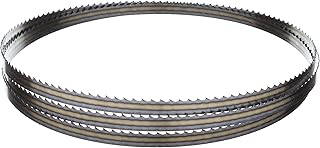


Best Band Saw Blades For Wood (2026)
How to Choose a/an Band Saw Blades For Wood (2026)
- Length: Match the manufacturer’s stated blade length exactly; even a small mismatch can make tensioning unreliable or impossible.
- Width: Wider blades track more steadily for straight resawing, while narrow blades turn tighter curves with less strain on the guides.
- Tooth pitch: Four teeth per inch suits many furniture cuts and thicker stock; finer pitches are preferable for thin boards and smoother edges.
- Tooth construction: Hardened or heat-treated teeth generally resist wear, while premium variable-set or low-tension designs can reduce vibration and operator fatigue.
- Cutting behavior: Choose a blade that clears chips effectively without forcing the work. Excessive pressure is a sign of dull teeth, the wrong pitch, or insufficient machine setup.
The Best Band Saw Blades For Wood (2026)s Reviewed
AYAO 70-1/2-Inch 4 TPI Hardened-Tooth Blade
This AYAO blade is a practical replacement for compatible 10-inch saws, including selected Craftsman and Rikon models. Its hardened teeth are appealing for general furniture work because they can retain a useful edge through repeated cuts, although users should verify the exact machine fit and avoid forcing dense hardwood through a narrow benchtop saw.
Timber Wolf 72-Inch 4 TPI Blade
The 1/2-inch Timber Wolf blade is a sensible all-purpose option for saws requiring a 72-inch loop. Its coarse pitch clears chips well in thicker timber and gives a controlled feel during straight cuts, making it a strong choice for stock preparation and moderate resawing rather than very tight curves.
Timber Wolf 70-1/2-Inch 4 TPI Blade
Designed for machines using a 70-1/2-inch blade, this Timber Wolf model offers the same useful coarse-tooth approach in a shorter format. It is well suited to furniture makers who want predictable tracking and efficient chip removal, provided the saw’s guides and thrust bearing are correctly adjusted.
BOSCH BS80-6H 80-Inch 6 TPI Blade
The Bosch BS80-6H uses a finer six-teeth-per-inch pattern than the coarse general-purpose blades here. That makes it attractive for cleaner cuts in thinner boards and shaped components, though it may clear chips less aggressively in thick stock and can reward a slower, steadier feed rate.
DoubleHard 158-Inch Sawmill Blade, 5-Pack
This five-pack is aimed at larger sawmill-style equipment rather than ordinary benchtop or 14-inch shop saws. The 10-degree all-purpose profile and DoubleHard construction make it a durability-focused option for substantial logs and rough lumber, but its unusual length means compatibility must be confirmed before purchase.
Frequently Asked Questions
What TPI is best for cutting wood on a band saw?
A 4 TPI blade is a versatile starting point for many furniture projects, particularly when cutting thicker boards. For thin stock, plywood, or cleaner detail work, a higher TPI blade such as 6 TPI may leave a more manageable cut.
Is a wider band saw blade better for resawing?
Usually, yes. A wider blade resists twisting and tends to track more consistently through a tall board. The limitation is the saw itself: never install a blade wider than the manufacturer permits, and do not exceed the machine’s tensioning capacity.
How often should a wood-cutting band saw blade be replaced?
Replace it when it requires noticeably more feed pressure, burns the wood despite proper setup, drifts repeatedly, or shows chipped or rounded teeth. Blade life depends heavily on timber species, contaminants such as grit or glue, and whether the operator is forcing the cut.
Does the FOXBC 93-1/2-inch blade fit every 14-inch band saw?
Not every model, but the FOXBC 93-1/2-inch x 3/4-inch x 4 TPI blade is marketed for many 14-inch Delta, Rockwell, Grizzly, Jet, Rikon, Steel City, General, Ridgid, and Craftsman saws. Confirm your manual’s required length, width, and blade profile before ordering.
Final Thoughts
For broadly useful furniture work, the Timber Wolf 72-inch and 70-1/2-inch 4 TPI blades are dependable starting points when their lengths match your saw. The BOSCH BS80-6H is worth considering for thinner, cleaner cuts, while the AYAO offers a practical hardened-tooth replacement for compatible compact machines.