Key takeaways
- Material: Match the blade to the workpiece. Carbon-steel blades suit many woods, while bi-metal blades are the safer long-wearing choice for steel and mixed materials.
- Tooth pitch: Lower TPI removes material quickly in thick stock; higher TPI produces a smoother cut in thinner sections. Aim for at least three teeth engaged in the material whenever possible.
- Blade width: Wider blades track more steadily for straight resawing. Narrower blades turn more easily, making them preferable for curves and compact portable saws.
- Set and rake: Tooth set creates clearance for the blade body, while rake affects how aggressively it enters the cut. A moderate profile is easier to control for general workshop use.
- Durability: Look for welded joints, consistent tooth geometry, and a blade suited to your saw’s tension limits. A durable blade should reduce changes, vibration, and hand fatigue rather than merely last longer.
What's inside
Choosing a band saw blade is less straightforward than matching a length and tooth count. A blade that cuts cleanly through hardwood may struggle in steel, while an aggressive metal-cutting blade can leave furniture parts rough, overheated, or needlessly slow. Incorrect tension, tooth pitch, or blade width can also shorten blade life and place extra strain on the saw.
This guide evaluates six widely used options from an ergonomics-and-durability perspective. The emphasis is on controllable cutting, fatigue reduction, tooth longevity, material suitability, and practical fit for home workshops, furniture making, and portable repair work. Always confirm your saw’s blade length, width, thickness, and recommended operating range before ordering.
As an Amazon Associate we earn from qualifying purchases.



How to Choose a Band Saw Blade (2026)
- Material: Match the blade to the workpiece. Carbon-steel blades suit many woods, while bi-metal blades are the safer long-wearing choice for steel and mixed materials.
- Tooth pitch: Lower TPI removes material quickly in thick stock; higher TPI produces a smoother cut in thinner sections. Aim for at least three teeth engaged in the material whenever possible.
- Blade width: Wider blades track more steadily for straight resawing. Narrower blades turn more easily, making them preferable for curves and compact portable saws.
- Set and rake: Tooth set creates clearance for the blade body, while rake affects how aggressively it enters the cut. A moderate profile is easier to control for general workshop use.
- Durability: Look for welded joints, consistent tooth geometry, and a blade suited to your saw’s tension limits. A durable blade should reduce changes, vibration, and hand fatigue rather than merely last longer.
The Best Band Saw Blades (2026) Reviewed
LENOX Portable 44-7/8-Inch Blade, 14 TPI
This five-pack is a sensible choice for compact portable band saws and routine cutting of thinner metal stock. The 14 TPI pattern offers a useful balance between bite and finish, while having replacements ready reduces downtime; use steady feed pressure rather than forcing the saw through the work.
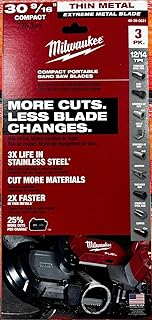
Milwaukee Compact Extreme Thick Metal Blade
Milwaukee’s 30-9/16-inch 12/14 TPI blade is designed for compact saws handling demanding metal work, including thicker sections where a fragile blade can dull quickly. Its variable pitch helps moderate vibration and tooth impact, making it a strong option for users who value controlled handling during repeated cuts.
LENOX Classic Tuff Tooth 93-Inch Bi-Metal Blade
The Classic Tuff Tooth is a substantial 93-inch, 3/4-inch-wide bi-metal blade with an 18 TPI regular-tooth pattern, wavy set, and positive rake. It is particularly well suited to stable, general-purpose metal cutting on a larger saw, where its width supports tracking and the bi-metal construction helps resist premature tooth wear.
Timber Wolf 93-1/2-Inch, 4 TPI Blade
With its coarse four-tooth-per-inch pattern, this Timber Wolf blade is aimed at fast wood cutting and material removal rather than delicate finish work. It is a practical choice for resawing or processing thicker boards, provided the saw is properly aligned and the operator accepts that freshly cut edges may need sanding.
DEWALT DW3983C Portable Blade, 18 TPI
The DEWALT DW3983C is a 32-7/8-inch, 18 TPI three-pack for portable band saws and thinner metal applications. Its finer tooth spacing favors smoother, more manageable cuts in smaller sections; it is less appropriate for thick stock, where the teeth can pack with debris or progress too slowly.
Frequently Asked Questions
Which band saw blade is best for furniture making?
For wood furniture, choose a blade based on the cut rather than the project label. A coarse Timber Wolf blade suits thick boards and resawing, while a finer blade is more comfortable for thinner parts, templates, and curves. Keep a second blade available instead of expecting one pitch to do everything well.
How often should I replace a band saw blade?
Replace it when cuts begin drifting despite correct tracking, when feeding requires noticeably more force, or when the teeth show rounding, missing tips, or heat discoloration. Dull blades increase operator fatigue and can encourage unsafe pushing, so replacement is often justified before total failure.
Can a metal-cutting blade cut wood?
It can, but it is usually an inefficient compromise. A high-TPI metal blade removes wood slowly and may clog with fine sawdust, whereas a purpose-built wood blade clears chips more effectively. Use the blade designed for the material whenever practical.
What is the correct way to break in a new blade?
Run a new blade at normal speed with reduced feed pressure and avoid forcing the first several cuts. This gently seats the teeth and helps prevent microscopic edge damage. Follow the manufacturer’s break-in guidance, especially with bi-metal blades intended for metal cutting.
Final Thoughts
For compact metal work, the LENOX 44-7/8-inch and DEWALT DW3983C offer useful multipack convenience, while Milwaukee is the stronger choice for demanding thick-metal cuts. For larger workshop saws, the LENOX Classic Tuff Tooth provides durable tracking, and the Timber Wolf 4 TPI is the better fit for fast, substantial wood cutting.