Key takeaways
- Capacity: Match the BTU rating to the room rather than relying on the largest number available. Sun exposure, high ceilings, poor insulation, and open-plan layouts can all increase the required capacity.
- Moisture removal: Look for a stated pint-per-day rating or a clearly described dehumidifier mode. Air conditioners remove some moisture while cooling, but dedicated dehumidifiers are generally better for damp basements and persistently humid rooms.
- Exhaust design: A well-sealed window kit is essential. Dual-hose systems typically manage hot-air exchange more efficiently, while single-hose models are often simpler and easier to reposition.
- Drainage: Auto-drain features reduce interruption, but they do not eliminate maintenance. Check whether the appliance supports continuous drainage and whether the hose can be routed without kinks or upward loops.
- Ergonomics: Consider caster quality, handle placement, remote readability, filter access, and operating noise. These details determine whether the unit is pleasant to live with after the first week.
What's inside
Best Air Conditioner Dehumidifier Combo (2026) — A portable air conditioner that also removes moisture can make a room feel substantially more comfortable, but buyers often underestimate the difference between cooling capacity, dehumidification performance, noise, and drainage. A unit that cools quickly may still struggle with persistent humidity, while an oversized appliance can waste floor space and energy.
This guide evaluates the most useful combinations for bedrooms, living areas, basements, and seasonal spaces. The focus is practical: room-size matching, hose and drainage design, control convenience, maintenance, and the durability details that matter when an appliance runs for hours at a time.
As an Amazon Associate we earn from qualifying purchases.



🛒 Best Price Today on Amazon
Prime members get fast, free shipping on everything above, plus member-only deals. New members get a 30-day free trial — cancel anytime.
How to Choose an Air Conditioner Dehumidifier Combo (2026)
- Capacity: Match the BTU rating to the room rather than relying on the largest number available. Sun exposure, high ceilings, poor insulation, and open-plan layouts can all increase the required capacity.
- Moisture removal: Look for a stated pint-per-day rating or a clearly described dehumidifier mode. Air conditioners remove some moisture while cooling, but dedicated dehumidifiers are generally better for damp basements and persistently humid rooms.
- Exhaust design: A well-sealed window kit is essential. Dual-hose systems typically manage hot-air exchange more efficiently, while single-hose models are often simpler and easier to reposition.
- Drainage: Auto-drain features reduce interruption, but they do not eliminate maintenance. Check whether the appliance supports continuous drainage and whether the hose can be routed without kinks or upward loops.
- Ergonomics: Consider caster quality, handle placement, remote readability, filter access, and operating noise. These details determine whether the unit is pleasant to live with after the first week.
The Best Air Conditioner Dehumidifier Combo (2026)s Reviewed
Garvee 14,000 BTU 3-in-1 Portable Air Conditioner
This Garvee combines cooling, fan circulation, and dehumidification in a practical package rated for rooms up to 750 square feet. Its remote, sleep mode, timer, and included window kit improve day-to-day usability, while the substantial capacity suits larger living spaces; buyers should still verify actual room conditions before relying on the maximum coverage claim.
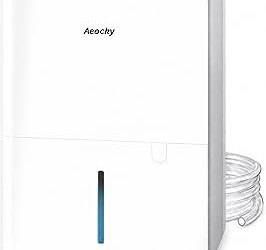
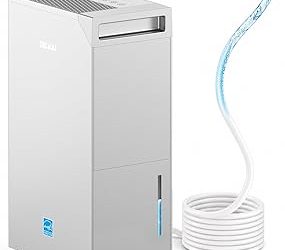
5500 Sq. Ft. Energy Star Dehumidifier
This high-capacity dehumidifier is the better fit when dampness—not heat—is the primary problem. Its intelligent humidistat and drain hose support more consistent moisture control in basements, bathrooms, and whole-home areas, though it should be paired with a separate air conditioner when meaningful temperature reduction is required.
Whynter ARC-14S Dual-Hose Portable Air Conditioner
The Whynter ARC-14S is a strong choice for a roughly 500-square-foot room where efficiency and stable cooling matter. Its dual-hose layout helps reduce the pressure imbalance common with single-hose portables, and the built-in dehumidifier, auto-drain, and straightforward setup make it especially suitable for frequent seasonal use.
SereneLife 8,000 BTU 3-in-1 Portable Air Conditioner
With cooling, dehumidifying, and fan modes, the SereneLife offers a compact solution for bedrooms, offices, and other spaces up to about 350 square feet. Its temperature range, three fan speeds, remote, and window kit are useful ergonomic touches; the smaller capacity is an advantage in modest rooms but a limitation in open areas.
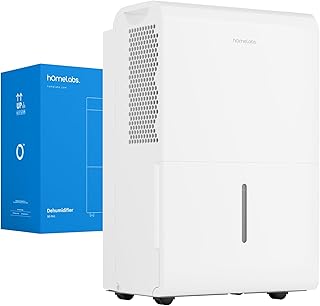
hOmeLabs 50-Pint Wi-Fi Dehumidifier
The hOmeLabs model is designed for moisture management rather than active cooling, making it a sensible choice for large basements, offices, and humid utility areas. Wi-Fi control, automatic shutoff, continuous drainage support, and humidity adjustments improve convenience, while the quiet operation helps it fit into occupied spaces.
Frequently Asked Questions
Can a portable air conditioner replace a dehumidifier?
Sometimes, but not always. An air conditioner removes moisture as it cools, yet a dedicated dehumidifier is usually more effective when the room is already cool but remains damp.
Is a dual-hose portable air conditioner better?
For many rooms, yes. A dual-hose design generally handles intake and exhaust separately, which can improve cooling stability and reduce the amount of warm outdoor air drawn into the room. The trade-off is a bulkier installation.
How often should filters be cleaned?
Inspect filters every two weeks during heavy use and clean them according to the manufacturer’s instructions. Dust-clogged filters restrict airflow, reduce moisture removal, increase noise, and place extra strain on the compressor and fan.
Where should the unit be positioned?
Place it on a firm, level surface with generous clearance around air inlets and outlets. Keep the exhaust hose as short and straight as practical, and avoid positioning the appliance where curtains, furniture, or rugs can obstruct ventilation or caster movement.
Final Thoughts
The Whynter ARC-14S is the strongest all-around cooling choice for buyers who value dual-hose efficiency, while the SereneLife is easier to justify in a smaller bedroom or office. For homes where humidity is the central concern, the hOmeLabs or 5500 Sq. Ft. Energy Star dehumidifier offers more purposeful moisture control than a cooling-first appliance.