Key takeaways
- Airflow: Prioritize CFM over headline PSI. Sprinkler blowout requires sustained volume, and a compressor with stronger output will clear zones more efficiently.
- Pressure control: Use a regulator and follow the irrigation manufacturer’s limits. Excessive pressure can damage valves, fittings, and buried pipe.
- Tank capacity: A larger receiver provides a useful burst of air, but recovery speed matters when clearing multiple zones in succession.
- Handling: Wheels, a stable vertical frame, manageable weight, and an accessible drain make setup and storage less punishing on your back and hands.
- Noise and upkeep: Oil-free models simplify maintenance, while quieter pumps are easier to tolerate near homes. Check duty-cycle guidance before extended operation.
What's inside
Best Air Compressor For Sprinkler Blow Out (2026) starts with an uncomfortable fact: most household compressors are chosen for pressure, while sprinkler winterization depends more heavily on usable airflow and controlled delivery. A unit may advertise impressive PSI yet struggle to clear several zones, overheat during repeated cycles, or lack the fittings needed for a clean connection.
This guide evaluates compressors from an ergonomics-and-durability perspective, focusing on airflow, duty cycle, portability, noise, maintenance, and practical control. The right choice depends on your irrigation layout, but every recommendation below should be used with the manufacturer’s zone-by-zone blowout procedure and appropriate pressure limits for your system.
As an Amazon Associate we earn from qualifying purchases.




How to Choose an Air Compressor For Sprinkler Blow Out (2026)
- Airflow: Prioritize CFM over headline PSI. Sprinkler blowout requires sustained volume, and a compressor with stronger output will clear zones more efficiently.
- Pressure control: Use a regulator and follow the irrigation manufacturer’s limits. Excessive pressure can damage valves, fittings, and buried pipe.
- Tank capacity: A larger receiver provides a useful burst of air, but recovery speed matters when clearing multiple zones in succession.
- Handling: Wheels, a stable vertical frame, manageable weight, and an accessible drain make setup and storage less punishing on your back and hands.
- Noise and upkeep: Oil-free models simplify maintenance, while quieter pumps are easier to tolerate near homes. Check duty-cycle guidance before extended operation.
The Best Air Compressor For Sprinkler Blow Out (2026)s Reviewed
Klutch 29-Gallon Air Compressor
The Klutch 29-Gallon compressor is the strongest fit here for larger residential systems or repeated seasonal work, with 5.1 CFM at 90 PSI and a tall oil-free design that saves floor space. Its large wheels and maintenance-friendly tank drain improve handling, while the larger tank helps reduce constant pump cycling. It is still a substantial machine, so plan a permanent storage location rather than carrying it around casually.
Klutch 20-Gallon Air Compressor
With 4.2 CFM at 90 PSI, the Klutch 20-Gallon model offers a useful balance of capacity and footprint for homeowners who need more endurance than a pancake compressor provides. The 75% duty cycle, vertical layout, large wheels, and easy-access drain support repeated zone blowouts. It is a sensible middle-ground choice when a 29-gallon tank feels excessive but a small portable unit would be frustratingly slow.
Metabo HPT 6-Gallon Pancake Compressor
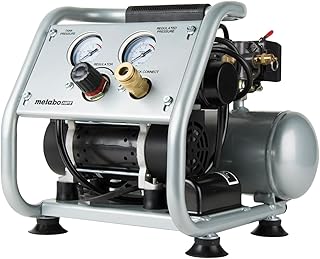
The Metabo HPT EC914S combines a compact pancake format with 200 PSI maximum pressure and a stated 4 CFM flow rate. Its portability suits occasional winterization and general home projects, although the smaller tank means more frequent recovery pauses than the Klutch models. It is particularly appealing when the compressor must also serve nailers and other tools after the sprinkler work is finished.
8-Gallon Ultra-Quiet Air Compressor
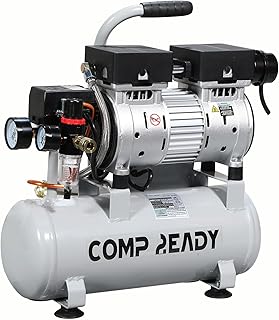
This 8-gallon oil-free model is rated at 2.5 CFM at 90 PSI and approximately 60 dB, making it an attractive option for noise-sensitive homes and lighter irrigation duties. The tank offers more reserve than a one- or six-gallon unit, but its modest airflow makes it better suited to smaller systems or patient, zone-by-zone clearing. Its portable format also works well for tires, light painting, and occasional pneumatic tools.
Metabo HPT EC28M 1-Gallon Quiet Compressor
The Metabo HPT EC28M earns its place for compact storage, low operating noise at 59 dB, and an easy universal quick coupler. However, its one-gallon tank and small overall capacity make it a poor match for demanding sprinkler blowouts; it is better reserved for very small systems, short bursts, inflation, or finish-nailing tasks. Choose it for convenience, not high-volume winterization.
Frequently Asked Questions
How much CFM is needed to blow out sprinkler lines?
There is no single number for every system. Small residential zones may be manageable with a lower-output compressor, while systems with longer runs, larger pipe, or many heads benefit from roughly 4 CFM or more. The compressor should be connected to one zone at a time, not used to pressurize the entire irrigation network simultaneously.
Is a 6-gallon compressor enough for sprinkler blowout?
It can be enough for a small home system when used patiently and within the irrigation manufacturer’s pressure limits. Expect the pump to recover between bursts. A larger tank improves reserve, but airflow and safe regulation remain more important than tank size alone.
Can I use 200 PSI to clear sprinkler lines faster?
No. Maximum compressor pressure is not an operating recommendation for irrigation. Use a regulator, introduce air gradually, and stay below the pressure limit specified for your sprinkler components. Uncontrolled pressure can create expensive damage that outweighs any time saved.
Should I choose an oil-free compressor?
For seasonal home maintenance, usually yes. Oil-free pumps avoid oil checks and simplify storage, though they may run warmer or louder than some lubricated designs. Whichever type you choose, respect the duty cycle and allow cooling pauses during a multi-zone blowout.
Final Thoughts
For the best combination of airflow, reserve, and manageable operation, the Klutch 29-Gallon is the leading choice, while the Klutch 20-Gallon is a more space-conscious alternative. For smaller systems and broader household use, the Metabo HPT 6-Gallon pancake compressor offers the most practical compromise; use the quieter compact models only when modest airflow is genuinely sufficient.