Key takeaways
- Airflow: Compare CFM at 90 PSI, not just peak pressure. Nailers use modest airflow, while spray guns, sanders, and grinders need substantially more and can expose a weak compressor quickly.
- Tank size: A larger tank provides a useful reserve for short bursts and reduces constant motor cycling. It does not replace adequate CFM for continuous-use tools.
- Noise and vibration: Quieter operation matters in a garage or attached workshop. Look for stable wheels, a manageable footprint, and a motor that will not make conversation or concentration difficult.
- Maintenance: Oil-free pumps simplify ownership, but they are not automatically indestructible. Check drain access, cooling, hose fittings, and the manufacturer’s duty-cycle guidance.
- Shop ergonomics: Consider whether you can roll, drain, store, and connect the unit without awkward lifting. Large wheels, a practical handle, and accessible controls make a bigger difference than marketing extras.
What's inside
Choosing an air compressor for a home shop is less about chasing the highest PSI number and more about matching airflow, noise, footprint, and duty cycle to the tools you actually use. A compressor that looks powerful on paper may recover slowly, overheat during repeated cycles, or consume valuable floor space.
This guide evaluates shop-ready options through an ergonomics-and-durability lens. We focus on usable airflow at 90 PSI, maintenance demands, mobility, noise, controls, and how comfortably each design fits furniture building, trim work, inflation, nailing, sanding, and occasional painting.
As an Amazon Associate we earn from qualifying purchases.



How to Choose a/an Air Compressor For Shop (2026)
- Airflow: Compare CFM at 90 PSI, not just peak pressure. Nailers use modest airflow, while spray guns, sanders, and grinders need substantially more and can expose a weak compressor quickly.
- Tank size: A larger tank provides a useful reserve for short bursts and reduces constant motor cycling. It does not replace adequate CFM for continuous-use tools.
- Noise and vibration: Quieter operation matters in a garage or attached workshop. Look for stable wheels, a manageable footprint, and a motor that will not make conversation or concentration difficult.
- Maintenance: Oil-free pumps simplify ownership, but they are not automatically indestructible. Check drain access, cooling, hose fittings, and the manufacturer’s duty-cycle guidance.
- Shop ergonomics: Consider whether you can roll, drain, store, and connect the unit without awkward lifting. Large wheels, a practical handle, and accessible controls make a bigger difference than marketing extras.
The Best Air Compressor For Shop (2026)s Reviewed
Klutch 20-Gallon Air Compressor
The Klutch 20-Gallon model is a balanced choice for a general home furniture shop, combining a vertical, oil-free layout with 4.2 SCFM at 90 PSI and a 175 PSI maximum. Its 75% duty cycle, large wheels, quick recovery, and easy-access drain support repeated nailing, fastening, and light finishing work without demanding excessive floor space.
California Air Tools 15020C
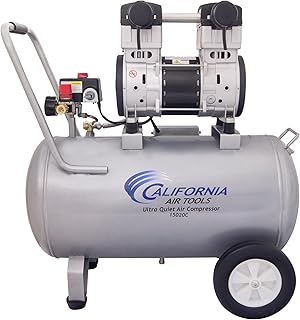
For workshops where noise is a genuine quality-of-life issue, the California Air Tools 15020C is especially appealing. Its 70 dB rating, 15-gallon tank, wheels, and oil-free 2 HP design create a more comfortable environment for detail-oriented woodworking, while the tank remains large enough for intermittent tool use and inflation.
Klutch 29-Gallon Air Compressor
The Klutch 29-Gallon model is the stronger pick when a shop regularly moves beyond brad nailers and staplers. With 5.1 CFM at 90 PSI, a 2.5 HP motor, and a 175 PSI maximum, it offers more reserve for painting and demanding pneumatic tools; the tradeoff is a larger, heavier presence that rewards a permanent parking spot.
Craftsman 2-Gallon Portable Air Compressor
The compact Craftsman CMXECXA0200243 is designed for portability rather than sustained shop production. Its 125 PSI maximum and 0.5 CFM at 90 PSI suit tire inflation, brad nailing, stapling, and quick touch-ups, while the oil-free hot-dog configuration keeps routine maintenance simple and storage easy.
VEVOR 13-Gallon Air Compressor
VEVOR’s 13-gallon compressor offers a useful middle ground, with 4.6 SCFM at 90 PSI, a 2 HP motor, wheels, and a claimed 66 dB operating level. Its oil-free tank design and thickened steel body make it practical for woodworking, automotive repairs, inflation, and occasional spray painting, although buyers should verify their spray gun’s airflow needs before committing.
Frequently Asked Questions
What size air compressor is best for a home furniture shop?
For most furniture work, a compressor in the 13- to 20-gallon range is a sensible starting point. It provides enough reserve for nailers and staplers while remaining easier to position than a large horizontal unit. Choose more airflow if painting or continuous sanding is part of the plan.
Is oil-free better for woodworking?
Oil-free compressors are convenient because they avoid oil changes and reduce the chance of oil contamination in the air line. They can be louder and may have different long-term service characteristics, so cooling, duty cycle, and build quality still matter more than the label alone.
Can these compressors run a spray gun?
Some can, but the answer depends on the gun’s required CFM and the compressor’s delivered CFM at the relevant pressure. A compressor may handle brief touch-ups yet struggle with continuous coverage. Use a regulator, moisture separator, and appropriately sized hose for better results.
Do I need an air hose reel in a shop?
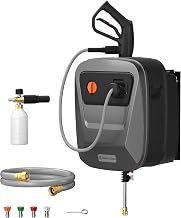
A reel is not essential, but it improves safety and storage by keeping hose off the floor and reducing kinks. The VEVOR 3/8-inch by 50-foot retractable reel is a practical accessory for a fixed work area, provided its fittings and capacity match your compressor setup.
Final Thoughts
The Klutch 20-Gallon is the best all-around choice for many home furniture shops, while the California Air Tools 15020C is the more considerate option for noise-sensitive spaces. Choose the Klutch 29-Gallon when higher airflow and painting capacity matter most; the compact Craftsman remains the convenient choice for light, mobile tasks.