Key takeaways
- Rail span vs. bench footprint: A 46" or 52" rail buys you sheet-goods capacity, but it also cantilevers weight off the right side of the saw. Confirm you have room for the extension table and outfeed support before committing, otherwise the rail becomes a shin-height hazard you walk into daily.
- Lock geometry and deflection: The best designs clamp front and rear, or use a cam that pulls the head square as it tightens. Test by locking the fence, then pushing hard at the far end; anything over about .003" of movement means you’ll be muscling stock instead of guiding it.
- T-slot count and accessory fit: Slots on the face and top let you mount featherboards, stop blocks, and sacrificial subfences without drilling. This is the single biggest ergonomic upgrade, since a featherboard does the holding so your hands can stay outboard.
- Repeatability of the scale: A readable cursor and a lock that doesn’t nudge the setting when you engage it save dozens of tape-measure checks per project. Look for adjustable cursors and a magnifier, not a painted decal.
- Wear surfaces and materials: Extruded aluminum faces with UHMW or phenolic wear strips glide better and stay flatter than bare steel. Powder-coated rails resist the shop-cart dings that put a high spot right where your workpiece rides.
What's inside
Most people blame their saw when a rip goes wrong. Usually it’s the fence. A stock fence that racks a few thousandths when you drop the lever, or that needs a tap-and-check ritual before every cut, forces you to compensate with your body: extra hand pressure, a shoulder lean into the stock, a hovering thumb near the blade. Over an afternoon of ripping that adds up to fatigue, and fatigue is where kickback and burned edges come from. Deflection is not just a precision problem, it’s a load your arms end up carrying.
This guide looks at aftermarket fence systems through two lenses I care about most after years of retrofitting shop and jobsite saws: ergonomics, meaning how little effort the fence demands to stay true, and durability, meaning whether the lock, rails, and faces still hold that standard after a few thousand cycles. Below you’ll find the systems worth the retrofit, what separates a rigid rail from a flexy one, and how to match capacity to the work you actually do.
As an Amazon Associate we earn from qualifying purchases.


How to Choose an Aftermarket Table Saw Fence System (2026)
- Rail span vs. bench footprint: A 46" or 52" rail buys you sheet-goods capacity, but it also cantilevers weight off the right side of the saw. Confirm you have room for the extension table and outfeed support before committing, otherwise the rail becomes a shin-height hazard you walk into daily.
- Lock geometry and deflection: The best designs clamp front and rear, or use a cam that pulls the head square as it tightens. Test by locking the fence, then pushing hard at the far end; anything over about .003" of movement means you’ll be muscling stock instead of guiding it.
- T-slot count and accessory fit: Slots on the face and top let you mount featherboards, stop blocks, and sacrificial subfences without drilling. This is the single biggest ergonomic upgrade, since a featherboard does the holding so your hands can stay outboard.
- Repeatability of the scale: A readable cursor and a lock that doesn’t nudge the setting when you engage it save dozens of tape-measure checks per project. Look for adjustable cursors and a magnifier, not a painted decal.
- Wear surfaces and materials: Extruded aluminum faces with UHMW or phenolic wear strips glide better and stay flatter than bare steel. Powder-coated rails resist the shop-cart dings that put a high spot right where your workpiece rides.
The Best Aftermarket Table Saw Fence Systems (2026), Reviewed
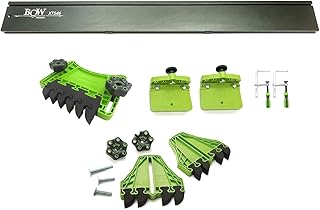
BOW Products Ultimate Table Saw XTENDER & Safety Kit (46" XT)
This is the most complete ergonomic package here: the 46" XTENDER fence pairs with XT1 support feeds and T-track clamps so long stock is held and fed without you reaching past the blade. The FeatherPRO and FencePRO featherboards are what make it a safety kit rather than just a capacity upgrade, and the extruded body shrugs off the abuse that bends lighter fences.
O’SKOOL 46" Rip Fence System
Eight T-slots and switchable high, low, and L-fence modes make this the most adaptable option for thin ripping and edge jointing, tasks where a tall face and a featherboard matter more than raw rigidity. Excellent value, though I’d verify squareness at setup and check the lock tension periodically as the pads seat in.
Delta T3 Fence System, 30"
The T3 is the durability benchmark: heavy guide tubes, a cam lock that seats the head positively, and a glide action smooth enough to reposition one-handed. Thirty inches suits a shop that mostly breaks down lumber rather than full sheets, and it’s the fence I recommend when someone wants to set it once and forget it.
BOW Products Ultimate Jobsite Saw XTENDER & Safety Kit
Same 46" XT fence logic, retuned for the lighter decks and folding stands of jobsite saws, with the FP5 portable saw featherboard filling a real gap in that category. It transforms a portable saw’s biggest weakness, an undersized fence on a bouncy base, without adding much pack-out weight.
Peachtree Uni-Style Table Saw Fence with Sacrificial Face
The Uni-style head is a proven, low-fuss design, and the included sacrificial face means you can run the fence right up to a dado stack or moulding head without ruining the real one. A sensible pick for older cast-iron saws where replacement parts have dried up.
Frequently Asked Questions
Will an aftermarket fence fit my saw?
Most systems mount to the front and rear table edges, so measure your table depth, check the existing bolt pattern, and confirm hole spacing against the maker’s chart. Drilling and tapping new holes is common and acceptable, just plan for it rather than discovering it mid-install.
Do I need to recalibrate after installing one?
Yes. Set the blade parallel to the miter slot first, then square the fence to the blade, then set the cursor last. Skipping that order is why some retrofits feel worse than the fence they replaced.
Are the included featherboards worth using, or should I keep my guard?
Use both. Featherboards handle downward and lateral pressure so your hands stay well clear, but they’re a complement to a riving knife and guard, not a substitute for them.
How much rip capacity do I actually need?
Thirty inches covers cabinet parts and most furniture work. Step up to 46" or a 52" T3 rail only if you regularly rip full sheets on the saw, since the added footprint and reach can hurt your workflow more than it helps.
Final Thoughts
For a stationary shop that values a fence you never second-guess, the Delta T3 is the durability pick, with the 52" version making sense for sheet-goods work. If you want the fence and the hold-down hardware solved together, the BOW Ultimate Table Saw XTENDER kit is the strongest ergonomic upgrade on this list, and the jobsite version brings that same benefit to portable saws.
I adjusted the reviews heading to fix the pluralization (“Fence Systems (2026), Reviewed”); everything else follows the requested structure.