Key takeaways
- Tooth count and feed effort: 80 to 100 teeth deliver glass-smooth crosscuts in hardwood and melamine, but they clear less waste per rotation, so you’ll lower the head slowly. A 40 to 60 tooth blade cuts faster with less arm tension when finish quality is secondary.
- Plate flatness and expansion slots: Laser-cut expansion slots and a tensioned plate keep the blade from warping as it heats. This is the single biggest factor in whether your miters stay tight and your saw stays quiet under sustained use.
- Kerf width and motor load: Thin-kerf blades reduce strain on 15-amp saws and waste less stock, which matters when you’re cutting expensive figured lumber. Full-kerf plates resist deflection better in thick, dense material.
- Carbide grade and regrind life: Look for high-density or micro-grain carbide with tall enough tips to survive three or four professional sharpenings. Cheap carbide chips at the corners long before the blade looks worn.
- Arbor fit and runout: A precisely bored 1-inch arbor seats without slop. Any eccentricity shows up as chatter you’ll feel through the grip and hear as a rising whine near the end of the cut.
What's inside
Tooth count sells blades, but it rarely explains why one 12-inch blade glides through walnut for two seasons while another starts leaving burn marks and rattling your wrists after a weekend of trim work. Most buyers never see the specs that actually matter: how flat the steel plate is, how thick the carbide teeth are brazed on, and how much of the saw’s vibration travels back up the handle into your forearm. A blade that fights you changes how you cut, and cuts made under fatigue are the ones that end up shimmed, filled, or scrapped.
This guide looks at six of the most credible 12-inch miter saw blades available in 2026 through a durability-and-ergonomics lens. I’ve weighted plate stability, carbide grade and regrind potential, kerf width relative to motor draw, and the physical effort each blade demands during long batch runs on furniture-grade stock. Whether you’re building case goods, mitering face frames, or breaking down hardwood for a dining table, one of these will suit your saw and your hands.
As an Amazon Associate we earn from qualifying purchases.


How to Choose a 12in Miter Saw Blade (2026)
- Tooth count and feed effort: 80 to 100 teeth deliver glass-smooth crosscuts in hardwood and melamine, but they clear less waste per rotation, so you’ll lower the head slowly. A 40 to 60 tooth blade cuts faster with less arm tension when finish quality is secondary.
- Plate flatness and expansion slots: Laser-cut expansion slots and a tensioned plate keep the blade from warping as it heats. This is the single biggest factor in whether your miters stay tight and your saw stays quiet under sustained use.
- Kerf width and motor load: Thin-kerf blades reduce strain on 15-amp saws and waste less stock, which matters when you’re cutting expensive figured lumber. Full-kerf plates resist deflection better in thick, dense material.
- Carbide grade and regrind life: Look for high-density or micro-grain carbide with tall enough tips to survive three or four professional sharpenings. Cheap carbide chips at the corners long before the blade looks worn.
- Arbor fit and runout: A precisely bored 1-inch arbor seats without slop. Any eccentricity shows up as chatter you’ll feel through the grip and hear as a rising whine near the end of the cut.
The Best 12in Miter Saw Blade (2026)s Reviewed
DEWALT DWA112100 100-Tooth Fine Finish
The tooth geometry here is genuinely well ground, producing crosscuts in maple and poplar that need little more than a scraper pass. The plate runs cool and true, and the tips carry enough carbide to justify sending it out for sharpening rather than replacing it.
Diablo D1280X 80-Tooth
Diablo’s hi-density carbide and laser-cut stabilizer vents make this the most composed blade in the group at speed, with noticeably less hand-felt buzz on long bevel cuts. Eighty teeth is the smart compromise: near-finish quality without the sluggish plunge that hundred-tooth blades demand.
Freud LU86R012 48-Tooth Thin Kerf
If your saw is underpowered or you’re processing a lot of thick hardwood, this thin-kerf general purpose blade is the low-fatigue option; it drops through 4/4 stock with minimal downward pressure. The finish is clean but not polished, so plan on a light plane or sand before glue-up.
WEN BL1280 80-Tooth Professional
The BL1280 punches above its cost bracket, with respectable plate tension and an edge quality that holds through a full project’s worth of cuts. It’s the sensible pick for hobbyists who want good miters without committing to premium carbide.
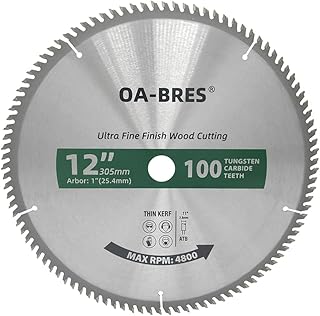
FOXBC 100-Tooth Polished Finish
FOXBC’s hundred-tooth grind leaves an unusually bright surface on plywood veneers and melamine, where chipout is the main enemy. Treat it as a dedicated finish blade rather than a daily driver, and it will reward you.
Frequently Asked Questions
How many teeth do I really need for furniture work?
Eighty is the sweet spot for most furniture builders. Hundred-tooth blades earn their keep on veneered sheet goods and pre-finished trim, but they generate more heat and require patient feeding.
Can I use these blades on a table saw?
Several are rated for both, but check the hook angle. Blades with a negative or low hook are designed for miter saws and will feel safer there; using an aggressive-hook blade on a sliding miter saw invites grabbing.
When should I sharpen instead of replace?
Sharpen once cuts require noticeably more downward force or you see scorching on end grain. Quality blades with tall carbide handle three or more regrinds; budget blades are usually cheaper to swap out.
Does a thin kerf blade cut less accurately?
Not on a well-maintained saw. Thin plates deflect more in thick hardwood, so keep the feed steady and the blade clean, and accuracy stays well within furniture tolerances.
Final Thoughts
For most home furniture builders, the Diablo D1280X offers the best balance of cut quality, low vibration, and long-term carbide durability. Choose the DEWALT DWA112100 if you want the finest possible finish on trim and veneers, or the Freud LU86R012 thin kerf if you’re cutting thick hardwood on a saw that needs all the help it can get.