Key takeaways
- Cut capacity: Check the maximum crosscut and nested crown-molding capacity against your typical furniture components, including wide shelves and apron stock.
- Accuracy: Favor a rigid fence, positive detents, a clearly readable scale, and a blade or shadow indicator that remains visible in normal workshop lighting.
- Ergonomics: A comfortable trigger, accessible bevel lock, balanced carry handle, and ambidextrous controls reduce wrist strain and setup errors.
- Durability: Look for robust slides, smooth pivot action, replaceable wear parts, and a table that resists flexing when supporting heavier boards.
- Dust and stability: Effective dust collection, a secure base, and provisions for extensions or a dedicated stand make cleaner, safer, more controlled cuts possible.
What's inside
Buying a miter saw for furniture work is less straightforward than choosing the largest blade or highest advertised speed. A saw can cut accurately in the showroom yet become tiring, awkward, or unstable during a long trim session. Dust buildup, poor bevel access, excessive reach, and a fence that is difficult to align can all undermine otherwise good results.
This guide evaluates the best 10-inch miter saws for 2026 from an ergonomics-and-durability perspective. The focus is on repeatable alignment, usable controls, support for long stock, transportability, cutting capacity, and the everyday details that determine whether a saw remains dependable in a home workshop.
As an Amazon Associate we earn from qualifying purchases.




How to Choose a/an 10 In Miter Saw (2026)
- Cut capacity: Check the maximum crosscut and nested crown-molding capacity against your typical furniture components, including wide shelves and apron stock.
- Accuracy: Favor a rigid fence, positive detents, a clearly readable scale, and a blade or shadow indicator that remains visible in normal workshop lighting.
- Ergonomics: A comfortable trigger, accessible bevel lock, balanced carry handle, and ambidextrous controls reduce wrist strain and setup errors.
- Durability: Look for robust slides, smooth pivot action, replaceable wear parts, and a table that resists flexing when supporting heavier boards.
- Dust and stability: Effective dust collection, a secure base, and provisions for extensions or a dedicated stand make cleaner, safer, more controlled cuts possible.
The Best 10 In Miter Saw (2026)s Reviewed
SKIL MS6305-00 10-Inch Dual-Bevel Sliding Compound Miter Saw
The SKIL MS6305-00 is a strong all-around choice for home furniture projects because its sliding design and dual-bevel capability reduce the need to reposition workpieces. Its broad cutting capability is useful for shelving and casework, while the controls are approachable for occasional users. Expect the best results when the saw is securely mounted and its fence is checked before precision work.
Metabo HPT C10FCG2 10-Inch Single-Bevel Compound Miter Saw
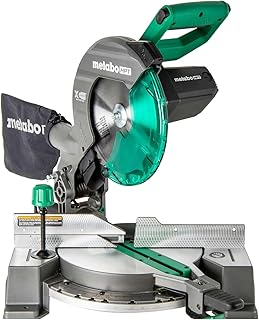
The Metabo HPT C10FCG2 prioritizes portability and straightforward operation, making it a practical fit for smaller shops or users who frequently move tools between rooms. Its Xact Cut shadow-line system is easier to follow than many basic laser guides, and the single-bevel layout keeps the machine relatively simple. It is best suited to trim, framing, and furniture parts that do not require bevels in both directions.
DEWALT DWS713 10-Inch Single-Bevel Compound Miter Saw
The DEWALT DWS713 is a durable, compact option for repeatable crosscuts and miters without the footprint of a slider. Its familiar detent system and sturdy construction suit demanding household projects, although the single-bevel design requires more planning when cutting angled joinery. This is a sensible pick for users who value predictable operation over maximum versatility.
Makita LS1019L 10-Inch Dual-Bevel Sliding Compound Miter Saw
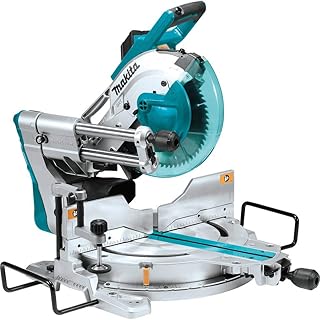
The Makita LS1019L stands out for controlled movement and a relatively refined sliding mechanism, qualities that matter when cutting expensive hardwood or maintaining a clean furniture workflow. Its dual-bevel function improves access from either side, while the laser helps confirm the intended cut line. It is a premium choice for users willing to pay for smoother handling, greater flexibility, and a more substantial machine.
DOVAMAN Updated 10-Inch Sliding Miter Saw
The DOVAMAN combines sliding capacity, ambidextrous operation, a laser guide, and multiple TCT blades in a package aimed at broad household use. Its multi-material positioning may appeal to DIYers working with wood, laminates, plastics, or selected metal-cutting applications, but blade choice and material compatibility should always be verified first. Treat its advertised capacity as a starting point and support wide stock carefully to preserve accuracy.
Frequently Asked Questions
Is a 10-inch miter saw enough for furniture building?
For most home furniture projects, yes. A 10-inch blade handles common dimensional lumber, trim, face frames, and many shelf components. Wider panels still need a circular saw, track saw, or table saw, depending on the cut.
Do I need a sliding miter saw?
A slider is worthwhile when you regularly cut wide boards or deep framing stock. If your work mostly involves narrow trim and furniture rails, a non-sliding saw can be lighter, easier to store, and less sensitive to slide alignment.
Are laser guides better than shadow lines?
Both can work well, but a shadow line is often easier to see because it is created directly by the blade. Lasers can be useful, though visibility depends on ambient light and calibration. Neither replaces a test cut and careful measurement.
How can I keep a miter saw accurate?
Mount it on a stable surface, keep the table and fence free of chips, confirm the blade is properly seated, and periodically check zero-degree and 45-degree settings with a reliable square. Support long stock at the same height as the saw table.
Final Thoughts
The SKIL MS6305-00 is a versatile starting point for many home furniture makers, while the Makita LS1019L is the stronger premium choice for demanding, repeated work. Choose the DEWALT DWS713 when compact durability matters most, and prioritize a stable stand and quality blade whichever model you buy.