Key takeaways
- Seat pan depth and height: Measure from the back of your knee to your seat, then subtract two inches. Anything deeper forces you to perch or slump; anything shallower loads pressure onto your thighs. Seat height between 18 and 20 inches keeps hips level with knees for most adults.
- Lumbar geometry, not just padding: A high back means little if the curve sits above or below your lower spine. Look for a defined lordotic bulge in the lower third of the backrest, or an adjustable headrest that lets you shift the whole support column.
- Foam resilience over initial softness: High-resilience foam in the 1.8 to 2.2 lb/ft³ range holds shape far longer than the low-density fill that makes a chair feel cloud-like on day one. Pocket coils under the seat cushion are a strong durability signal.
- Swivel and rocker hardware: A steel bearing plate with ball races runs quieter and lasts longer than a nylon bushing. Check that the rocker arc returns smoothly without a hard stop, and that the base footprint is wider than the seat to prevent tipping when you push off.
- Upholstery abrasion rating: Chenille and tight-weave polyester handle daily use better than loose-weave linen blends. If a manufacturer publishes a double-rub figure, 20,000 or above is appropriate for a primary chair.
What's inside
Swivel recliners occupy an awkward middle ground in furniture engineering. A chair that rotates, rocks, and reclines has three moving systems stacked on one another, and every added mechanism is another place for wobble, squeak, and premature sag to develop. Shoppers usually discover this the hard way: the chair feels plush in month one, then the swivel plate starts clicking, the seat foam flattens under the sit bones, and the recline angle no longer holds without body tension. Comfort at first sit is easy to manufacture. Comfort at year three is a matter of frame construction, foam density, and bearing quality.
This guide evaluates current swivel recliners through an ergonomics-and-durability lens rather than a showroom one. I’ve prioritized models with genuine lumbar geometry, seat depths that suit a range of leg lengths, hardware that carries load through the frame instead of the upholstery, and base designs stable enough to rock without creeping across the floor. Below you’ll find the shortlist, followed by the specifications worth checking before you commit and honest notes on where each chair’s strengths and compromises fall.
As an Amazon Associate we earn from qualifying purchases.


How to Choose a Swivel Recliner (2026)
- Seat pan depth and height: Measure from the back of your knee to your seat, then subtract two inches. Anything deeper forces you to perch or slump; anything shallower loads pressure onto your thighs. Seat height between 18 and 20 inches keeps hips level with knees for most adults.
- Lumbar geometry, not just padding: A high back means little if the curve sits above or below your lower spine. Look for a defined lordotic bulge in the lower third of the backrest, or an adjustable headrest that lets you shift the whole support column.
- Foam resilience over initial softness: High-resilience foam in the 1.8 to 2.2 lb/ft³ range holds shape far longer than the low-density fill that makes a chair feel cloud-like on day one. Pocket coils under the seat cushion are a strong durability signal.
- Swivel and rocker hardware: A steel bearing plate with ball races runs quieter and lasts longer than a nylon bushing. Check that the rocker arc returns smoothly without a hard stop, and that the base footprint is wider than the seat to prevent tipping when you push off.
- Upholstery abrasion rating: Chenille and tight-weave polyester handle daily use better than loose-weave linen blends. If a manufacturer publishes a double-rub figure, 20,000 or above is appropriate for a primary chair.
The Best Swivel Recliners (2026) Reviewed
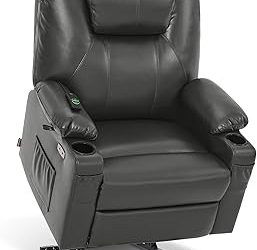
Korser 360° Swivel Rocker Recliner with Massage and Heating
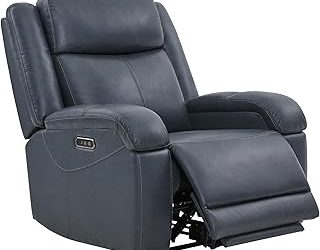
The strongest all-rounder here: a full 360-degree rotation on a stable base, a genuine rocking arc, and lumbar heat that helps loosen tight paraspinal muscles after long sitting. The massage motors are a comfort feature rather than a therapeutic one, but the frame and manual recline mechanism feel appropriately over-built for daily use.
Harkawon Swivel Rocker Recliner Chair
Harkawon’s high back and deep seat make this the pick for taller sitters who bottom out in standard recliners, with enough backrest height to actually support the cervical spine. The deep pan is less forgiving for shorter frames, so add a lumbar pillow if your knee-to-seat measurement runs under 19 inches.
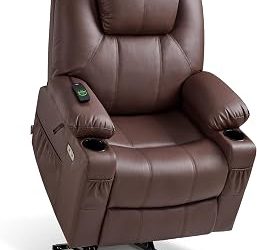
Oversized Swivel Rocker Recliner with Massage, Heat and Adjustable Headrest
The adjustable headrest is the differentiator: it lets you tune neck support independently of the backrest, which is rare at this price and genuinely useful if you read or watch television in a reclined position. The barrel silhouette and two removable pillows give you room to dial in your own support geometry.
DaVinci Suzy Electronic Swivel Recliner
The best-engineered option for nursery use, with GREENGUARD Gold and CertiPUR-US certification addressing emissions and foam content rather than just marketing softness. Powered recline plus a USB port makes one-handed operation realistic when you’re holding an infant.
Korser Swivel Rocker Recliner in Chenille
A compact footprint that reclines without demanding much rear clearance, making it the practical choice for apartments and narrow rooms. Chenille wears well against abrasion, and the side pockets keep clutter off the armrests where it usually interferes with the recline handle.
Frequently Asked Questions
Does a swivel base make a recliner less stable?
Not inherently. Stability depends on base diameter relative to seat width and where the swivel plate mounts. Chairs with a wide steel base and a low-mounted plate feel planted; problems appear when a bulky seat sits on an undersized base.
How much wall clearance do I need?
Plan on 12 to 18 inches behind a manual swivel recliner, plus room for the rotation arc. A compact model like the smaller Korser 360 swivel rocker recliner needs noticeably less than an oversized barrel design.
Is manual or power recline more durable?
Manual mechanisms have fewer failure points and no electronics to replace, but power recline reduces the shoulder and core effort required to change position — a real advantage for anyone with mobility limitations.
Will heat and massage functions hold up?
Treat them as secondary. Motors and heating pads are typically the first components to fail, so choose the chair on frame, foam, and hardware quality, then treat the therapy features as a bonus.
Final Thoughts
For most living rooms, the Korser 360° Swivel Rocker Recliner strikes the best balance of mechanical robustness, ergonomic support, and comfort features. Tall sitters should look at the Harkawon for its high back and deep seat, while nursery buyers get the most thoughtful engineering and certified materials from the DaVinci Suzy — and if floor space is the constraint, the compact Korser chenille model delivers proper recline geometry without the footprint.