Key takeaways
- Lift weight and grip points: Compressor units typically run 18 to 30 pounds. Check for recessed side grips or a defined base ledge, and plan a permanent home at counter height rather than a low cabinet you’ll have to crouch and haul from.
- Bowl removal geometry: Fixed-bowl machines require you to scoop downward into a deep well, which strains the wrist. Removable canisters let you lift the whole thing to the counter and scrape at a natural angle, which also protects the interior finish from scraper gouges.
- Ventilation clearance: Every compressor exhausts heat somewhere. Confirm which side the vents sit on and leave four to six inches clear. Restricted airflow raises the duty cycle, and heat is what shortens compressor life more than churn hours do.
- Materials at stress points: Stainless liners resist staining and thermal fatigue better than coated aluminum. The parts most likely to fail first are the lid hinge, the paddle shaft seal, and the drive coupling, so favor designs where those look substantial and replaceable.
- Control legibility and feedback: A backlit display with a real countdown timer and an audible finish cue keeps you from lifting the lid repeatedly, which dumps cold air and forces the compressor to recover. Small ergonomic detail, measurable effect on wear.
What's inside
Compressor ice cream makers solve the freezer-bowl problem, then quietly introduce two new ones that nobody mentions on the box: they are heavy, and they run a refrigeration cycle inside a kitchen appliance. A 20-pound machine that lives on a low shelf becomes a two-handed lift every single time you want dessert, and a compressor that shares its housing with a poorly ventilated cabinet gap works harder, runs hotter, and gives up sooner. Buyers rarely find out which machines age well until year two.
This guide looks at self-refrigerating ice cream makers through a durability and handling lens: how much mass you actually move, whether the bowl comes out without a wrist contortion, how legible the controls are in a dim kitchen, and which construction choices tend to survive repeated freeze cycles. Capacity and speed matter, but they matter less than whether the machine still works smoothly after fifty batches.
As an Amazon Associate we earn from qualifying purchases.


How to Choose a/an Ice Cream Maker With Compressor (2026)
- Lift weight and grip points: Compressor units typically run 18 to 30 pounds. Check for recessed side grips or a defined base ledge, and plan a permanent home at counter height rather than a low cabinet you’ll have to crouch and haul from.
- Bowl removal geometry: Fixed-bowl machines require you to scoop downward into a deep well, which strains the wrist. Removable canisters let you lift the whole thing to the counter and scrape at a natural angle, which also protects the interior finish from scraper gouges.
- Ventilation clearance: Every compressor exhausts heat somewhere. Confirm which side the vents sit on and leave four to six inches clear. Restricted airflow raises the duty cycle, and heat is what shortens compressor life more than churn hours do.
- Materials at stress points: Stainless liners resist staining and thermal fatigue better than coated aluminum. The parts most likely to fail first are the lid hinge, the paddle shaft seal, and the drive coupling, so favor designs where those look substantial and replaceable.
- Control legibility and feedback: A backlit display with a real countdown timer and an audible finish cue keeps you from lifting the lid repeatedly, which dumps cold air and forces the compressor to recover. Small ergonomic detail, measurable effect on wear.
The Best Ice Cream Maker With Compressor (2026)s Reviewed
Whynter ICM-200LS 2.1 Qt
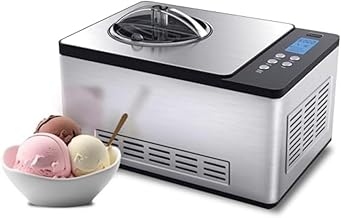
The stainless body and removable 2.1-quart canister make this the most serviceable design in the group; the bowl lifts clear so you never scrape blind into a fixed well. It is genuinely heavy at roughly 27 pounds, so commit to a dedicated counter spot before you buy.
4-in-1 Compressor Ice Cream Maker (1.0 Qt)
The vertical footprint is the smart part here, trading horizontal counter real estate for height and staying manageable to reposition one-handed. The 1-quart ceiling and lighter build suit occasional batches rather than a weekly production habit.
Whynter ICM-128WS 1.28 Qt
Essentially the ICM-200LS logic in a smaller shell, and the reduced mass is the real ergonomic win for anyone who does not want to wrestle a full-size unit. The LCD and timer are clear, and the shorter bowl depth means less reaching to empty it.
Instant Pot InstantChill
The quietest operator of the bunch and the easiest to clean, with a lid and paddle assembly that comes apart without fuss, which matters more for long-term hygiene than most buyers expect. Two-pint output is modest, so treat it as a fresh-batch machine rather than a party workhorse.
Inoviva IM001 1.7 Pt
Compact, light enough to shift without planning, and the three presets remove guesswork for beginners. Build feels less robust than the Whynter units, so it earns its place on lower-frequency use rather than heavy rotation.
Frequently Asked Questions
Do compressor models need any pre-freezing?
No. The built-in refrigeration chills the bowl directly, so you can run consecutive batches without waiting overnight between them. Most machines benefit from a short pre-chill cycle before the mix goes in.
How long should a compressor unit last?
With adequate ventilation and no tipping during transport, five to ten years is realistic. Moving the machine while it is running or storing it on its side is the fastest way to damage the sealed refrigeration system.
Are these machines loud?
They produce a low refrigeration hum plus churn noise, generally comparable to a small dorm fridge with a mixer running. The Instant Pot unit is noticeably the most restrained.
Can I leave one on the counter permanently?
Yes, and you should. Repeated lifting is the main injury and damage risk with appliances in this weight class.
Final Thoughts
For long-term durability and the most comfortable emptying process, the Whynter ICM-200LS is the strongest overall choice, with the ICM-128WS offering the same removable-canister advantage at a weight most people can actually manage. If quiet operation and painless cleanup rank highest, the Instant Pot InstantChill is the one to take home.