Key takeaways
- Cleaning code: Flip a cushion and read the tag. W and WS take water-based products, S means solvent only, and X means vacuum-only — no liquid, no exceptions. Matching the code prevents the two failure modes that end a sofa early: shrinkage and watermarking.
- Residue profile: Leftover surfactant is a dirt magnet, so a treated patch re-soils faster than the fabric around it. Prioritize formulas that dry crisp and rinse-free rather than ones that feel slick or tacky once cured.
- Moisture load: Foams and low-moisture sprays keep liquid in the top layer of yarn. Saturating sprays push moisture into the foam core and deck, where it wicks back up as a ring and can sour in humid rooms.
- Sprayer ergonomics: A 32 oz bottle held at arm’s length loads your wrist and forearm heavily. Look for a wide foam trigger, a comfortable grip diameter, and a shape you can steady with your off hand while working a full cushion.
- Agitation method: Dwell time should do the work, not force. Soft nylon or horsehair bristles lift soil without fracturing fiber tips; stiff brushes and circular scrubbing are what create permanent fuzz and sheen on chenille, microfiber, and velvet.
What's inside
Sofas fail from the outside in. Long before a frame joint creaks or a spring sags, the seat deck starts telling on itself: pile flattens where people actually sit, the weave fuzzes at the arm fronts, and a faint gray halo blooms around every spot that once got scrubbed too hard. Most of that wear was not caused by the spill. It was caused by the cleanup — too much water, too much pressure, and a surfactant that never fully left the fiber.
This guide evaluates sofa fabric cleaners the way an upholstery tech would: how the chemistry treats face yarn and backing, how much moisture actually reaches the cushion core, and how the bottle behaves in your hand after ten minutes of continuous triggering. You’ll find our picks below, followed by a buying framework, short reviews of the top five, and answers to the questions readers ask most when they’re working on a fabric they can’t afford to ruin.
As an Amazon Associate we earn from qualifying purchases.



How to Choose a Sofa Fabric Cleaner (2026)
- Cleaning code: Flip a cushion and read the tag. W and WS take water-based products, S means solvent only, and X means vacuum-only — no liquid, no exceptions. Matching the code prevents the two failure modes that end a sofa early: shrinkage and watermarking.
- Residue profile: Leftover surfactant is a dirt magnet, so a treated patch re-soils faster than the fabric around it. Prioritize formulas that dry crisp and rinse-free rather than ones that feel slick or tacky once cured.
- Moisture load: Foams and low-moisture sprays keep liquid in the top layer of yarn. Saturating sprays push moisture into the foam core and deck, where it wicks back up as a ring and can sour in humid rooms.
- Sprayer ergonomics: A 32 oz bottle held at arm’s length loads your wrist and forearm heavily. Look for a wide foam trigger, a comfortable grip diameter, and a shape you can steady with your off hand while working a full cushion.
- Agitation method: Dwell time should do the work, not force. Soft nylon or horsehair bristles lift soil without fracturing fiber tips; stiff brushes and circular scrubbing are what create permanent fuzz and sheen on chenille, microfiber, and velvet.
The Best Sofa Fabric Cleaners (2026) Reviewed
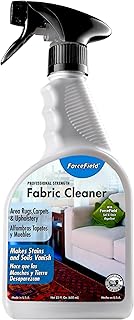
ForceField Professional Strength Fabric Cleaner
A concentrated, deep-penetrating formula built for water-safe fibers, and the one I’d reach for on ground-in traffic lanes rather than fresh drips. It’s strong enough that a colorfastness check on a hidden seam is genuinely worth the two minutes, but it clears aged soil without the repeated scrubbing that wrecks nap.
NOYATECH Couch Cleaner and Stain Remover Spray
The pet-household workhorse: 32 oz of coverage, a pet-safe formula, and enough volume to treat an entire three-seater in one session instead of rationing it. Support the bottle with both hands on long jobs, since a full 32 oz bottle gets heavy fast when you’re spraying overhead cushion backs.
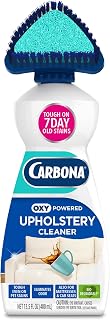
Carbona Oxy Powered Upholstery Cleaner with Brush and Sponge
The smartest packaging in the category — the included brush and sponge are correctly matched to the formula, so you’re not improvising with a dish brush that shears fiber tips. Oxygen-driven chemistry handles organic staining well and the no-residue claim holds up, which is why this is my default recommendation for a first-time DIY cleaner.
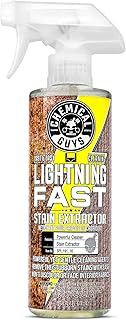
Chemical Guys Lightning Fast Carpet and Upholstery Stain Extractor
Detailing-grade chemistry that translates cleanly to furniture: spray, agitate gently, blot, repeat. The spray-and-blot workflow keeps moisture shallow, which makes it a good pick for thin woven fabrics over foam that you don’t want to soak.
Upholstery Dry Cleaning Foam
The lowest-risk option here by a wide margin. Because the foam carries very little free water, it’s the sensible choice for structured cushions, sofa backs, and delicate blends where wicking and watermarks are the real threat rather than the stain itself.
Frequently Asked Questions
Can I use one cleaner on the whole sofa?
Only if every panel shares the same cleaning code, which isn’t guaranteed on two-tone or mixed-material designs. Check the tag, then test on the back or underside of a skirt before committing to a visible surface.
Why does a stain reappear after the fabric dries?
That’s wicking. Liquid traveled down into the cushion, then carried dissolved soil back up to the surface as it evaporated. Use less product, blot with steady pressure instead of scrubbing, and speed up drying with a fan aimed across the cushion face.
Do these products shorten a sofa’s lifespan?
Used correctly, no — leaving soil in place is harder on fiber, since embedded grit acts as an abrasive every time someone sits down. The damage comes from over-wetting, aggressive brushing, and stacking incompatible chemistries on the same spot.
Are they safe around kids and pets?
Several here are formulated with that in mind, including the NOYATECH spray and the dry cleaning foam. Regardless of the label, ventilate the room and keep everyone off the cushion until it’s fully dry to the touch.
Final Thoughts
For most households, the Carbona Oxy kit is the best all-around buy — matched tools, honest residue performance, and low technique risk. Choose NOYATECH if pets and volume are your reality, and keep the Upholstery Dry Cleaning Foam on hand for delicate or structured panels where minimal moisture matters more than raw cleaning power.