Key takeaways
- Sone rating, read skeptically: A sone is a loudness unit, not a decibel; 1.0 sone is roughly the hum of a refrigerator, 2.0 sones is twice as intrusive. Manufacturers measure at 0.1″ static pressure, which almost no real duct run achieves, so assume your installed noise lands slightly above the label. Anything at or below 1.5 sones stays out of the way; above 2.0 and people stop using the fan.
- CFM matched to volume, not vibes: The workable rule is one CFM per square foot for bathrooms under 100 sq ft, with 50 CFM as the floor. Add capacity for tall ceilings, jetted tubs, or long, elbow-heavy duct runs, because every 90-degree turn eats airflow you paid for.
- Serviceability from below: Look for a grille that releases by spring clip or thumbscrew, a motor assembly that unplugs from a wiring compartment, and a blower wheel you can reach without pulling the housing. This single factor decides whether the fan gets cleaned annually or never.
- Durable materials in a wet room: Galvanized steel housings resist rust far better than painted mild steel, and a properly weighted backdraft damper prevents the flutter-and-slam that kills quiet operation. Acrylic diffusers survive steam and temperature swings without the yellowing you get from thin polystyrene.
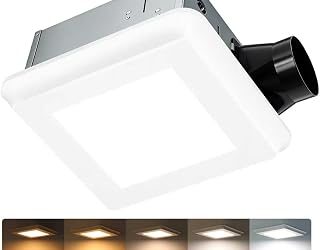
- Light comfort and control: Because the LEDs in these units are integrated and non-replaceable, treat the diode rating as the product’s lifespan. Prioritize diffused output over raw lumens, dimming for nighttime use, and selectable color temperature so you get warm light at night and neutral light for shaving or makeup.
What's inside
Most bathroom fans get chosen in about ninety seconds, usually while standing in a puddle of frustration after the old one starts howling. That’s a shame, because this is one of the few fixtures in a house that runs in a hot, humid, corrosive environment, gets touched only when it fails, and lives directly overhead — meaning every repair involves a ladder, an awkward reach, and a shower of dust in your face. The ergonomic and durability consequences of a bad pick don’t show up on day one. They show up in year three, when the bearing whine sets in and you realize the grille won’t come off without a putty knife.
This guide evaluates 2026’s strongest bathroom fan-and-light combinations through that longer lens: how quietly they run at real duct pressures, how the housings and dampers hold up to constant moisture cycling, how comfortable the light is on your eyes at 6 a.m., and — critically — how much of the unit you can service from below without crawling into an attic. Six models are compared, from budget retrofits to Panasonic’s engineering benchmark.
As an Amazon Associate we earn from qualifying purchases.



How to Choose a Bathroom Ceiling Fan With Light (2026)
- Sone rating, read skeptically: A sone is a loudness unit, not a decibel; 1.0 sone is roughly the hum of a refrigerator, 2.0 sones is twice as intrusive. Manufacturers measure at 0.1″ static pressure, which almost no real duct run achieves, so assume your installed noise lands slightly above the label. Anything at or below 1.5 sones stays out of the way; above 2.0 and people stop using the fan.
- CFM matched to volume, not vibes: The workable rule is one CFM per square foot for bathrooms under 100 sq ft, with 50 CFM as the floor. Add capacity for tall ceilings, jetted tubs, or long, elbow-heavy duct runs, because every 90-degree turn eats airflow you paid for.
- Serviceability from below: Look for a grille that releases by spring clip or thumbscrew, a motor assembly that unplugs from a wiring compartment, and a blower wheel you can reach without pulling the housing. This single factor decides whether the fan gets cleaned annually or never.
- Durable materials in a wet room: Galvanized steel housings resist rust far better than painted mild steel, and a properly weighted backdraft damper prevents the flutter-and-slam that kills quiet operation. Acrylic diffusers survive steam and temperature swings without the yellowing you get from thin polystyrene.
- Light comfort and control: Because the LEDs in these units are integrated and non-replaceable, treat the diode rating as the product’s lifespan. Prioritize diffused output over raw lumens, dimming for nighttime use, and selectable color temperature so you get warm light at night and neutral light for shaving or makeup.
The Best Bathroom Ceiling Fan With Light (2026)s Reviewed
Panasonic WhisperFit FV-0511VFL1
Panasonic’s Pick-A-Flow selector lets you dial 50, 80, or 110 CFM on site, which means you size the fan after seeing the actual duct run rather than guessing at the store. The DC motor and low-profile housing make this the model I’d install in a home I planned to keep — the bearing design and build quality are the reason these units are still quiet a decade in.
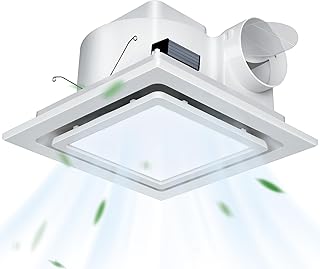
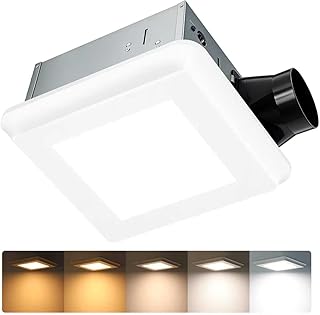
130 CFM Humidity Sensor Fan with 5CCT Light
The adjustable humidity sensor is the real ergonomic upgrade here: the fan runs when moisture demands it and shuts off on its own, eliminating the switch-flipping compromise that leaves mirrors fogged and drywall damp. At 1.0 sones with 130 CFM of capacity, it suits large or double-shower bathrooms, and the five color-temperature options cover both task lighting and late-night use.
Ultra Quiet 120 CFM Fan with 1000-Lumen LED
A 10″ × 10″ ceiling opening matches a large share of existing cutouts, making this one of the easier one-ladder-trip replacements on the list. The 1000-lumen output is genuinely bright for a mid-size bathroom, though I’d pair it with a dimmer if the room has light-colored tile that bounces glare.
Broan-NuTone 80 CFM Fan with Heater and 3-Level CCT
The integrated heater is a comfort feature with a wiring caveat: verify your circuit capacity and confirm the switch layout before ordering, since heater models draw substantially more current. Broan’s housings and damper hardware have a long track record in punishing conditions, and 1.5 sones is respectable for a unit doing three jobs.
110 CFM Black Round Fan with Light and Nightlight
The round black trim reads more like a recessed downlight than a vent, which matters in bathrooms where a white square grille breaks the ceiling plane. The dimmable main light plus low-level nightlight is the right control scheme for shared bathrooms — nobody gets blasted awake at 3 a.m.
Frequently Asked Questions
Can I replace a bathroom fan without attic access?
Often yes, if you choose a model whose housing installs through the ceiling opening and mounts to joists with brackets accessible from below. Retrofit-friendly units with common 10″ × 10″ footprints, like the Ultra Quiet 120 CFM, are the ones to shortlist.
How long should the fan run after a shower?
Twenty minutes past the end of the shower is the practical minimum for clearing residual moisture from grout and drywall. A humidity-sensing model or a simple timer switch handles this reliably, since nobody remembers to come back and turn it off.
How often does a fan need cleaning?
Pull the grille and vacuum the blower wheel once a year; lint loading is the leading cause of airflow loss and rising noise. Fans with tool-free grille release, including the 80 CFM brushed nickel combo, make this a five-minute job instead of a project.
What happens when the integrated LED dies?
On most combo units the LED module is not user-replaceable, so the light’s rated hours effectively set the fixture’s service life. Check the warranty terms on the light separately from the motor — they’re frequently different lengths.
Final Thoughts
For a long-term install where quiet operation and rebuildable hardware matter most, the Panasonic WhisperFit FV-0511VFL1 remains the reference point. If you want the fan to manage itself, the 130 CFM humidity-sensor model with 5CCT lighting is the smartest set-and-forget choice, while the Broan-NuTone heater unit earns its place in cold-climate bathrooms where warmth is worth the extra electrical work.