Key takeaways
- Seat depth and lumbar apex: Measure from the back of your knee to your tailbone and subtract about two inches. A seat deeper than that forces you to slide forward, which flattens the lumbar curve. The back’s supportive bulge should land at your beltline, not between your shoulder blades.
- Frame and joinery: Kiln-dried hardwood with corner blocking and dowelled or bolted joints resists the racking forces a reclining action generates. Stapled particleboard rails are the most common origin of a wobble that appears in year two.
- Foam density over initial softness: Look for high-resilience foam around 1.8 to 2.2 lb/ft³ in the seat. Lower-density fill feels generous on day one and takes a permanent impression once it has absorbed a few hundred hours of body weight.
- Mechanism type: Push-back designs have the fewest moving parts and the longest mechanical life. Lever mechanisms add positional control; power bases add infinite adjustment and a motor, transformer, and wiring harness that become the serviceable components.
- Upholstery wear profile: Top-grain leather develops patina; bonded and PU surfaces eventually delaminate at flex points along the seat edge and arm tops. Textured chenille and performance woven fabrics tolerate daily abrasion well but need a stain-resist treatment if the chair sees food and drink.
What's inside
Most recliner disappointment traces back to a mismatch, not a defect. A chair that felt plush in a showroom for ninety seconds can leave your hamstrings compressed and your lower back unsupported by minute forty, because seat depth, lumbar apex height, and the arc of the recline mechanism were never checked against the body sitting in it. The second failure point is quieter: hardware and foam degrade long before upholstery looks worn, so a chair can still photograph well while the seat has lost an inch of loft and the mechanism has developed play.
This guide evaluates recliners the way a fit-and-durability assessment would: frame construction, foam density and recovery, mechanism type and its wear profile, upholstery abrasion resistance, and the postural range each chair actually delivers. Six models are covered below, spanning compact manual push-backs to oversized power seating with heat and massage, with notes on who each geometry suits and where each design is likely to show age first.
As an Amazon Associate we earn from qualifying purchases.




How to Choose a Home Furniture Recliner (2026)
- Seat depth and lumbar apex: Measure from the back of your knee to your tailbone and subtract about two inches. A seat deeper than that forces you to slide forward, which flattens the lumbar curve. The back’s supportive bulge should land at your beltline, not between your shoulder blades.
- Frame and joinery: Kiln-dried hardwood with corner blocking and dowelled or bolted joints resists the racking forces a reclining action generates. Stapled particleboard rails are the most common origin of a wobble that appears in year two.
- Foam density over initial softness: Look for high-resilience foam around 1.8 to 2.2 lb/ft³ in the seat. Lower-density fill feels generous on day one and takes a permanent impression once it has absorbed a few hundred hours of body weight.
- Mechanism type: Push-back designs have the fewest moving parts and the longest mechanical life. Lever mechanisms add positional control; power bases add infinite adjustment and a motor, transformer, and wiring harness that become the serviceable components.
- Upholstery wear profile: Top-grain leather develops patina; bonded and PU surfaces eventually delaminate at flex points along the seat edge and arm tops. Textured chenille and performance woven fabrics tolerate daily abrasion well but need a stain-resist treatment if the chair sees food and drink.
The Best Home Furniture Recliners of 2026, Reviewed
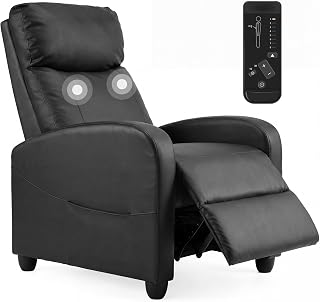
Homall PU Leather Recliner
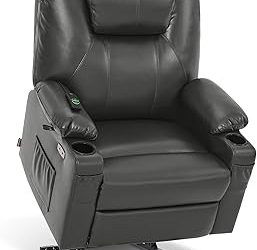
A tidy footprint and a straightforward mechanism make this the sensible pick for bonus rooms and apartments where wall clearance is tight, and the segmented lumbar bolstering holds the lower spine better than the price suggests. Treat the PU surface as a wear item: keep it out of direct sun and away from heat vents to slow the cracking that eventually shows along the seat front.
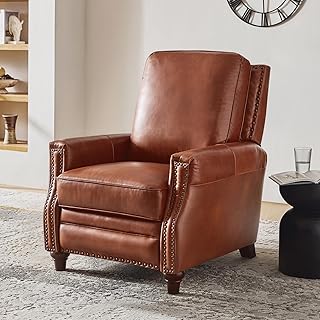
HULALA HOME Genuine Leather Push-Back Recliner
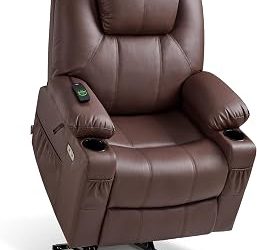
The longevity standout here is the combination of real leather and a push-back action with minimal linkage, meaning fewer parts to loosen and a hide that improves rather than degrades with use. The solid wood legs and firmer back angle suit anyone who wants a reading recline rather than a full horizontal drop.
FLEXISPOT Mochi Oversized 54″ Power Recliner
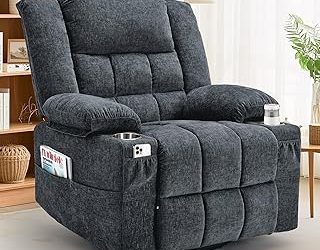
At 54 inches wide with a deep seat platform, this is genuinely scaled for big-and-tall users who bottom out in standard chairs, and the power base lets you dial in a supported mid-recline instead of choosing between upright and flat. The chenille resists surface abrasion well; the USB and Type-C ports make it a practical primary seat rather than an occasional one.
Ashley Boyington Zero Gravity Power Recliner
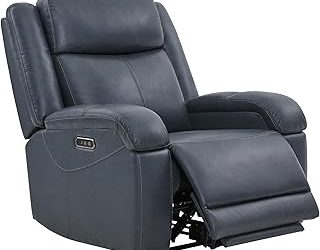
The zero-gravity position raises the knees above the heart and unloads spinal compression, which is the most therapeutically useful geometry on this list, and the adjustable headrest lets you correct cervical alignment independently of the backrest. Air massage and heat are welcome extras, though they are also the features most likely to need service, so the warranty terms matter here more than elsewhere.
Massage Recliner Chair, Ink Fabric
A well-judged middle path: fabric upholstery that breathes better than leather across long sessions, defined lumbar support, and vibration massage without the complexity of a full power base. The woven surface hides light wear effectively, making it a good fit for households where the chair gets used hard and daily.
Frequently Asked Questions
How much clearance does a recliner need behind it?
Traditional models need roughly four to twelve inches depending on the mechanism. Wall-hugger designs move the seat forward as the back tilts and typically clear in three to four inches, which is the safer assumption in a small room.
Is a power recliner worth the extra cost?
It is if you need incremental positioning or have limited core and shoulder strength to operate a lever. If you consistently use one or two positions, a manual mechanism will outlast the electronics and costs less to maintain.
What weight capacity should I look for?
Match capacity to the heaviest regular user with meaningful margin, since ratings are static and reclining generates dynamic loads. For anyone near a 250-pound limit, step up to an oversized frame with a wider seat platform.
How do I keep the seat from sagging?
Rotate seating position, avoid perching on the front edge, and vacuum the crevices so grit does not abrade the foam and deck fabric from below. If a removable cushion is offered, flipping it monthly will visibly extend its recovery.
Final Thoughts
For long-term durability with the least to go wrong, the HULALA HOME genuine leather push-back is the most defensible buy on this list. If postural relief is the priority, the Ashley Boyington’s zero-gravity range and adjustable headrest do the most measurable work, while the FLEXISPOT Mochi remains the clear choice for anyone who needs a wider, deeper seat than a standard recliner provides.