Key takeaways
- Detent plate quality: This is the single most wear-sensitive part on any miter saw. Look for machined metal stops with firm, audible engagement. A vague or spongy detent at 45 degrees means your miters will drift within months of steady use.
- Handle geometry and trigger reach: Vertical D-handles suit tall users and downward-pressure cuts; horizontal grips reduce wrist extension on repetitive crosscuts. Ambidextrous designs matter more than most buyers expect, especially in shops where the saw sits against a wall and you can only approach from one side.
- Fence height and squareness: Tall, adjustable fences support crown and wide stock upright. Check that the fence is machined flat rather than stamped, and confirm it stays square when you torque the material clamp against it.
- Cut-line indication: Shadow-line systems and lasers both work, but shadow projection never needs recalibration because it references the actual blade body. Lasers require periodic adjustment and lose reliability as mounting hardware loosens.
- Weight strategy: Decide whether the saw lives on a stand or travels. Heavy cast bases damp vibration and improve repeatability; lighter magnesium and composite builds save your back but demand more careful setup to stay accurate.
What's inside
Miter joints punish equipment. A door casing that closes tight at 45 degrees and a picture frame with four hairline seams both depend on a saw that returns to the same angle after the hundredth cut, not just the first. Most buyers discover the gap the hard way: the detent plate develops slop, the fence shifts a fraction under clamp pressure, the pivot bearing loosens, and suddenly every corner needs shims and filler. The saw still cuts. It just stopped cutting accurately, which for miter work is the same as being broken.
This guide looks at miter saws through two lenses that matter over years rather than weekends: ergonomics, meaning how the machine handles across a long session without wearing out your shoulder or your patience, and durability, meaning which components hold tolerance under real workshop cycling. Below are the models worth considering in 2026 for furniture builders, trim carpenters, and serious hobbyists who cut joints that have to close.
As an Amazon Associate we earn from qualifying purchases.



How to Choose a/an The Best Saw For Cutting Miter Joints Is The (2026)
- Detent plate quality: This is the single most wear-sensitive part on any miter saw. Look for machined metal stops with firm, audible engagement. A vague or spongy detent at 45 degrees means your miters will drift within months of steady use.
- Handle geometry and trigger reach: Vertical D-handles suit tall users and downward-pressure cuts; horizontal grips reduce wrist extension on repetitive crosscuts. Ambidextrous designs matter more than most buyers expect, especially in shops where the saw sits against a wall and you can only approach from one side.
- Fence height and squareness: Tall, adjustable fences support crown and wide stock upright. Check that the fence is machined flat rather than stamped, and confirm it stays square when you torque the material clamp against it.
- Cut-line indication: Shadow-line systems and lasers both work, but shadow projection never needs recalibration because it references the actual blade body. Lasers require periodic adjustment and lose reliability as mounting hardware loosens.
- Weight strategy: Decide whether the saw lives on a stand or travels. Heavy cast bases damp vibration and improve repeatability; lighter magnesium and composite builds save your back but demand more careful setup to stay accurate.
The Best The Best Saw For Cutting Miter Joints Is The (2026)s Reviewed
DEWALT DWS780 12-Inch Double Bevel Sliding
The XPS shadow light is the standout ergonomic feature here: you align the cut to a real blade shadow rather than squinting at a projected line, which cuts fatigue dramatically over a long day of picture-frame or casing work. Double bevel means you stop flipping stock, and the sliding rails and bearings on this platform have a long field record of holding tolerance.
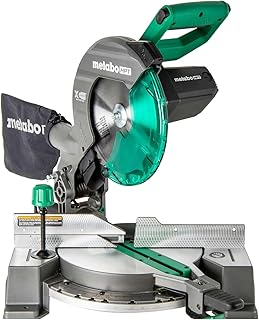
Metabo HPT C10FCG2 10-Inch Single Bevel
At roughly 24 pounds this is the easiest saw here to lift onto a bench single-handed, and the Xact Cut shadow line brings premium alignment to a budget chassis. It is a non-slider, so wide stock is out, but for frame stock and narrow furniture parts the compact head travel actually improves control.
DOVAMAN 12-Inch Dual-Bevel Sliding
Nine positive stops and genuine ambidextrous handle operation make this a sensible pick for shops where the saw is boxed in and you cannot always stand on the traditional side. The 4.2 x 13-inch capacity handles apron and rail stock comfortably, though I would verify factory bevel calibration before your first real joint.
DOVAMAN 10-Inch Sliding, Multi-Material
Dual 5000/3200 RPM speeds are the practical draw: the lower setting keeps aluminum and plastics from grabbing and melting, which matters for mixed-material furniture work. Three included TCT blades let you dedicate one to fine wood miters instead of dulling a general-purpose blade on everything.
DEWALT DWS715 12-Inch Single Bevel
A stripped-down, dependable workhorse with the tall fence and stainless detent plate that make DEWALT miters repeatable. No slider and no shadow light, so you trade convenience for a lower-maintenance machine with fewer components that can develop play.
Frequently Asked Questions
Do I need a sliding saw for miter joints?
Not for narrow stock. If your joints are in frames, trim, or table aprons under about 6 inches wide, a non-slider is stiffer and holds accuracy longer. Sliding rails are for wide shelving and baseboard.
Why do my 45-degree cuts still leave gaps?
Usually the blade, not the angle. A 40-tooth general blade tears end grain on miters; switch to 60 to 80 teeth. Also check the fence for square and confirm your stock is flat before blaming the detent.
Is 10-inch or 12-inch better?
Ten-inch blades deflect less and run truer, which favors precision joinery. Twelve-inch blades buy vertical capacity for crown and tall stock. For furniture miters specifically, 10-inch is often the more accurate choice.
How often should I recalibrate?
Check 90 and 45 degrees with a reliable square monthly under regular use, and immediately after any transport. Five minutes of verification prevents an afternoon of gap-filling.
Final Thoughts
For serious miter work, the DEWALT DWS780 earns its price through the XPS shadow line and proven long-term rigidity. The Metabo HPT C10FCG2 is the smartest value for anyone cutting frame-scale joints who wants shadow-line alignment without the weight, and the DOVAMAN 12-Inch Dual-Bevel is the pick if ambidextrous access and wide capacity drive your layout.