Key takeaways
- Grip circumference and trigger reach: Wrap your hand around the handle before committing. A grip over roughly 5 inches around forces smaller hands into a pinch hold, which kills control on overhead work. Feathering the trigger should be possible with the pad of your index finger, not the second knuckle.
- Vibration transfer: Twin-hammer mechanisms distribute impact across two dogs, producing smoother delivery and noticeably less wrist buzz than single-hammer designs at comparable torque. If you work in long sessions, this matters more than a few extra foot-pounds.
- Housing material and internal support: Composite bodies cut weight and insulate your hand from cold air, while magnesium and aluminum shells shrug off drops better. Look for ball or roller bearings on the anvil rather than plain bushings; bearings keep the anvil concentric far longer under side load.
- Air consumption versus your compressor: Most 1/2-inch guns want 4 to 7 CFM at 90 PSI. A pancake compressor with a 6-gallon tank will run a high-draw wrench for seconds, then leave you waiting. Match the tool to your air supply, not your ambition.
- Noise and serviceability: Anything under about 90 dBA is genuinely easier to live with in a closed garage. Check that rebuild kits, vanes, and O-rings are sold separately; a tool you can service at year five is cheaper than two tools.
What's inside
Torque figures dominate the spec sheets on impact wrenches, and they are the least useful number for predicting whether you will still like the tool in two years. Advertised maximum torque is usually a nut-busting burst measured under ideal lab conditions with a fully charged line. What actually wears you down is the shape of the grip against your palm, how much of the hammer’s recoil travels into your wrist, and whether the housing survives the third time it rolls off a bench onto concrete. Buyers routinely spend on power they cannot supply with a small compressor, then discover the tool is uncomfortable at the exact angle their work demands.
This guide looks at the current crop of 1/2-inch pneumatic impact wrenches through two lenses: ergonomics, meaning grip circumference, trigger reach, balance point, and vibration transfer; and durability, meaning housing construction, hammer mechanism design, bushing versus bearing support, and how realistically the tool can be rebuilt rather than replaced. Whether you are breaking loose seized suspension hardware, disassembling metal furniture frames, or working through a driveway brake job, the picks below are ranked on how they hold up in the hand and over time.
As an Amazon Associate we earn from qualifying purchases.

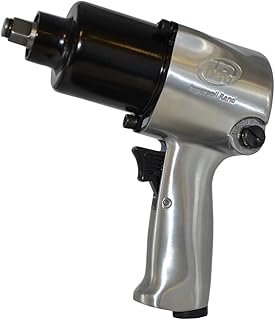


How to Choose an Air Compressor Impact Wrench (2026)
- Grip circumference and trigger reach: Wrap your hand around the handle before committing. A grip over roughly 5 inches around forces smaller hands into a pinch hold, which kills control on overhead work. Feathering the trigger should be possible with the pad of your index finger, not the second knuckle.
- Vibration transfer: Twin-hammer mechanisms distribute impact across two dogs, producing smoother delivery and noticeably less wrist buzz than single-hammer designs at comparable torque. If you work in long sessions, this matters more than a few extra foot-pounds.
- Housing material and internal support: Composite bodies cut weight and insulate your hand from cold air, while magnesium and aluminum shells shrug off drops better. Look for ball or roller bearings on the anvil rather than plain bushings; bearings keep the anvil concentric far longer under side load.
- Air consumption versus your compressor: Most 1/2-inch guns want 4 to 7 CFM at 90 PSI. A pancake compressor with a 6-gallon tank will run a high-draw wrench for seconds, then leave you waiting. Match the tool to your air supply, not your ambition.
- Noise and serviceability: Anything under about 90 dBA is genuinely easier to live with in a closed garage. Check that rebuild kits, vanes, and O-rings are sold separately; a tool you can service at year five is cheaper than two tools.
The Best Air Compressor Impact Wrenches (2026), Reviewed
Ingersoll Rand 2135QXPA
The benchmark for balanced high-output work, delivering up to 1,100 ft-lbs from a compact magnesium-alloy housing that keeps the center of mass close to your wrist. The quiet-technology muffler and cushioned grip make extended suspension jobs far less punishing than the raw numbers suggest, and parts availability is excellent.
AIRCAT 1150
At 89 dBA it is one of the calmest serious impacts you can buy, and the composite shell keeps hand fatigue low without feeling flimsy. The twin-hammer mechanism produces 900 ft-lbs of max torque with a smooth ramp-up that gives you real control on fasteners you would rather not shear.
Ingersoll Rand 231C
A long-serving 600 ft-lb workhorse with a pressure-fed lubrication system that explains why so many of these are still running after a decade in busy shops. The all-metal body is heavier than composite rivals, so it suits bench and wheel-well work more than sustained overhead use.
AEROPRO TOOLS 1/2-Inch Twin Hammer
Strong value for occasional use, pairing a twin-hammer setup and a light chassis with a 1200 ft-lb burst rating that should be read as peak loosening figure rather than working torque. The grip is slim and comfortable, though the finish and internal tolerances do not match the premium tier.
ACDelco ANI405A 5-Speed Kit
The five-position regulator is the standout here, letting you dial output well below the 500 ft-lb ceiling for delicate hardware and furniture fasteners. Twin-hammer smoothness plus a bundled socket set makes it a sensible first pneumatic impact for a home workshop.
Frequently Asked Questions
What size compressor do I actually need?
Aim for a compressor rated at or above the tool’s CFM requirement at 90 PSI, with at least a 20-gallon tank for continuous work. Smaller tanks will run a gun in short bursts, which is fine for a single wheel but frustrating for a full brake job.
Are 1200 to 1500 ft-lb ratings believable?
Treat them as maximum reverse breakaway figures under optimal air supply. Sustained working torque is typically half to two-thirds of the headline number, which is why a well-built 600 ft-lb tool often outperforms a cheap 1500 ft-lb claim.
Composite or metal housing for longevity?
Composite resists corrosion, insulates against cold, and cuts weight, which reduces fatigue-related mistakes. Metal handles impact damage and heat better. For most home users, composite ergonomics win; for daily commercial abuse, metal earns its extra ounces.
How much maintenance do these need?
A few drops of pneumatic tool oil into the air inlet before each session, and a grease-fitting service on the hammer case every few months. Skipping lubrication is the single most common cause of premature vane and hammer wear.
Final Thoughts
For the best combination of comfort, output, and long-term serviceability, the Ingersoll Rand 2135QXPA is the pick worth stretching for, with the AIRCAT 1150 close behind if quiet operation and low hand fatigue top your list. If your work is more occasional and you want adjustable control for lighter fasteners, the ACDelco ANI405A kit covers home workshop needs without overwhelming a modest compressor.