Key takeaways
- Sustained CFM at 90 PSI: This is the number that matters. A 3/8″ impact driver typically wants 3+ SCFM continuous; a 1/2″ impact wrench wants considerably more. Compare delivered airflow, not max PSI, and expect stop-and-start work with anything under 3 SCFM.
- Tank volume as a buffer: Larger tanks don’t create air, they store it. A 6- to 8-gallon tank absorbs short bursts so the motor cycles less often, which reduces both heat stress on the pump and the fatigue of constant noise.
- Carry ergonomics: Look at where the handle sits relative to the tank’s center of mass. Off-center handles force wrist supination and a leaned gait. Wheeled units solve weight but add a lifting hazard at curbs and tailgates.
- Noise you can live with: Anything above roughly 80 dBA demands hearing protection and drains your concentration. Ultra-quiet models in the 56 to 60 dBA range change how willingly you reach for the tool.
- Pump and tank longevity: Oil-free pumps eliminate maintenance but wear faster under heavy cycling. Cast-iron and aluminum tanks resist internal corrosion better than thin steel, and a daily drain habit matters more than any spec sheet.
What's inside
Impact tools punish a compressor in a way finish nailers never do. Every trigger pull on an impact wrench dumps air in a sustained burst, and a tank that recovers slowly leaves you standing there listening to a motor labor while the fastener sits half-seated. The frustration most buyers run into isn’t horsepower on the box — it’s the gap between a tank’s rated pressure and how much air it can actually deliver, minute after minute, at the working end of the hose. Add in the physical toll of hauling an awkward 40-pound unit up basement stairs or across a driveway, and the wrong choice becomes a tool you quietly stop using.
This guide looks at portable compressors through two lenses I care about most after years of evaluating jobsite gear: how the machine treats your body, and how long it survives being treated badly. That means handle geometry and balance, noise levels you can tolerate for a full afternoon, pump design and its service life, tank material and corrosion resistance, and whether the CFM figure holds up under real impact-tool duty cycles. Below are six units worth considering for garage, shop, and light-duty automotive work in 2026.
As an Amazon Associate we earn from qualifying purchases.



How to Choose a/an Air Compressor For Impact Tools (2026)
- Sustained CFM at 90 PSI: This is the number that matters. A 3/8″ impact driver typically wants 3+ SCFM continuous; a 1/2″ impact wrench wants considerably more. Compare delivered airflow, not max PSI, and expect stop-and-start work with anything under 3 SCFM.
- Tank volume as a buffer: Larger tanks don’t create air, they store it. A 6- to 8-gallon tank absorbs short bursts so the motor cycles less often, which reduces both heat stress on the pump and the fatigue of constant noise.
- Carry ergonomics: Look at where the handle sits relative to the tank’s center of mass. Off-center handles force wrist supination and a leaned gait. Wheeled units solve weight but add a lifting hazard at curbs and tailgates.
- Noise you can live with: Anything above roughly 80 dBA demands hearing protection and drains your concentration. Ultra-quiet models in the 56 to 60 dBA range change how willingly you reach for the tool.
- Pump and tank longevity: Oil-free pumps eliminate maintenance but wear faster under heavy cycling. Cast-iron and aluminum tanks resist internal corrosion better than thin steel, and a daily drain habit matters more than any spec sheet.
The Best Air Compressor For Impact Tools (2026)s Reviewed
Metabo HPT EC914S 6-Gallon Pancake
At 4 CFM and 200 PSI, this is the strongest performer here for genuine impact-tool duty, with enough stored pressure to feed a small impact wrench without constant recovery pauses. The roll-cage framing protects the gauges from drops, and the low pancake profile keeps the load close to your leg during a carry.
DEWALT DWFP55126 6-Gallon Pancake
A proven workhorse with a high-efficiency motor that starts reliably in cold garages, delivering 2.6 SCFM at 90 PSI — adequate for impact drivers and intermittent wrench work. The console cover and rubber feet have held up well in the field, and the maintenance-free pump removes any oil-change routine.
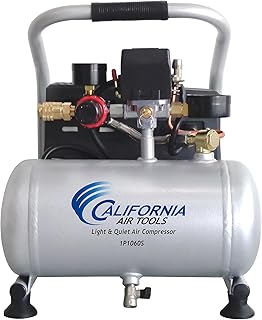
California Air Tools CAT-1P1060S
At 56 dBA this is quiet enough for indoor use without ear protection, and the featherweight 1-gallon build is the easiest single-hand carry in the group. Understand its limits, though: it’s built for brad nailers and inflation, not sustained impact work.
DEWALT DWFP55130 Trim Compressor
A 200-PSI ceiling in a genuinely quiet, compact package makes this a smart pick for finish carpentry and tight interior spaces. The small tank means frequent cycling under heavy air draw, so treat it as a precision tool rather than an impact-wrench companion.
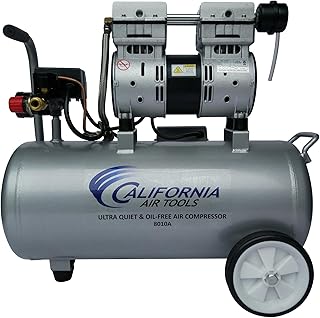
California Air Tools 8010A
The 8-gallon aluminum tank resists rust from condensate better than steel, and 60 dBA operation makes long sessions far less punishing. Wheels handle the weight across flat ground well, though the low center of gravity still requires a proper two-handed lift into a vehicle.
Frequently Asked Questions
Can a pancake compressor really run an impact wrench?
For short bursts on lug nuts or suspension bolts, yes — particularly the higher-CFM models. For continuous work, you’ll wait on recovery cycles, which is why larger stationary units exist.
Does a higher max PSI mean more power at the tool?
No. Higher PSI stores more air in the same tank, extending run time between cycles, but your tool still operates at its regulated pressure. CFM determines whether it performs.
Are oil-free pumps a durability compromise?
Somewhat. They run hotter and wear sooner under heavy cycling, but for intermittent home and garage use the tradeoff for zero maintenance is usually worth it.
How do I extend the tank’s life?
Drain condensate after every session. Trapped moisture corrodes tanks from the inside out and is the most common cause of premature failure.
Final Thoughts
For actual impact-tool work, the Metabo HPT EC914S is the clear choice thanks to its 4 CFM output and protective frame, with the DEWALT DWFP55126 a close second for its cold-weather reliability and balanced carry. If noise and long working sessions are your priority, the California Air Tools 8010A delivers the best comfort-to-capacity ratio of the group.