Key takeaways
- Tooth geometry: For crosscutting trim, an ATB or modified ATB profile generally provides a cleaner exit cut than an aggressive ripping pattern. TCG teeth can be useful for laminates, plastics, and composite materials.
- Tooth count: Blades with 80 to 120 teeth are well suited to finish work. More teeth can improve edge quality, but they also remove less material per tooth and may cut more slowly through thick stock.
- Kerf and motor load: A thin-kerf blade can reduce resistance on compact saws, while a full-kerf blade may feel more rigid on powerful machines. Match the blade to the saw’s rated diameter and arbor.
- Carbide and durability: Larger carbide tips can usually be sharpened more times and tolerate occasional embedded grit better. Anti-vibration slots or a stable plate also help maintain accuracy over long projects.
- Material compatibility: Confirm whether you are cutting solid wood, painted trim, MDF, PVC, laminate, or composite boards. A blade optimized for clean wood crosscuts is not automatically the best choice for every manufactured material.
What's inside
Trim work exposes every weakness in a saw blade. A blade that is merely “sharp” can still leave chipped veneer, fuzzy crosscuts, heat marks, or a shoulder that needs excessive sanding. The challenge is finding a blade that balances tooth count, carbide quality, stability, and kerf width without making the saw work harder than necessary.
This guide focuses on blades suited to baseboard, casing, crown molding, furniture edging, and other finish carpentry. The recommendations emphasize clean shoulders, predictable tracking, manageable noise and vibration, and durability under repeated cuts—not just an impressive tooth-count figure.
As an Amazon Associate we earn from qualifying purchases.



How to Choose a Miter Saw Blade For Trim (2026)
- Tooth geometry: For crosscutting trim, an ATB or modified ATB profile generally provides a cleaner exit cut than an aggressive ripping pattern. TCG teeth can be useful for laminates, plastics, and composite materials.
- Tooth count: Blades with 80 to 120 teeth are well suited to finish work. More teeth can improve edge quality, but they also remove less material per tooth and may cut more slowly through thick stock.
- Kerf and motor load: A thin-kerf blade can reduce resistance on compact saws, while a full-kerf blade may feel more rigid on powerful machines. Match the blade to the saw’s rated diameter and arbor.
- Carbide and durability: Larger carbide tips can usually be sharpened more times and tolerate occasional embedded grit better. Anti-vibration slots or a stable plate also help maintain accuracy over long projects.
- Material compatibility: Confirm whether you are cutting solid wood, painted trim, MDF, PVC, laminate, or composite boards. A blade optimized for clean wood crosscuts is not automatically the best choice for every manufactured material.
The Best Miter Saw Blade For Trim (2026)s Reviewed
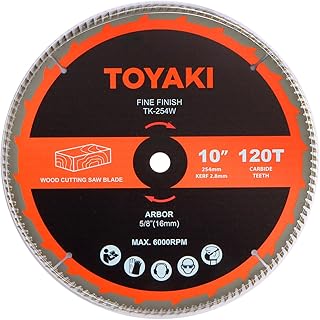
10-Inch 120-Tooth Fine-Finish Blade
This high-tooth-count 10-inch blade is aimed squarely at delicate crosscuts where minimizing splintering matters more than speed. Its 5/8-inch arbor suits many common miter, table, and circular saws, but verify compatibility before installation; on a properly aligned saw, it should be a strong choice for painted casing and visible furniture edges.
WEN BL1080 10-Inch 80-Tooth Blade
The WEN BL1080 takes a more practical approach with 80 carbide-tipped teeth, offering a useful compromise between finish quality and cutting rate. It is particularly appealing for homeowners who need one dependable blade for repeated trim cuts rather than an ultra-specialized blade that feels slow on thicker stock.
10-Inch 120-Tooth TCG Aluminum-Working Blade
With a TCG tooth design, this blade is the most versatile option for users who cut beyond ordinary lumber. It can be a sensible fit for aluminum, plastic, laminate, and composite materials as well as fine woodwork, although material-specific guidance and safe cutting procedures should always take priority over tooth count.
DEWALT DWA112100 12-Inch 100-Tooth Blade
The DEWALT DWA112100 is a robust choice for 12-inch miter saw owners who want a fine-finish blade from an established tool brand. Its 100 ultra-sharp carbide teeth should produce clean trim crosscuts while retaining enough cutting efficiency for larger molding profiles, provided the saw is properly supported and adjusted.
12-Inch 100-Tooth ATB TCT Blade
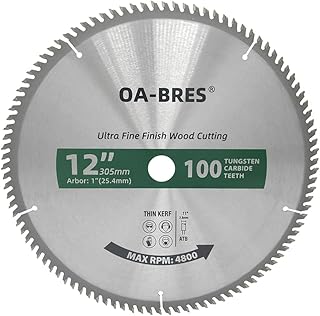
This 12-inch ATB blade emphasizes smooth wood cutting with a 1-inch arbor and a dense tooth pattern. It is best suited to users who prioritize a refined edge on wider trim and furniture components, but its arbor specification makes careful saw compatibility checking essential.
Frequently Asked Questions
Is a higher tooth count always better for trim?
No. More teeth can reduce breakout, but they may cut slowly, produce more heat, and clear dust less efficiently. An 80-tooth blade is often the better all-around option, while a 100- or 120-tooth blade makes sense for highly visible finish cuts.
Should I use a 10-inch or 12-inch blade?
Use only the diameter specified by your saw manufacturer. A 12-inch blade is not an upgrade for a 10-inch saw; diameter, arbor size, guard clearance, and maximum RPM all need to match.
Why are my trim cuts still splintering with a fine blade?
Blade selection is only one factor. Check that the blade is sharp, the fence is square, the workpiece is firmly supported, and the saw is not being pushed through the cut. Cutting with the finished face positioned appropriately can also reduce visible tear-out.
Can one blade cut wood, plastic, and aluminum?
Some TCG blades are designed for a broader material range, but “multi-material” does not mean universally suitable. Follow the blade manufacturer’s instructions, confirm the saw’s capability, and never assume a wood-only blade is safe or effective for metal.
Final Thoughts
For the cleanest delicate crosscuts, the 10-Inch 120-Tooth Fine-Finish Blade is the precision-focused pick. The WEN BL1080 is the more balanced everyday option, while the DEWALT DWA112100 stands out for owners of larger 12-inch saws who want durable, polished trim cuts.