Key takeaways
- Duty rating vs. real load: Duty ratings cover you plus tools plus materials. Type IA (300 lb) suits most homeowners; Type IAA (375 lb) and 500-pound-rated models buy you stiffness, not just capacity, which translates directly into less lateral sway at the top step.
- Step depth and edge profile: Anything under 3 inches of usable tread concentrates pressure across the midfoot. Look for deep, ribbed, slip-resistant steps with a rolled or braced front edge. A platform-style top step is the single biggest comfort upgrade for work lasting more than a few minutes.
- Fiberglass or aluminum: Fiberglass is non-conductive, holds rail stiffness better under repeated flex, and resists UV-driven surface chalking reasonably well when stored indoors. Aluminum wins on weight, which matters if you carry the ladder up stairs or reposition it constantly.
- Joint and brace hardware: Check how the rear rails attach to the top cap and how the spreader braces lock. Heavy-gauge steel spreaders with a positive stop stay tight far longer than thin folded brackets, and slop at that joint is what makes an aging ladder feel unsafe.
- Feet and top cap utility: Wide, replaceable slip-resistant shoes protect finished floors and grip decking. A molded top cap with tool slots and a pail shelf keeps you from over-reaching, which is the root cause of most household ladder falls.
What's inside
A six-foot step ladder gets used more than almost any other tool in a house, and it fails in ways people rarely anticipate. The problem is seldom catastrophic collapse. It’s the slow accumulation of annoyances: a top cap that flexes when you lean, narrow steps that dig into the arch of your foot after ten minutes of ceiling work, rivet joints that develop a quarter-inch of play by year three, and rear rails that hum under a 200-pound adult carrying a gallon of paint. Buyers shop by height and price, then live with the ergonomics for a decade.
This guide evaluates six-foot ladders on the two factors that actually determine long-term satisfaction: how the ladder loads your body during sustained work, and how its joints and rails hold tolerance over hundreds of open-close cycles. I’ve weighted step geometry, hinge construction, spreader-brace design, and rail stiffness above marketing specs, and I note where a lighter ladder is worth the tradeoff in perceived rigidity.
As an Amazon Associate we earn from qualifying purchases.


How to Choose a 6-Foot Ladder (2026)
- Duty rating vs. real load: Duty ratings cover you plus tools plus materials. Type IA (300 lb) suits most homeowners; Type IAA (375 lb) and 500-pound-rated models buy you stiffness, not just capacity, which translates directly into less lateral sway at the top step.
- Step depth and edge profile: Anything under 3 inches of usable tread concentrates pressure across the midfoot. Look for deep, ribbed, slip-resistant steps with a rolled or braced front edge. A platform-style top step is the single biggest comfort upgrade for work lasting more than a few minutes.
- Fiberglass or aluminum: Fiberglass is non-conductive, holds rail stiffness better under repeated flex, and resists UV-driven surface chalking reasonably well when stored indoors. Aluminum wins on weight, which matters if you carry the ladder up stairs or reposition it constantly.
- Joint and brace hardware: Check how the rear rails attach to the top cap and how the spreader braces lock. Heavy-gauge steel spreaders with a positive stop stay tight far longer than thin folded brackets, and slop at that joint is what makes an aging ladder feel unsafe.
- Feet and top cap utility: Wide, replaceable slip-resistant shoes protect finished floors and grip decking. A molded top cap with tool slots and a pail shelf keeps you from over-reaching, which is the root cause of most household ladder falls.
The Best 6-Foot Ladders of 2026, Reviewed
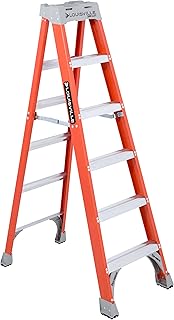
Louisville FS1506 Fiberglass Step Ladder (Type IA, 300 lb)
This is the benchmark for straightforward homeowner duty: molded top with pail shelf, ribbed steps, and rail sections that stay quiet under a single occupant. If your ladder lives in a garage and comes out a dozen times a year, the FS1506 will outlast the house’s paint job.
Louisville FS1406HD Fiberglass Step Ladder (Type IAA, 375 lb)
The heavy-duty version adds meaningful rail thickness and beefier bracing, and you feel it as reduced twist when you work off-center or reach sideways. Worth the extra pounds for anyone doing regular trim, drywall, or fixture work.
Louisville FM1406HD Twin Front Step Ladder (Type IAA, 375 lb)
Twin front means both sides are climbable, which eliminates the awkward repositioning that leads to over-reaching, and lets two people work opposite faces. The symmetrical frame is also inherently more rigid than a front-and-rail design.
Little Giant Flip-N-Lite 6-ft Aluminum Stepladder (Type IA, 300 lb)
The lightest genuinely comfortable option here, with unusually wide anti-slip steps and a big standing platform that makes overhead work far less fatiguing. Note that aluminum conducts, so keep it away from live electrical work.
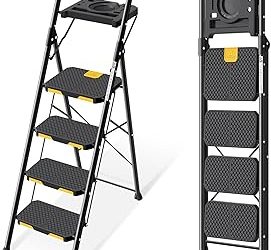
6-Foot Fiberglass Platform Step Ladder (Type IA, 500 lb)
The 500-pound rating buys you a near-total absence of flex plus a full standing platform, which is the combination pros choose for long stationary tasks. Heavy to carry, but the most stable-feeling six-footer in this group.
Frequently Asked Questions
How high can I actually reach on a six-foot ladder?
Figure roughly 10 feet of comfortable working reach for an average adult standing on the second step from the top. Never stand on the top cap of a standard step ladder.
Do fiberglass ladders wear out?
They degrade rather than break. Prolonged sun exposure causes fiber bloom on the rails, which is a cosmetic and skin-irritation issue first, a strength issue much later. Store it indoors and it’s effectively a lifetime tool.
Is a platform ladder worth the extra weight?
If your typical job lasts more than five minutes in one spot, yes. The reduction in foot and calf fatigue is substantial compared with standing on a narrow rung.
How do I keep the joints tight?
Open and close it fully rather than half-folding it, wipe grit off the spreader braces, and check hardware torque annually. Most developed play comes from debris and partial cycling, not from load.
Final Thoughts
For most homes, the Louisville FS1506 is the sensible default and the FS1406HD is the upgrade worth paying for if you work off a ladder often. If comfort and portability matter more than absolute rigidity, the Little Giant Flip-N-Lite is the one you’ll actually reach for.