Key takeaways
- Mounting depth versus clearance: Measure from your ceiling panel to the top of the tallest person who walks under it, then subtract at least four inches of safety margin. Flush-mount and ultra-slim housings in the 7-inch range keep blade tips out of head-strike range in trailers with 78-inch interior height.
- Motor construction: Brushless DC motors run cooler, draw less current at low speed, and avoid the brush dust that eventually contaminates bearings. Sealed bearings matter more in an RV than in a house because road vibration works lubricant out of open designs.
- Vibration resistance at the hub: Look for blades secured with threaded fasteners and lock washers rather than snap-fit tabs. A hub that loosens by a quarter turn introduces wobble, and wobble accelerates bearing wear in a feedback loop.
- Control reach and feel: Touch panels mounted on the fixture body require standing up; a remote does not. If you choose a remote, confirm it is a discrete-button unit rather than a membrane pad, since membrane overlays crack in cold storage and delaminate in heat.
- Light separation: The best designs let you run air without light. Combined circuits force you to choose, and a diffused warm LED at low output serves a sleeping cabin far better than a bright cool panel aimed straight down.
What's inside
Anyone who has spent a summer night in a travel trailer knows the problem: air stops moving the moment the shore power goes off. A 12V ceiling fan should solve that, but the aftermarket is crowded with fixtures borrowed from residential lighting, hung on mounts never intended to absorb road vibration, and wired with lamp-gauge conductors that sag under continuous draw. Add a light kit and the failure points multiply. Bearings dry out, blade irons loosen at the hub, and lens clips fatigue until the diffuser rattles loose somewhere on a washboard forest road.
This guide approaches the category from a different angle than most: how these fixtures hold up under vibration, thermal cycling, and daily hand contact. I look at mounting depth against typical RV ceiling clearance, motor type and its duty cycle, switch and remote ergonomics for someone reaching up from a bunk, and whether the light output actually serves the space rather than glaring into it. Six units are covered below, spanning low-profile paddle fans, roof vent fans with integrated lighting, and a compact bunk combo.
As an Amazon Associate we earn from qualifying purchases.


How to Choose a/an 12v Rv Ceiling Fan With Light (2026)
- Mounting depth versus clearance: Measure from your ceiling panel to the top of the tallest person who walks under it, then subtract at least four inches of safety margin. Flush-mount and ultra-slim housings in the 7-inch range keep blade tips out of head-strike range in trailers with 78-inch interior height.
- Motor construction: Brushless DC motors run cooler, draw less current at low speed, and avoid the brush dust that eventually contaminates bearings. Sealed bearings matter more in an RV than in a house because road vibration works lubricant out of open designs.
- Vibration resistance at the hub: Look for blades secured with threaded fasteners and lock washers rather than snap-fit tabs. A hub that loosens by a quarter turn introduces wobble, and wobble accelerates bearing wear in a feedback loop.
- Control reach and feel: Touch panels mounted on the fixture body require standing up; a remote does not. If you choose a remote, confirm it is a discrete-button unit rather than a membrane pad, since membrane overlays crack in cold storage and delaminate in heat.
- Light separation: The best designs let you run air without light. Combined circuits force you to choose, and a diffused warm LED at low output serves a sleeping cabin far better than a bright cool panel aimed straight down.
The Best 12v Rv Ceiling Fan With Light (2026)s Reviewed
DC 12V 42-Inch Low Profile Flush Mount RV Ceiling Fan
A 42-inch sweep is generous for a rig, and the flush-mount body keeps the whole assembly tight to the ceiling so blade tips stay clear of shoulders in a walkway. The DC motor stays genuinely quiet at mid speed, which is where you will leave it, and the black blade finish hides the fine dust that shows up on light-colored paddles.
Upgraded Remote Control RV Roof Vent Fan with Rain Sensor
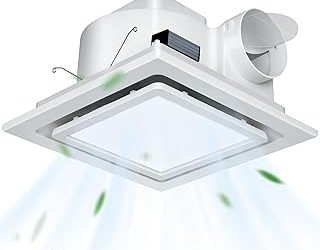
Ten speeds sounds like marketing until you use the bottom three, which move air without the low-frequency drone that keeps light sleepers awake. The rain sensor closes the lid on its own, and reversible airflow lets you pull cooking heat out rather than only pushing air down.
RV Roof Vent Fan 14×14 with 4-Color LED Ambiance Light
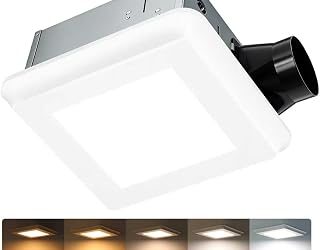
This one earns its place on lighting design: four selectable color temperatures mean you can run a low amber setting at night instead of the harsh daylight white most vent fans default to. Build quality at the lid hinge is reassuringly solid, and the remote handles both fan and light without menu diving.
Lumitronics 12V LED Bunk Light and 2-Speed Fan Combo
Purpose-built for the space where a ceiling fan cannot fit, this compact combo puts moving air and a reading light within arm’s reach of a bunk pillow. The removable lens makes cleaning trivial, and the low-draw LEDs will not meaningfully dent a battery bank overnight.
14-Inch RV Roof Vent Fan with LED Light, 4-Speed Reversible
A straightforward deluxe vent fan with touch controls on the trim ring, which suits anyone who dislikes hunting for a lost remote. Four speeds and reversible airflow cover the practical range, and the manual white dome means a dead motor still leaves you a working vent.
Frequently Asked Questions
How much current does a 12V RV ceiling fan draw?
Most brushless DC paddle fans pull roughly 0.5 to 2 amps depending on speed, and vent fans land in a similar band. Running one overnight on low typically costs less than 20 amp-hours, well within a modest lithium or dual AGM setup.
Can I install one where a residential fan bracket already exists?
Rarely without modification. RV ceilings are thin laminate over framing, so locate an actual joist or add a backing plate. A fan hung from luan alone will work the fasteners loose within a season of travel.
Do these fans need to be secured before driving?
Paddle fans with rigid downrods generally do not, but blade-tip clearance to cabinetry should be verified at rest. Vent fan lids must be fully closed, and a lid left cracked at highway speed usually ends in a broken hinge.
Why does my new fan wobble after a few trips?
Almost always hub fasteners backing out under vibration. Re-torque the blade screws after your first thousand miles and add thread-locking compound; catching it early prevents the bearing damage that follows sustained wobble.
Final Thoughts
For a fixed ceiling in a taller rig, the 42-inch DC low-profile flush mount delivers the most air movement per amp with the least intrusion into headroom. If you want ventilation and lighting from one roof opening, the 14×14 unit with four-color ambiance LEDs offers the most usable light control, while the 10-speed remote model with rain sensor is the better pick if quiet operation at low speed is your priority. Add the Lumitronics bunk combo wherever a ceiling fan simply will not fit.