Key takeaways
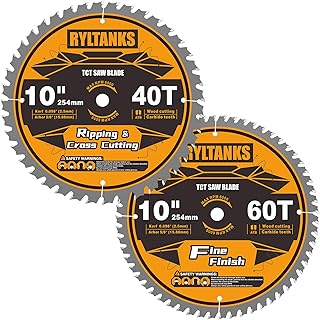
- Tooth count vs. fatigue: High counts (80T–120T) shave tiny chips and feel smooth in fine hardwood and plywood, but they load up fast in thick stock and force you to lean into the cut. For 2x framing lumber, a 32T–40T blade finishes sooner and keeps your arm out of a sustained press.
- Plate stiffness and anti-vibration slots: A thicker, laser-cut plate with expansion slots resists flutter and heat warp. Less flutter means less buzz through the handle, quieter cuts, and a squarer shoulder on your joinery — all three come from the same design detail.
- Carbide grade over tooth count: Micro-grain carbide holds an edge through far more cuts than generic tips, and a dull tooth is what turns a light pull-down into a shove. Larger carbide bodies also survive two or three professional sharpenings, which changes the long-term math considerably.
- Kerf width: Thin-kerf blades remove less material, so your saw’s motor and your arm both work less. On heavy sliding saws with plenty of power, a full-kerf plate adds stability and tracks straighter in deep cuts.
- Arbor and coating: Confirm a 5/8-inch (16mm) arbor for standard 10-inch miter saws. An anti-friction or non-stick coating reduces pitch buildup, and a clean blade glides — sticky resin is a silent cause of extra feed pressure and burn marks.
What's inside
Most people blame the saw when a crosscut comes out fuzzy, burned, or slightly out of square. Nine times out of ten the saw is fine — the blade riding on it is either the wrong tooth count for the material or it has gone dull enough that you’re forcing the cut. That extra push is where the real damage happens: your wrist absorbs the vibration, your shoulder braces against the resistance, and the workpiece gets scorched while the blade plate slowly wanders out of flat. A blade is the cheapest ergonomic upgrade you can make to a miter saw.
This guide looks at 10-inch blades through two lenses that matter for anyone building furniture at home: how little effort a blade demands from your body, and how long it holds that easy-cutting behavior before it needs a sharpening or replacement. I’ve weighted plate rigidity, carbide quality, vibration control, and tooth geometry over raw specs, and flagged which options make sense for a single-blade setup versus a rotating kit.
As an Amazon Associate we earn from qualifying purchases.



How to Choose a Miter Saw Blade 10 Inch (2026)
- Tooth count vs. fatigue: High counts (80T–120T) shave tiny chips and feel smooth in fine hardwood and plywood, but they load up fast in thick stock and force you to lean into the cut. For 2x framing lumber, a 32T–40T blade finishes sooner and keeps your arm out of a sustained press.
- Plate stiffness and anti-vibration slots: A thicker, laser-cut plate with expansion slots resists flutter and heat warp. Less flutter means less buzz through the handle, quieter cuts, and a squarer shoulder on your joinery — all three come from the same design detail.
- Carbide grade over tooth count: Micro-grain carbide holds an edge through far more cuts than generic tips, and a dull tooth is what turns a light pull-down into a shove. Larger carbide bodies also survive two or three professional sharpenings, which changes the long-term math considerably.
- Kerf width: Thin-kerf blades remove less material, so your saw’s motor and your arm both work less. On heavy sliding saws with plenty of power, a full-kerf plate adds stability and tracks straighter in deep cuts.
- Arbor and coating: Confirm a 5/8-inch (16mm) arbor for standard 10-inch miter saws. An anti-friction or non-stick coating reduces pitch buildup, and a clean blade glides — sticky resin is a silent cause of extra feed pressure and burn marks.
The Best Miter Saw Blade 10 Inch (2026)s Reviewed
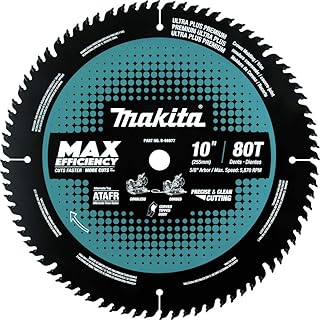
Makita B-66977 10″ 80T Max Efficiency
The standout here is how little the plate resonates — the thin kerf and ultra-thin body let the saw spin up and stay composed, so cuts feel effortless rather than laborious. The carbide is durable enough that it stays in this easy-cutting state long after cheaper 80-tooth blades have started demanding muscle.
WEN BL1080 80-Tooth Ultra-Fine Finish
A well-balanced blade for miter and table saw duty, with tooth geometry that leaves edges clean enough to glue up straight off the saw. It’s the sensible everyday choice for cabinet-grade plywood and hardwood trim without stepping into premium pricing.
WEN BL1060 60-Tooth Fine Finish
Sixty teeth is the practical middle ground: smooth enough for furniture parts, open enough to clear chips in thicker stock without bogging. If you only want one blade mounted year-round, this is the tooth count that asks the least of your arms across the widest range of jobs.
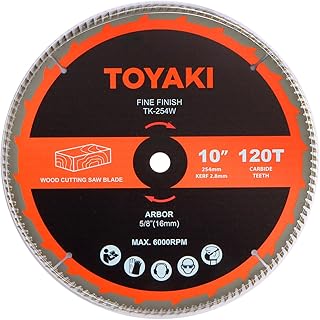
120-Tooth Fine-Finish Professional Blade
The extreme tooth count produces glassy edges in thin plywood, veneered panels, and moldings where any tearout means scrapping the piece. Keep feed rates slow and reserve it for finish cuts — pushing 120 teeth through thick hardwood generates heat and unnecessary strain.
32T / 60T / 80T 3-Pack Combo Set
The most ergonomic setup is simply matching the blade to the task, and this three-blade spread covers framing, general furniture work, and fine finishing for roughly the cost of one premium blade. Ideal for a shop where the saw handles both deck lumber and drawer fronts.
Frequently Asked Questions
How many teeth do I need for furniture work?
60 to 80 teeth handles most hardwood and plywood cleanly. Save 100T+ for veneered panels and delicate trim, and drop to 32T–40T for construction lumber.
Will a table saw blade work in my miter saw?
Usually yes, if the diameter and arbor match and the blade isn’t a dedicated rip blade with an aggressive hook angle. Blades with negative or low hook angles are safer in a chop or sliding saw because they resist self-feeding.
When should I replace instead of sharpen?
If the carbide tips are intact and the plate is flat, sharpening is worth it on quality blades. Chipped teeth, a warped plate, or a blade that wobbles at speed means replacement.
Why does my cut burn even with a new blade?
Usually pitch buildup, feeding too slowly through the cut, or an out-of-square fence forcing the blade to rub. Clean the blade with a resin remover before assuming it’s dull.
Final Thoughts
For the smoothest, lowest-effort cuts over the longest service life, the Makita B-66977 is the one to buy once and forget about. The WEN BL1060 is the smartest single-blade compromise for a mixed home shop, and the 32T/60T/80T 3-pack is the best value if you’d rather swap blades than fight the wrong one.