Key takeaways
- Grip circumference and taper: Wrap both hands around the motor housing before you commit. You want roughly a 9 to 11 inch circumference with a slight waist, so your fingers close naturally rather than splaying. A perfectly cylindrical barrel forces a pinch grip, and pinch grips fatigue the forearm flexors fast.
- Switch and dial reach: The power switch should sit under your thumb while your grip stays intact. If you have to release and re-grab to shut down, you’ve built a bad habit into every cut. Same for the speed dial: recessed is good, since a proud dial gets knocked off setting by your palm.
- Base flatness and clamping method: A thick aluminum or reinforced polymer sub-base beats thin stamped metal for keeping the bit perpendicular. Check the depth adjustment too — rack-and-pinion or a threaded ring holds a setting far longer than a friction clamp that creeps under vibration.
- Collet quality over bit count: A 15-piece bit set looks generous, but a single-slit collet with poor concentricity will chatter regardless of what you install. Look for a proper collet nut with even slits and a wrench that seats squarely. Bits are consumable; the collet is not.
- Serviceable wear parts: Externally accessible brush caps, a cord with a real strain relief boot, and vents positioned away from your grip hand. These three details separate a router you’ll still use in five years from one that becomes a paperweight when a brush wears down.
What's inside
Most first routers get bought for the wrong reason: horsepower. Then the tool arrives, and the real problems show up in your hands and forearms. A body that’s too fat to wrap your fingers around. A switch you can only reach by breaking your grip mid-pass. A base plate that rocks a half-degree on narrow stock, so your first attempt at a rounded table edge comes out wavy. Beginners blame their technique. Usually it’s the interface between the tool and the human holding it.
I evaluate tools the way a physical therapist and a repair technician would: where does vibration travel, what does the body force your wrist to do over a forty-minute session, and which parts wear out first. This guide looks at compact palm routers in the beginner price bracket through that lens — grip geometry, control placement, base rigidity, collet quality, and how each one is likely to hold up after a couple hundred passes. Bit kits and speed dials matter, but they matter less than whether you can hold the thing steady without white knuckles.
As an Amazon Associate we earn from qualifying purchases.



How to Choose a/an Wood Router For Beginner (2026)
- Grip circumference and taper: Wrap both hands around the motor housing before you commit. You want roughly a 9 to 11 inch circumference with a slight waist, so your fingers close naturally rather than splaying. A perfectly cylindrical barrel forces a pinch grip, and pinch grips fatigue the forearm flexors fast.
- Switch and dial reach: The power switch should sit under your thumb while your grip stays intact. If you have to release and re-grab to shut down, you’ve built a bad habit into every cut. Same for the speed dial: recessed is good, since a proud dial gets knocked off setting by your palm.
- Base flatness and clamping method: A thick aluminum or reinforced polymer sub-base beats thin stamped metal for keeping the bit perpendicular. Check the depth adjustment too — rack-and-pinion or a threaded ring holds a setting far longer than a friction clamp that creeps under vibration.
- Collet quality over bit count: A 15-piece bit set looks generous, but a single-slit collet with poor concentricity will chatter regardless of what you install. Look for a proper collet nut with even slits and a wrench that seats squarely. Bits are consumable; the collet is not.
- Serviceable wear parts: Externally accessible brush caps, a cord with a real strain relief boot, and vents positioned away from your grip hand. These three details separate a router you’ll still use in five years from one that becomes a paperweight when a brush wears down.
The Best Wood Router For Beginner (2026)s Reviewed
800W Compact Wood Router with 15PC 1/4″ Bit Set
The 800W class hits a useful sweet spot: enough torque for hardwood edge profiles without the bulk that makes one-handed control awkward. The bundled 15-piece set is the practical draw here, letting you experiment with roundovers, chamfers, and cove profiles before you know which ones you’ll actually reach for.
AVID POWER 6.5 Amp 1.25 HP Compact Router
The standout is control ergonomics — six discrete speeds plus a fixed base that stays put, so your depth setting survives a full session of vibration. The included edge and roller guides let beginners lean the tool against a reference surface instead of relying on unpracticed freehand steadiness, which is the single biggest source of wavy cuts.
800W Palm Router, 32,000 RPM with Edge & Roller Guide
At 32,000 RPM the cut quality on softwoods and plywood veneer is genuinely clean, with less tearout than slower budget units. The palm-format housing keeps your hand low and close to the workpiece, which reduces the tipping moment that trips up new users on narrow stock.
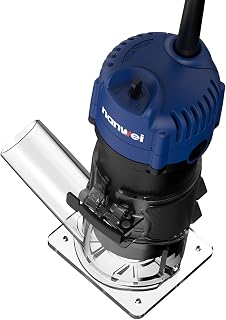
NANWEI 450W Compact Edge Trimmer
The lightest option here, and that’s the point — 450W and a slim body mean minimal wrist load for laminate trimming and light edge work. It ships without bits, so budget for a small quality set rather than accepting whatever comes in the box.
TwoWin 800W Compact Wood Router with 15-Piece Carbide Set
Tungsten carbide bits hold an edge dramatically longer than the high-speed steel typically bundled at this price, which changes the long-term math considerably. The 1/4″ collet system is standard, so replacement bits are cheap and universally available when you eventually wear these down.
Frequently Asked Questions
Is a palm router powerful enough for real furniture work?
For edge profiles, dadoes, hinge mortises, and template work — yes, comfortably. Where you’ll hit limits is deep single-pass cuts in dense hardwood and large panel-raising bits, which need a 2+ HP router in a table.
How do I stop my router from burning the wood?
Burning almost always means the bit dwelled in one spot. Keep the tool moving at a steady walking pace, take shallow passes of about 1/8 inch, and dial the speed down for larger diameter bits.
Do I need variable speed as a beginner?
It matters more than most guides admit. Small bits want high RPM for a clean cut, while wider bits at full speed cause chatter and burning, so a speed dial expands what you can safely run.
How long should a budget router last?
With replaceable brushes, dust blown out of the vents regularly, and no forcing of feed rate, several years of weekend use is realistic. Bearings and brushes are the usual failure points, and neither is stressed much by light work.
Final Thoughts
If you want the most forgiving learning curve, the AVID POWER 6.5 Amp is the pick — its speed range and guide accessories do the most to compensate for developing technique. The TwoWin 800W earns a strong second on durability grounds thanks to its carbide bits, while the NANWEI 450W suits anyone prioritizing low weight and wrist comfort for laminate and trim work.