Key takeaways
- Grip circumference over raw power: A handle around 100–115 mm in circumference suits most adult hands. Anything fatter forces a pinch grip, which loads the thumb joint and tires you out long before the battery does.
- Balance point, not headline weight: A 3 lb drill that carries its mass above the trigger feels lighter than a 2.5 lb drill that hangs forward. Test by holding it horizontally — if your wrist has to fight a downward tilt, expect fatigue on overhead work.
- Clutch detents you can actually feel: Look for 15+ torque settings with tactile clicks. Vague, mushy clutch rings are the single biggest cause of stripped cam bolts and split MDF on flat-pack furniture.
- Battery seat construction: Slide the pack on and off a few times. Sloppy rails and thin contact blades are the most common failure point on budget drills, well ahead of the motor itself.
- Chuck quality and runout: A single-sleeve keyless chuck that grips a 1/8 in bit without wobble matters more than a 1/2 in capacity you will never use. Wobble means bit walk, oversized holes, and premature bearing wear.
What's inside
Most people shopping for a cordless drill are really shopping for relief. You have a flat-pack wardrobe on the floor, forty-odd cam bolts ahead of you, and a hex key that has already left a red crease across your palm. The frustrating part is that the specs printed on the box — voltage, torque, piece count — say almost nothing about how a drill feels on the fortieth screw, or whether the chuck will still hold a bit straight after two seasons of use. Cheap tools tend to fail in two predictable places: the trigger assembly and the battery contact seat. Neither is listed on a spec sheet.
This guide looks at 2026’s best-value cordless drills through a narrower lens than most roundups: grip geometry, wrist angle, weight distribution over the trigger hand, clutch feedback, and the parts most likely to wear out first. Every pick below is a genuine bargain-tier tool, chosen because it earns its keep on furniture assembly, wall fixings, and the small repairs that keep a home running — not because it wins a torque contest.
As an Amazon Associate we earn from qualifying purchases.



How to Choose a Deal On Cordless Drill (2026)
- Grip circumference over raw power: A handle around 100–115 mm in circumference suits most adult hands. Anything fatter forces a pinch grip, which loads the thumb joint and tires you out long before the battery does.
- Balance point, not headline weight: A 3 lb drill that carries its mass above the trigger feels lighter than a 2.5 lb drill that hangs forward. Test by holding it horizontally — if your wrist has to fight a downward tilt, expect fatigue on overhead work.
- Clutch detents you can actually feel: Look for 15+ torque settings with tactile clicks. Vague, mushy clutch rings are the single biggest cause of stripped cam bolts and split MDF on flat-pack furniture.
- Battery seat construction: Slide the pack on and off a few times. Sloppy rails and thin contact blades are the most common failure point on budget drills, well ahead of the motor itself.
- Chuck quality and runout: A single-sleeve keyless chuck that grips a 1/8 in bit without wobble matters more than a 1/2 in capacity you will never use. Wobble means bit walk, oversized holes, and premature bearing wear.
The Best Deal On Cordless Drill (2026) Picks Reviewed
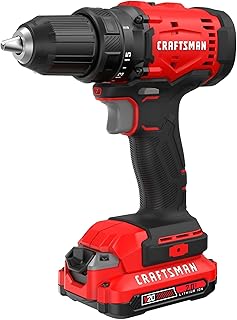
CRAFTSMAN V20 1/2 in Drill Set (CMCD702D1)
The best-shaped handle in this price bracket — a slim neck with a genuine palm swell that keeps the wrist neutral rather than cocked back, which is exactly what you want when driving dozens of screws at floor level. Its 2.0 Ah pack and long runtime make it the sensible choice if you assemble furniture in marathon sessions rather than short bursts.
BLACK+DECKER 20V MAX 68-Piece Project Kit (LDX120PK)
A rare case where the bundled accessories are actually worth having: enough driver bits, hex keys, and hand tools to finish a whole room without a second trip to the hardware store. The drill itself is modest on torque but well balanced, and the storage bag keeps the kit intact, which is half the battle with multi-piece sets.
BLACK+DECKER 12V MAX Drill & Home Tool Kit (BDCDD12PK)
The 12V platform trades power for a noticeably shorter head length, letting you work inside cabinet carcasses and between bed slats where a 20V tool simply will not fit. For anyone with smaller hands or joint sensitivity, this is the most comfortable full-size drill on the list.
PULITUO 20V Cordless Drill/Driver
Two batteries at this price is unusual, and the 21+1 clutch gives you fine enough control for chipboard fixings without over-torquing. Build quality is decent for the money, though I would treat the second battery as insurance rather than a bonus — spare packs are what keep budget tools in service.
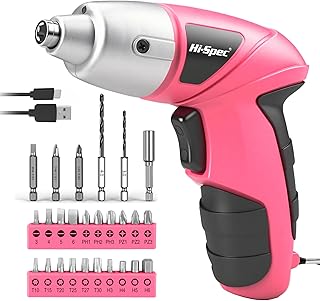
Hi-Spec 3.6V Mini Cordless Screwdriver Set
Not a drill, and that is the point: a 3.6 in-line driver spins cam bolts and small screws with almost no wrist deviation and no risk of blowing through a panel. USB charging, an LED, and 26 bits in organised storage make it the tool most people reach for once they own one.
Frequently Asked Questions
Is 12V enough for furniture assembly?
Comfortably, yes. Flat-pack fixings rarely need more than 15–20 Nm, and the lighter, shorter 12V tools are easier on the wrist in confined spaces.
How many clutch settings do I really need?
Fifteen is the practical minimum for furniture work. Fewer than that and the jumps between settings are too coarse to protect softwood and particleboard.
Do bundled bit sets hold up?
The hex and Phillips drivers usually do. Cheap twist drill bits dull quickly, so budget for a decent set of HSS bits if you drill into hardwood or masonry.
What fails first on a budget drill?
Battery contacts and the trigger switch, typically. Store packs at partial charge, avoid dropping the tool on its battery foot, and most of these drills will outlast expectations.
Final Thoughts
For all-round comfort and runtime, the CRAFTSMAN V20 (CMCD702D1) is the pick I would put in most hands. If you want a complete kit that covers the whole house, the BLACK+DECKER 20V 68-Piece Project Kit is the better value, and the Hi-Spec mini screwdriver is worth adding alongside either one — it will save your wrist on every flat-pack build you tackle.