Key takeaways
- Match the manufacturer spec first: Most triplex pumps call for a non-detergent SAE 30 or a 15W-40 equivalent. Detergent oils suspend contaminants instead of letting them settle, which works in an engine with a filter but not in a filterless pump crankcase.
- Check thermal stability, not just grade: A pump running twenty minutes on a hot driveway sees sustained temperatures that break down marginal base oils. Synthetics hold film strength longer and resist the varnish buildup that stiffens seals.
- Prioritize corrosion inhibitors: Seasonal users leave pumps idle for months. Oils with strong rust and oxidation additives protect polished plunger surfaces during storage, where most hidden damage actually occurs.
- Consider the bottle ergonomics: Fill ports are often recessed behind a frame rail. A narrow neck, an integrated spout, or a flexible tube saves you from working one-handed at an awkward angle and spilling oil across a hot engine.
- Buy the right volume: Pump crankcases typically take 5 to 15 ounces. A quart covers several changes for one machine; a gallon only makes sense if you maintain multiple units or run a fleet.
What's inside
Most pressure washer pumps don’t fail from overwork. They fail from a few ounces of neglected oil. The crankcase on a triplex or axial pump holds a surprisingly small volume, runs hot, and sits inches away from vibrating metal and pressurized water. When that oil thins out, oxidizes, or picks up moisture, the plunger rods and bearings start wearing in ways you can hear before you can see. By then the repair bill often rivals the cost of the machine. The frustrating part for most owners is that the label on the bottle rarely explains what the pump actually needs, and generic motor oil gets recommended far too often by people who won’t be paying for the rebuild.
This guide approaches pump oil the way a durability specialist would: as a wear-management decision, not a consumable purchase. We look at viscosity behavior under sustained heat, additive packages that resist corrosion during long storage, container design that makes a cramped fill port less of an ordeal, and how each option fits real maintenance intervals. Below you’ll find our picks for 2026, a short checklist for matching oil to your pump, and answers to the questions that come up most often in the shop.
As an Amazon Associate we earn from qualifying purchases.

How to Choose a/an Oil For Pressure Washer Pump (2026)
- Match the manufacturer spec first: Most triplex pumps call for a non-detergent SAE 30 or a 15W-40 equivalent. Detergent oils suspend contaminants instead of letting them settle, which works in an engine with a filter but not in a filterless pump crankcase.
- Check thermal stability, not just grade: A pump running twenty minutes on a hot driveway sees sustained temperatures that break down marginal base oils. Synthetics hold film strength longer and resist the varnish buildup that stiffens seals.
- Prioritize corrosion inhibitors: Seasonal users leave pumps idle for months. Oils with strong rust and oxidation additives protect polished plunger surfaces during storage, where most hidden damage actually occurs.
- Consider the bottle ergonomics: Fill ports are often recessed behind a frame rail. A narrow neck, an integrated spout, or a flexible tube saves you from working one-handed at an awkward angle and spilling oil across a hot engine.
- Buy the right volume: Pump crankcases typically take 5 to 15 ounces. A quart covers several changes for one machine; a gallon only makes sense if you maintain multiple units or run a fleet.
The Best Oil For Pressure Washer Pump (2026)s Reviewed
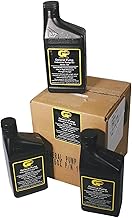
Stens Pump Oil for General Pump 100214
This is the safest default for anyone running a General Pump or a comparable triplex, because it’s formulated to the pump maker’s own specification rather than adapted from an engine oil. The single-serving sizing means no partially used bottles oxidizing on a shelf, and the pour neck clears tight frame openings without a funnel.
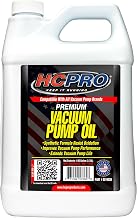
HCPRO HCVPO128 Super Premium Vacuum Pump Oil, 1 Gallon
Worth being clear here: this is a synthetic vacuum and refrigeration oil, so it belongs in HVAC vacuum pumps rather than a pressure washer crankcase unless your equipment manual specifically calls for that class of oil. Within its intended use it’s excellent, with a genuinely non-misting formula and low moisture pickup that keeps pull-down times consistent across many cycles.
Valley Industries Premium Pump Oil, 1 Liter
A well-balanced choice for homeowners who service one machine a couple of times a year. The liter bottle gives you three or four changes with sensible headroom, and the additive package holds up well through off-season storage in an unheated garage.
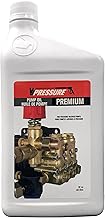
Pressure Washer Pump Oil, 21 oz (CAT-Compatible)
Built specifically around CAT pump maintenance schedules, this one earns its place on wear and corrosion protection rather than volume. The 21-ounce size is practical: enough for a full change plus a top-off, without a leftover jug that degrades before you need it.
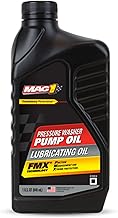
60694 Pressure Washer Pump Oil, 1 Quart
The value pick for anyone maintaining more than one unit or committed to a genuinely regular interval. Quart packaging lowers your cost per change substantially, though you’ll want to store it sealed and upright to keep the additive package intact.
Frequently Asked Questions
Can I use regular motor oil in my pressure washer pump?
It’s not advisable. Motor oils carry detergent additives designed to work with a filtration system your pump doesn’t have, and using them can leave contaminants circulating against bearing surfaces.
How often should I change pump oil?
Change the initial fill after the first 50 hours, then every 250 to 300 hours or annually, whichever arrives first. Seasonal users should change it before storage, not after, so the pump sits on clean oil.
Why does my pump oil look milky?
Milky oil means water has entered the crankcase, usually through worn seals or condensation. Change it immediately and inspect the seals, because water in the crankcase accelerates corrosion faster than almost anything else.
Do sealed pumps need oil changes?
Many consumer-grade axial pumps are sealed and non-serviceable, with no fill port. Check for a plug or dipstick before buying oil; if there isn’t one, the pump is designed to be replaced rather than maintained.
Final Thoughts
For most owners, the Stens Pump Oil for General Pump 100214 is the least risky path to a long-lived pump, since it matches an OEM spec instead of approximating one. The Valley Industries Premium Pump Oil is the better everyday choice if you’d rather keep a liter on hand for annual service, and the 60694 quart makes the most sense once you’re maintaining multiple machines on a real schedule.