Key takeaways
- Hinge and rotation mechanism: A 360° head is only useful if it holds position under its own weight. Look for stepped detents rather than smooth friction pivots — friction joints loosen as the internal washers polish themselves, usually within a year of daily use.
- Magnet placement and pull rating: Base magnets fail in shear, not tension, so a magnet rated for several pounds straight-pull may still creep down a vertical fender. Multiple magnet contact points, or a magnet plus hook, gives you redundancy when you’re working under a raised hood.
- Housing material and heat path: Aluminum bodies conduct LED waste heat away from the emitter, which preserves both brightness and diode lifespan. Polymer shells run hotter internally and typically throttle output sooner during long runs at maximum.
- Grip geometry and one-handed control: A barrel between roughly 25 and 32 mm with a knurled or ribbed surface stays controllable through nitrile gloves. Mode buttons should be reachable with the thumb of the holding hand so you never need a second hand mid-task.
- Port protection and charge cycle honesty: USB-C is now standard, but the rubber flap covering it is what keeps solvent mist and metal dust out. A digital charge readout beats a three-LED gauge for planning long jobs, since it tells you whether you have forty minutes left or five.
What's inside
Anyone who has spent twenty minutes holding a flashlight in their teeth while tracing a wiring harness understands the real failure of most work lights: they ask your body to do the mounting. Wrists rotate into awkward angles, elbows float unsupported, and by the time the fastener finally breaks loose your grip strength is gone. The lighting industry markets lumens because lumens are easy to print on a box, but the numbers that actually determine whether a light survives three winters in a cold garage are hinge detent design, magnet shear strength, port sealing, and how the housing sheds heat.
This guide evaluates six rechargeable automotive work lights through that lens — how they load your hands and shoulders during sustained use, and which materials and mechanisms hold up once brake cleaner, dropped sockets, and repeated charge cycles enter the picture. You’ll find guidance on choosing between pocket-style rotating lights and full underhood bars, short reviews of the strongest options, and answers to the questions that tend to surface after the first month of ownership.
As an Amazon Associate we earn from qualifying purchases.


How to Choose a/an Automotive Work Light (2026)
- Hinge and rotation mechanism: A 360° head is only useful if it holds position under its own weight. Look for stepped detents rather than smooth friction pivots — friction joints loosen as the internal washers polish themselves, usually within a year of daily use.
- Magnet placement and pull rating: Base magnets fail in shear, not tension, so a magnet rated for several pounds straight-pull may still creep down a vertical fender. Multiple magnet contact points, or a magnet plus hook, gives you redundancy when you’re working under a raised hood.
- Housing material and heat path: Aluminum bodies conduct LED waste heat away from the emitter, which preserves both brightness and diode lifespan. Polymer shells run hotter internally and typically throttle output sooner during long runs at maximum.
- Grip geometry and one-handed control: A barrel between roughly 25 and 32 mm with a knurled or ribbed surface stays controllable through nitrile gloves. Mode buttons should be reachable with the thumb of the holding hand so you never need a second hand mid-task.
- Port protection and charge cycle honesty: USB-C is now standard, but the rubber flap covering it is what keeps solvent mist and metal dust out. A digital charge readout beats a three-LED gauge for planning long jobs, since it tells you whether you have forty minutes left or five.
The Best Automotive Work Light (2026)s Reviewed
Rechargeable 5000mAh Magnetic Foldable Work Light
The folding architecture is the standout here: collapsed, it drops into a pocket, and opened it becomes an L-shaped stand that transfers weight onto the panel instead of your wrist. At 1200 lumens with a 5000mAh cell, it lands in the sensible middle of the brightness-versus-runtime curve, which is where most diagnostic work actually happens.
2-Pack All-Aluminum 1500 Lumen Mechanic Light
An all-aluminum housing plus a digital percentage display makes this the most technically honest pick on the list — you know exactly what heat management and remaining capacity you’re working with. Having two identical units means you can light both sides of a component without repositioning, which is the single fastest way to reduce awkward reaching.
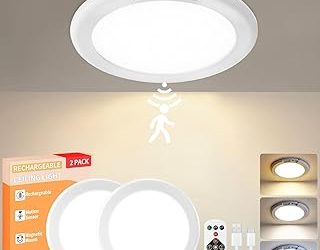
3000LM Underhood Work Light with Auto On/Off
The auto on/off sensor sounds like a gimmick until you’ve fumbled for a switch with both hands full of intake plumbing. Broad bar-style diffusion across the engine bay removes the harsh single-point shadows that force you to keep tilting your head to see around your own hands.
3000LM Magnetic Work Light Bar (Green)
A well-proportioned underhood bar with a 5200mAh battery, sized for hours of continuous illumination rather than short bursts. The high-visibility green shell is a genuinely practical touch — it stops the light from disappearing into a cluttered bench or a dark wheel well.
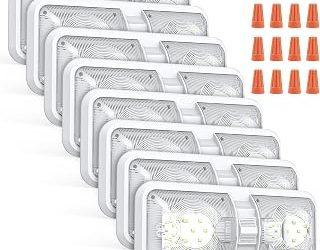
6-Pack Compact Magnetic Mechanic Lights
Buying in volume changes how you work: you place lights instead of holding them, distributing illumination around a job so nothing casts a shadow onto itself. The compact bodies and tail hooks make these ideal for shared shops, kits in multiple vehicles, or simply accepting that small lights get lost.
Frequently Asked Questions
How many lumens do I actually need?
Between 1000 and 1500 lumens covers nearly all handheld automotive work. Higher output is worth it for wide underhood bars, where light spreads across a large area, but in close quarters extreme brightness mostly produces glare off painted surfaces.
Will the magnet damage paint or clear coat?
Not on its own, but trapped grit between the magnet and the panel will. Wipe both surfaces before mounting, and check that the base has a rubber or silicone facing rather than exposed metal.
How long should the battery last over time?
Expect meaningful capacity loss after 300 to 500 full cycles. Storing the light near half charge rather than fully depleted, and keeping it out of freezing vehicles overnight, extends usable life considerably.
Are these safe to use around fuel or solvents?
Standard rechargeable work lights are not intrinsically safe or explosion-rated. Ventilate the space, keep the light away from open fuel containers, and choose a purpose-rated unit if you regularly work with volatile fluids.
Final Thoughts
For most people, the 2-Pack All-Aluminum 1500 Lumen light is the smartest buy — the metal housing and digital readout address durability and predictability at once. Pair it with the 3000LM Underhood Work Light for hands-free engine bay coverage, and consider the folding 5000mAh model if you want one compact light that can stand on its own instead of relying on your grip.