Key takeaways
- Tooth count and grind: For furniture-grade crosscuts, 80T is the practical floor and 100T with an alternate top bevel (ATB) grind gives the cleanest shoulder on hardwood and plywood. Higher counts remove less material per tooth, which means less tearout but also more heat, so keep the feed steady rather than fast.
- Plate thickness and stiffness: A thicker plate resists deflection and wanders less in a long 45-degree bevel, but it also raises cutting resistance and puts more load on your arm. Thin-kerf plates are gentler on smaller saws and on you; just check the plate is laser-cut flat and not visibly dished.
- Vibration and noise control: Look for laser-cut expansion slots, and ideally copper-plugged or resin-filled slots. These dampen the ringing that makes a saw feel harsh through the grip, and they let the plate expand under heat without going out of true.
- Carbide grade and shoulder support: Durability lives in the tip. Micro-grain carbide brazed onto a well-supported shoulder holds its edge through far more cuts and survives the occasional hidden brad. Thin, undersized tips chip early and turn a fine-finish blade into a rough-cut blade.
- Arbor fit and balance: A true 1-inch bore with no slop keeps the blade concentric, which is the single biggest factor in how smooth the saw feels at startup. Weigh a heavy blade against your saw’s motor and your own endurance, and buy in pairs if you switch tasks often rather than pushing one blade past its comfortable range.
What's inside
Furniture work punishes a mediocre blade twice over. First on the workpiece, where a slightly dull or badly balanced plate leaves fuzzed end grain, torn veneer, and a joint line you can read from across the room. Then on the operator, because every bit of vibration a blade fails to absorb travels straight up the miter saw’s handle into your wrist and shoulder. Spend an afternoon squaring up face frames with the wrong 12-inch blade and you’ll feel it the next morning, long before you notice the sanding you now have to do.
This guide looks at fine-cut 12-inch miter saw blades through two lenses that rarely get equal billing: how comfortable they are to run for hours, and how long they hold that first-cut quality. Below you’ll find the current picks, followed by a buying framework built around plate stiffness, carbide grade, and vibration control, then short reviews of the standouts and answers to the questions that come up most often in a small shop.
As an Amazon Associate we earn from qualifying purchases.



How to Choose a 12 Miter Saw Blade For Fine Cuts (2026)
- Tooth count and grind: For furniture-grade crosscuts, 80T is the practical floor and 100T with an alternate top bevel (ATB) grind gives the cleanest shoulder on hardwood and plywood. Higher counts remove less material per tooth, which means less tearout but also more heat, so keep the feed steady rather than fast.
- Plate thickness and stiffness: A thicker plate resists deflection and wanders less in a long 45-degree bevel, but it also raises cutting resistance and puts more load on your arm. Thin-kerf plates are gentler on smaller saws and on you; just check the plate is laser-cut flat and not visibly dished.
- Vibration and noise control: Look for laser-cut expansion slots, and ideally copper-plugged or resin-filled slots. These dampen the ringing that makes a saw feel harsh through the grip, and they let the plate expand under heat without going out of true.
- Carbide grade and shoulder support: Durability lives in the tip. Micro-grain carbide brazed onto a well-supported shoulder holds its edge through far more cuts and survives the occasional hidden brad. Thin, undersized tips chip early and turn a fine-finish blade into a rough-cut blade.
- Arbor fit and balance: A true 1-inch bore with no slop keeps the blade concentric, which is the single biggest factor in how smooth the saw feels at startup. Weigh a heavy blade against your saw’s motor and your own endurance, and buy in pairs if you switch tasks often rather than pushing one blade past its comfortable range.
The Best 12 Miter Saw Blade For Fine Cuts (2026)s Reviewed
ANGELSWORD 12-Inch 100T Ultra Fine Finish, 2 Pack
Buying in twos changes how you work: you keep a fresh blade for show surfaces and retire the other to job-site duty instead of nursing one tired plate. The 100-tooth grind leaves a surface that needs little more than a scuff sand, and the two-pack pricing takes the sting out of eventual resharpening.
DEWALT DWA112100 100-Tooth Fine Finish
This is the smoothest-running blade of the group in daily use, with tight balance and a plate that stays quiet through repeated miters in oak and maple. The carbide is the reason to pay the premium; it holds a crisp edge well past the point where budget blades start burnishing instead of cutting.
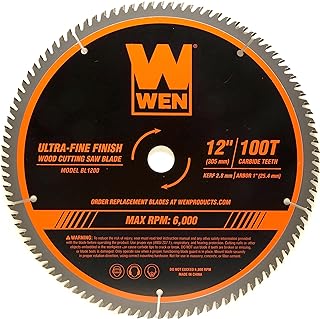
WEN BL1200 12-Inch 100-Tooth Carbide-Tipped
A sensible middle ground for hobby shops doing case work and trim, with enough tooth count for clean crosscuts in veneered panels. Feed it patiently on thick hardwood and it rewards you; rush it and the heat shows up as scorch on the offcut.
WEN BL1280 12-Inch 80-Tooth Fine-Finish
The 80-tooth count is the ergonomic pick here, cutting with noticeably less resistance and letting you work through a stack of parts without the arm fatigue a 100T blade builds up. Finish quality is a small step behind, easily closed with a light pass of sandpaper.
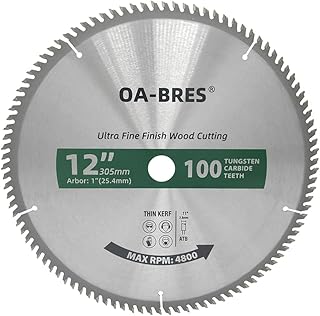
100-Tooth ATB TCT Ultra Fine Finish Blade
The ATB grind and true 1-inch arbor deliver a genuinely clean shoulder for the money, making this a strong second blade to keep in reserve. Inspect the tips on arrival, since consistency at this price point varies more than with name-brand options.
Frequently Asked Questions
Is 100 teeth always better than 80?
Not for every cut. A 100T blade gives a finer surface but generates more heat and demands slower feeding, which can burn softwoods and tire your arm. Reach for 80T on production runs and 100T on visible joinery.
Can I use these blades on a table saw?
Several are rated for both, but check the arbor and the manufacturer’s guidance first. High-tooth-count crosscut blades are poor rippers and will bog and burn in long grain regardless of the saw.
How do I know when a blade is done?
Watch for rising feed pressure, scorch marks on clean stock, and a change in the saw’s pitch. Chipped or rounded carbide tips are the visual confirmation. Quality blades are worth sending out for professional sharpening two or three times.
Does a heavier blade cut better?
Heavier usually means a thicker, stiffer plate and better accuracy on bevels, but it also loads the motor and your shoulder harder. On a lighter 12-inch saw, a well-balanced thin-kerf blade will feel and often cut better.
Final Thoughts
If you want one blade that stays sharp and smooth through years of furniture work, the DEWALT DWA112100 earns its price in vibration control and carbide life. The WEN BL1280 is the easier blade to run for long sessions, and the ANGELSWORD 100T two-pack is the smartest value play, giving you a dedicated finish blade and a backup for the rough stuff.