Key takeaways
- Fit and coverage: Full-length quilts protect shoulders through calves, where cold spots concentrate. Three-quarter models save weight but require a pad or extra layer under your feet, so measure your diagonal lay before committing.
- Suspension adjustability: Look for continuous shock cord with independent end adjusters and cinch hardware you can work in the dark. Fixed-length cords force you to accept whatever gap they create once fabric relaxes under body weight.
- Insulation type and behavior: Synthetic fill resists humidity and springs back after compression cycles; down packs smaller and lofts higher per ounce but demands dry storage. Either way, check for baffles or sewn-through channels that prevent fill from drifting.
- Shell durability: Ripstop nylon in the 20D to 40D range with a water-resistant finish balances weight against abrasion resistance. Inspect stitch density at attachment loops, since that’s where load concentrates and failures start.
- Honest temperature range: Treat published ratings as best-case survival numbers, not comfort numbers. Subtract roughly ten degrees for a realistic comfort floor, and add a top quilt rated similarly rather than pushing an underquilt past its limit.
What's inside
Anyone who has spent a night in a hammock knows the sensation: your back and shoulders feel fine, then somewhere around 2 a.m. the underside of your hips turns cold and stays that way. A sleeping bag can’t fix it, because your body weight crushes the loft flat wherever you press against the fabric. The insulation is still there; it just isn’t working. That compression problem is the single biggest reason hammock sleepers give up and go back to the ground, and it’s purely mechanical, not a matter of toughness.
An underquilt solves it by hanging outside the hammock, where nothing squashes it. Choosing well, though, means looking past temperature claims and paying attention to how a quilt behaves under load over dozens of nights: how the suspension holds tension as fabric stretches, whether baffles let down migrate toward the footbox, and how the shell handles abrasion from bark, gravel, and repeated stuffing. This guide covers six current options, what separates a quilt that stays snug from one that gaps at the shoulders, and how to match construction to the temperatures you actually sleep in.
As an Amazon Associate we earn from qualifying purchases.


How to Choose a/an Underquilt For Hammock (2026)
- Fit and coverage: Full-length quilts protect shoulders through calves, where cold spots concentrate. Three-quarter models save weight but require a pad or extra layer under your feet, so measure your diagonal lay before committing.
- Suspension adjustability: Look for continuous shock cord with independent end adjusters and cinch hardware you can work in the dark. Fixed-length cords force you to accept whatever gap they create once fabric relaxes under body weight.
- Insulation type and behavior: Synthetic fill resists humidity and springs back after compression cycles; down packs smaller and lofts higher per ounce but demands dry storage. Either way, check for baffles or sewn-through channels that prevent fill from drifting.
- Shell durability: Ripstop nylon in the 20D to 40D range with a water-resistant finish balances weight against abrasion resistance. Inspect stitch density at attachment loops, since that’s where load concentrates and failures start.
- Honest temperature range: Treat published ratings as best-case survival numbers, not comfort numbers. Subtract roughly ten degrees for a realistic comfort floor, and add a top quilt rated similarly rather than pushing an underquilt past its limit.
The Best Underquilt For Hammock (2026)s Reviewed
OneTigris Hideout Hammock Underquilt
The Hideout earns its four-season label through even fill distribution and a suspension system that stays taut as the hammock body stretches over a long night. It’s a sensible pick for hikers who want one quilt to cover shoulder season through light winter without carrying a supplementary pad.
Full-Length 3-4 Season Underquilt (Stealth Black)
Rated for roughly 41 to 68 degrees, this full-length quilt targets the temperature band most campers actually use, and its soft-handed shell drapes closely around the hammock rather than standing off and creating drafts. The matte black finish also hides trail grime well, which matters more than it sounds after a wet season.
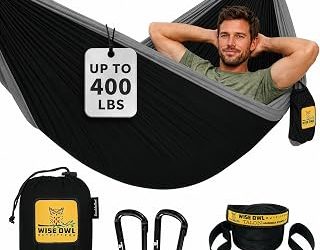
Wise Owl Outfitters Hammock Underquilt
Wise Owl’s version prioritizes packability and a water-resistant shell, making it a strong entry point for someone testing whether hammock camping suits them. Loft is modest compared to dedicated winter quilts, so pair it with a warmer top layer once nights dip below fifty.
AYAMAYA Single & Double 4-Season Underquilt
Sized to fit both single and double hammocks, this quilt delivers generous full-length coverage and enough bottom insulation for genuinely cold weather, including hard frost. The extra width reduces shoulder gapping for side sleepers, though it adds bulk you’ll notice in a small pack.
Insulated Camping Underquilt (Army Green)
Setup is refreshingly quick here, with a straightforward suspension that new hammock users can rig correctly on the first try. It’s best suited to backyard, patio, and mild-weather trips where convenience outweighs the last few degrees of warmth.
Frequently Asked Questions
Can I use a sleeping bag instead of an underquilt?
Not effectively. Lying on a bag compresses the fill beneath you to almost nothing, eliminating the trapped air that provides insulation. Underquilts work precisely because they hang free on the outside.
How tight should the underquilt hang?
Snug enough that it contacts the hammock along its full length with no visible air gap, but not so tight that it compresses against you and flattens the loft. Adjust the end shock cords after you climb in and settle.
Do I still need a sleeping pad?
Usually no, and that’s the ergonomic payoff: pads shift, crinkle, and create pressure ridges under your shoulders. Some sleepers keep a small pad under their feet with three-quarter-length quilts.
How should I store an underquilt?
Loosely, in a large breathable sack rather than its stuff sack. Long-term compression permanently degrades loft in both down and synthetic fills, shortening the quilt’s useful life by years.
Final Thoughts
For most hammock sleepers, the OneTigris Hideout offers the best balance of loft, suspension quality, and shell durability across seasons. Cold-weather campers and side sleepers should look at the AYAMAYA full-length quilt for its wider coverage, while the onewind double underquilt remains the sharper choice for anyone prioritizing low pack weight on longer backpacking trips.