Key takeaways
- Spray reach: A stream that carries 20 to 25 feet lets you clean foyer and stairwell fixtures from a landing or a shorter ladder. Reach is the single largest reducer of fall risk and overhead fatigue, so treat it as a safety spec, not a convenience feature.
- Trigger and pump ergonomics: A full 32 oz bottle held overhead loads the wrist and forearm quickly. Pump-style sprayers that pressurize once and then release with light finger effort beat stiff pistol triggers that demand dozens of hard squeezes per fixture.
- Material compatibility: Ammonia-free formulas are the safer default across plated brass, antique bronze, painted steel, and especially acrylic, which can haze or craze when exposed to harsh solvents. If your fixture blends materials, assume the weakest one sets the limit.
- Drip management: No-wipe formulas work by flooding and carrying soil off the crystal, which means real runoff. Confirm the product dries residue-free and plan drop cloths or a lined bucket beneath, since floor protection is faster than remediation.
- Refill economics: Fixtures need attention roughly twice a year. Gallon refills paired with a durable sprayer cut cost per cleaning substantially and reduce plastic waste, which matters if you own several fixtures or manage a property.
What's inside
Cleaning a chandelier is less a cleaning problem than a body-position problem. The fixture sits at the one height where your arms are above your heart, your neck is extended, and your balance depends on a ladder rung. Every extra minute spent hand-polishing individual crystals is a minute of shoulder abduction and cervical strain, which is why so many homeowners quietly let a beautiful fixture go grey for years. The second problem is quieter but more expensive: aggressive cleaners and repeated hand-wiping wear on the parts you cannot easily replace, including plated arms, wire insulation, socket interiors, and the pin joints that hold crystal strands together.
This guide evaluates drip-dry chandelier cleaners through those two lenses: how much overhead time and effort a formula actually eliminates, and how kindly it treats the fixture’s materials over a decade of repeat use. I look at spray reach, trigger and pump feel, drip behavior, ammonia content and metal compatibility, acrylic safety, and whether a product makes sense as a refill for long-term ownership rather than a one-off purchase.
As an Amazon Associate we earn from qualifying purchases.




How to Choose a Chandelier Cleaner (2026)
- Spray reach: A stream that carries 20 to 25 feet lets you clean foyer and stairwell fixtures from a landing or a shorter ladder. Reach is the single largest reducer of fall risk and overhead fatigue, so treat it as a safety spec, not a convenience feature.
- Trigger and pump ergonomics: A full 32 oz bottle held overhead loads the wrist and forearm quickly. Pump-style sprayers that pressurize once and then release with light finger effort beat stiff pistol triggers that demand dozens of hard squeezes per fixture.
- Material compatibility: Ammonia-free formulas are the safer default across plated brass, antique bronze, painted steel, and especially acrylic, which can haze or craze when exposed to harsh solvents. If your fixture blends materials, assume the weakest one sets the limit.
- Drip management: No-wipe formulas work by flooding and carrying soil off the crystal, which means real runoff. Confirm the product dries residue-free and plan drop cloths or a lined bucket beneath, since floor protection is faster than remediation.
- Refill economics: Fixtures need attention roughly twice a year. Gallon refills paired with a durable sprayer cut cost per cleaning substantially and reduce plastic waste, which matters if you own several fixtures or manage a property.
The Best Chandelier Cleaners (2026) Reviewed
Sparkle Plenty Crystal Chandelier Cleaner Spray, 32 oz
A gentle, wipe-free formula that suits mixed collections, moving from crystal drops to porcelain figurines and glass shelving without a change in approach. The soft spray pattern favors close work over long-range foyer fixtures, making it best for chandeliers you can reach comfortably from a two-step ladder.
Sparkle Plenty Drip Dry Spray, No Wipe
The same easygoing chemistry positioned squarely at dust and light film, which is the realistic maintenance load between deep cleanings. Used quarterly, it keeps you off the ladder longer by preventing the baked-on grime that eventually forces hand contact with every crystal.
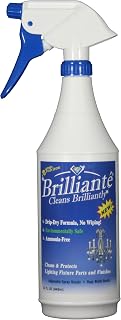
BRILLIANTE Crystal Chandelier Cleaner, 32 oz Manual Sprayer
The manual sprayer is the ergonomic standout here: pressurize at waist height, then dispense with minimal finger force while your arm stays relaxed. The ammonia-free, environmentally safer formula is a sound long-term choice for plated finishes and acrylic prisms alike.
Hagerty Chandelier Cleaner, 32 oz
Hagerty’s 25-foot reach is what makes tall entryway and stairwell fixtures genuinely maintainable, and the stated compatibility with bronze and metal components reflects the brand’s long history in fine-finish care. Expect a firmer trigger pull, so work in short passes rather than one continuous spray.
Chandelier Cleaner Spray, 32 oz No-Wipe Drip-Dry
A well-balanced generalist that combines long-range delivery with explicit acrylic safety, a combination that is surprisingly rare and useful for modern crystal-look fixtures. Streak-free drydown was consistent enough that follow-up wiping was unnecessary on smooth glass.
Frequently Asked Questions
Do drip-dry cleaners really need no wiping?
On smooth crystal, glass, and acrylic, yes. Textured metal castings and heavily oxidized brass still benefit from targeted attention, but the crystal itself should be left alone to dry.
Should the fixture be powered off?
Always. Switch off the circuit, let bulbs cool fully, and avoid spraying directly into sockets or wire entry points. Cool glass also prevents thermal shock and spotting.
How often should I clean a chandelier?
Twice a year for most homes, quarterly in kitchens or near candles and fireplaces. Frequent light cleaning is easier on both your shoulders and the fixture than annual deep scrubbing.
Is a gallon refill worth it?
If you own more than one fixture or clean on a schedule, yes. Refilling a proven sprayer lowers cost per use and keeps a working bottle on hand, which is often the difference between doing the job and postponing it.
Final Thoughts
For most homes, the BRILLIANTE Manual Sprayer offers the best balance of low-effort dispensing and finish-safe chemistry, while Hagerty’s 25-foot reach earns its place for tall foyer and stairwell fixtures. Long-term owners should pair either with the BRILLIANTÉ gallon refill, which turns a periodic chore into a routine that is easy to keep.