Key takeaways
- Working height: Aim for a top surface between 34 and 38 inches. Lower forces you to hunch over layout work; higher forces shoulder abduction when you lean in. Detachable top boxes let you tune this by removing or repositioning the upper unit.
- Drawer slide type: Ball-bearing slides with a stated per-drawer rating (30 lb minimum, 100 lb for deep drawers) glide with light finger pressure. Friction slides demand a yanking motion that loads your elbow and eventually racks the drawer box.
- Caster diameter and lock quality: Anything under 3 inches will catch on expansion joints and cord runs. Look for two swivel casters with brakes and two fixed, which gives you directional control instead of a cart that wanders.
- Steel gauge and weld pattern: Thinner sheet metal telegraphs flex through the whole cabinet, and flex is what eventually misaligns slides. Spot-welded frames with reinforced corners outperform bolt-together panels over time.
- Security and edge finish: A central lock bar protects the full stack, not just one drawer. Run your hand along drawer lips before regular use; rolled or hemmed edges prevent the nicks that raw stamped steel delivers.
What's inside
Most tool chest regret happens about six weeks after delivery. The drawers still open, technically, but the top one sticks when it’s loaded with sockets, the casters have started to gouge a track across the garage floor, and you’ve begun stooping to dig through a bottom drawer that sits four inches too low. None of that shows up in a product photo. It shows up in your lower back, your wrists, and eventually in a resale listing.
This guide approaches the question of where to buy a tool chest from two angles that matter long after the unboxing: how the unit fits your body during repeated use, and whether its structure will hold tolerance under load for years. Amazon remains the most practical purchase channel for most home workshops, thanks to return coverage on heavy freight items and the sheer breadth of drawer configurations. Below are the chests worth your attention in 2026, along with the specifications that actually predict longevity.
As an Amazon Associate we earn from qualifying purchases.


How to Choose a Place To Buy A Tool Chest (2026)
- Working height: Aim for a top surface between 34 and 38 inches. Lower forces you to hunch over layout work; higher forces shoulder abduction when you lean in. Detachable top boxes let you tune this by removing or repositioning the upper unit.
- Drawer slide type: Ball-bearing slides with a stated per-drawer rating (30 lb minimum, 100 lb for deep drawers) glide with light finger pressure. Friction slides demand a yanking motion that loads your elbow and eventually racks the drawer box.
- Caster diameter and lock quality: Anything under 3 inches will catch on expansion joints and cord runs. Look for two swivel casters with brakes and two fixed, which gives you directional control instead of a cart that wanders.
- Steel gauge and weld pattern: Thinner sheet metal telegraphs flex through the whole cabinet, and flex is what eventually misaligns slides. Spot-welded frames with reinforced corners outperform bolt-together panels over time.
- Security and edge finish: A central lock bar protects the full stack, not just one drawer. Run your hand along drawer lips before regular use; rolled or hemmed edges prevent the nicks that raw stamped steel delivers.
The Best Place To Buy A Tool Chest (2026)s Reviewed
Goplus 5-Drawer Rolling Tool Cabinet
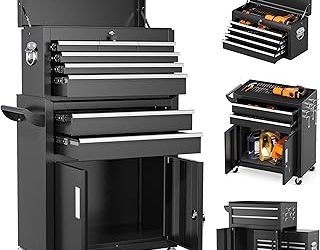
The detachable top box is the real ergonomic feature here, letting you carry a working subset of tools to the job instead of walking back to the cabinet twenty times. Universal lockable wheels and a full-height lock bar make it a sensible first serious chest for a shared garage.
DEWALT TSTAK Rolling Tool Box (DWST17820)
The telescopic handle is set at a genuinely useful height, so you pull rather than crouch, and the stackable TSTAK interface means the load stays balanced over the wheels instead of teetering. Best suited to tradespeople who move tools between vehicle and site daily.
72-Inch 15-Drawer Rolling Workbench
This is the option for anyone who currently works off a folding table: a long, stable top with pegboard and upper cabinets gets frequently used tools into forearm reach at eye level. Plan your floor space and helper before assembly, because the mass that makes it steady also makes it immobile in practice.
Crownland 8-Drawer Rolling Tool Chest
The two-in-one split gives you a proper bench-height lower cart plus a portable upper, and the included liners cut the metallic rattle that makes cheaper chests unpleasant to work near. Side hooks handle the awkward long-handled tools that never fit a drawer well.
8-Drawer Assembled Rolling Tool Chest
Arriving assembled removes the most common failure point in budget chests, which is an owner’s imperfect square-up during build. Tray dividers and liners come standard, making it a strong pick for a repair room where inventory control matters more than portability.
Frequently Asked Questions
Is Amazon a good place to buy a tool chest?
For most home users, yes. Freight-shipped chests are covered by standard return policies, and you get access to configurations that big-box floor space can’t accommodate. Inspect for shipping damage before the carrier leaves.
How many drawers do I actually need?
Count your tool categories, then add two. Eight drawers suits most home mechanics; fifteen only pays off if you already own enough tools to fill them, since half-empty deep drawers become dumping grounds.
Do drawer liners matter?
They do more than protect finishes. Liners stop tools from sliding into a pile when the drawer closes, which means you find things by feel and reduce noise and wear on the drawer bottom.
Should I choose a rolling chest or a stationary workbench?
Roll if your projects move around the garage. Choose a long stationary bench if you do repetitive work in one spot, since a fixed surface won’t shift under lateral pressure.
Final Thoughts
For most readers, the Crownland 8-Drawer chest hits the best balance of bench height, drawer capacity, and everyday comfort. The Goplus 5-Drawer is the smarter buy if you’re building a collection rather than storing a finished one, and the DEWALT TSTAK DWST17820 remains the standard for anyone whose workshop travels.