Key takeaways
- Working height and reach zones: Side shelves should land near 34 to 36 inches so your forearms stay roughly level with your elbows. Anything lower forces a hunch over hot metal; anything much higher makes plating awkward. Shelf depth of 10 inches or more holds a half-sheet pan without overhang.
- Headroom and smoke clearance: Measure from your grill’s open lid to the roof underside and aim for at least 24 inches. Double-tier roofs with a vented gap let heat and smoke escape instead of pooling around your face, which matters most on still summer evenings.
- Frame material and fastener quality: Powder-coated aluminum won’t rust and needs no upkeep. Cedar looks warmer and dampens heat but moves with humidity, so check for galvanized or stainless bolts and metal gusset plates at the joints rather than bare screws into end grain.
- Roof load and wind path: Galvanized steel panels shed snow and hail far better than fabric or polycarbonate. Look for stated snow support, cross bracing, and anchor points sized for lag bolts or concrete wedge anchors. Ground stakes alone are a liability in gusty yards.
- Integrated power and cable routing: Built-in outlets or USB strips keep rotisserie motors, probes, and string lights off the ground. Confirm weather-rated covers, then run the shelter from a GFCI circuit.
What's inside
Most grill shelters get bought after a bad night. You’re standing in a drizzle with tongs in one hand, a plate balanced on the lid, and a thermometer cable stretched to an outlet twelve feet away. The umbrella is doing nothing useful. A grill gazebo fixes the weather problem, but the shelters that actually get used year after year solve a second problem people rarely think about at purchase time: how the space works around your body, and whether the structure survives its fifth winter without sagging, streaking, or shedding hardware.
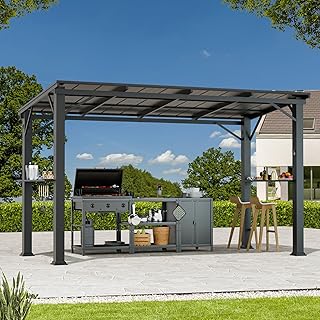
This guide looks at grill gazebos through those two lenses. I’ve prioritized working height and reach geometry, headroom above the grill lid, roof venting and load capacity, fastener corrosion resistance, and how the frame handles wind and seasonal movement. Below are six shelters worth considering in 2026, followed by the specs that separate a durable investment from a two-season disappointment.
As an Amazon Associate we earn from qualifying purchases.



How to Choose a Grill Gazebo (2026)
- Working height and reach zones: Side shelves should land near 34 to 36 inches so your forearms stay roughly level with your elbows. Anything lower forces a hunch over hot metal; anything much higher makes plating awkward. Shelf depth of 10 inches or more holds a half-sheet pan without overhang.
- Headroom and smoke clearance: Measure from your grill’s open lid to the roof underside and aim for at least 24 inches. Double-tier roofs with a vented gap let heat and smoke escape instead of pooling around your face, which matters most on still summer evenings.
- Frame material and fastener quality: Powder-coated aluminum won’t rust and needs no upkeep. Cedar looks warmer and dampens heat but moves with humidity, so check for galvanized or stainless bolts and metal gusset plates at the joints rather than bare screws into end grain.
- Roof load and wind path: Galvanized steel panels shed snow and hail far better than fabric or polycarbonate. Look for stated snow support, cross bracing, and anchor points sized for lag bolts or concrete wedge anchors. Ground stakes alone are a liability in gusty yards.
- Integrated power and cable routing: Built-in outlets or USB strips keep rotisserie motors, probes, and string lights off the ground. Confirm weather-rated covers, then run the shelter from a GFCI circuit.
The Best Grill Gazebo (2026)s Reviewed
Modern Shade Aluminum Grill Gazebo 6×8 with USB Charging
The extra-wide columns give this one unusual torsional stiffness for a 6×8 footprint, and the aluminum frame sidesteps rust entirely, which is why I’d pick it for coastal or high-humidity sites. The USB power strip, shelves, and hook rail put your tools and cables within an easy arm sweep of the grill.
Sunjoy Wooden Grill Gazebo 8 x 12 ft. with AC Power Port
The most generous work envelope here: 96 square feet means a grill, a prep cart, and a second person can coexist without anyone reaching across heat. Cedar framing over a steel hardtop is a smart hybrid, and the built-in outlets remove the extension-cord tripping hazard that plagues most setups.
Backyard Discovery Saxony XL 12′ x 6′ Cedar Pavilion
Backyard Discovery publishes real engineering numbers for snow support and wind resistance, which puts this pavilion ahead of most competitors on documented durability. The bar tops sit at a comfortable standing height and effectively double as a serving counter, so guests stay out of your cooking lane.
MUPATER 6 x 13 FT Wooden Grill Gazebo
Built for two full-size grills, this is the pick for anyone running a gas unit and a smoker side by side. The sloping metal roof clears water and snow quickly, and the 13-foot span gives you a genuine landing zone between appliances instead of a cramped pinch point.
Grill Gazebo 6’x12′ with Side Shelf and Bottle Opener
A straightforward, rustproof steel shelter with the small ergonomic touches that reduce trips indoors: a usable side shelf, hooks at reach height, and a bottle opener on the post. Good value if you want span and shade without paying for wood or integrated electrical.
Frequently Asked Questions
Do I need to anchor a grill gazebo permanently?
Yes. Every hardtop shelter here should be bolted to concrete, pavers, or a deck frame. A steel roof acts like a wing in a gust, and unanchored units are the single most common failure I see.
Is it safe to grill under a gazebo roof?
With a vented metal hardtop and adequate lid clearance, yes for gas and charcoal. Keep at least two feet above the open lid, never enclose all four sides, and check your grill manufacturer’s clearance specs.
How much maintenance does a cedar frame need?
Plan on cleaning and resealing every 18 to 24 months, sooner in full sun. Retorque bolts annually, since cedar shrinks and swells with the seasons and loose hardware accelerates joint wear.
What size should I buy for one grill?
A 6×8 works for a single grill and one cook. Go to 6×12 or larger if you want prep space, a second appliance, or room for someone to stand beside you without brushing hot surfaces.
Final Thoughts
For maintenance-free longevity in a compact footprint, the Modern Shade Aluminum 6×8 is the most sensible buy. If you want documented wind and snow ratings plus counter space that doubles as a serving bar, the Backyard Discovery Saxony XL earns its price, while the Sunjoy 8×12 with AC power ports is the one to choose when you cook for a crowd and want real room to move.