Key takeaways
- Working height and stance: A folding stand that lands the table between 34 and 38 inches lets most adults feed stock with a straight back and locked elbows. Too low and you hunch; too high and you lose downward control on the push stroke. Check the stated height before you check the horsepower.
- Fence engagement effort: Rack-and-pinion systems move the fence with a knob and hold parallel without coaxing. Single-lock fences are cheaper and lighter, but they demand a tap-and-recheck ritual on every setting. If you make dozens of adjustments a session, that ritual becomes the fatigue.
- Trunnion and tabletop rigidity: Press down on the middle of the table in the store or read reviews looking for flex complaints. A top that deflects moves the blade relative to the fence, and bevel stops drift out of true within months rather than years.
- Dust port placement and diameter: A 1.5 to 2.5 inch port sitting below the arbor captures far more than a rear-mounted afterthought. Fine hardwood and MDF dust is the real long-term hazard here, and capture at the source beats any shop vac added later.
- Motor duty cycle over peak numbers: A 15-amp universal motor pulling hard through 3-inch stock will thermal-cycle. Look for a copper-wound armature, accessible brushes, and vents that won’t clog. Sustained cutting without bogging matters more than an advertised RPM ceiling.
What's inside
Benchtop saws get judged on two numbers — blade diameter and RPM — and those two numbers tell you almost nothing about how the machine will feel on hour three of a build, or whether it will still cut square after fifty sheets of plywood. What actually wears you down is geometry: how far you reach across the table to clear an offcut, how much wrist rotation the height crank demands, whether the fence lever seats with a thumb press or a shoulder shove. What actually kills these saws is the drivetrain and the trunnion — bearings that get gritty, and cast-versus-stamped assemblies that lose their reference angle once the aluminum flexes. Neither shows up on a spec sheet.
This guide looks at the current crop of portable benchtop saws through that lens. I’ve grouped the picks by the kind of work they suit, flagged where a stand’s fixed height will fight your back, and noted which models put dust extraction where it belongs rather than venting fines straight into your breathing zone. Cutting capacity and rip width still matter, and they’re covered — but treated as one input among several, not the headline.
As an Amazon Associate we earn from qualifying purchases.


How to Choose a Benchtop Table Saw (2026)
- Working height and stance: A folding stand that lands the table between 34 and 38 inches lets most adults feed stock with a straight back and locked elbows. Too low and you hunch; too high and you lose downward control on the push stroke. Check the stated height before you check the horsepower.
- Fence engagement effort: Rack-and-pinion systems move the fence with a knob and hold parallel without coaxing. Single-lock fences are cheaper and lighter, but they demand a tap-and-recheck ritual on every setting. If you make dozens of adjustments a session, that ritual becomes the fatigue.
- Trunnion and tabletop rigidity: Press down on the middle of the table in the store or read reviews looking for flex complaints. A top that deflects moves the blade relative to the fence, and bevel stops drift out of true within months rather than years.
- Dust port placement and diameter: A 1.5 to 2.5 inch port sitting below the arbor captures far more than a rear-mounted afterthought. Fine hardwood and MDF dust is the real long-term hazard here, and capture at the source beats any shop vac added later.
- Motor duty cycle over peak numbers: A 15-amp universal motor pulling hard through 3-inch stock will thermal-cycle. Look for a copper-wound armature, accessible brushes, and vents that won’t clog. Sustained cutting without bogging matters more than an advertised RPM ceiling.
The Best Benchtop Table Saw (2026)s Reviewed
FINDBUYTOOL 10-Inch Portable Jobsite Table Saw
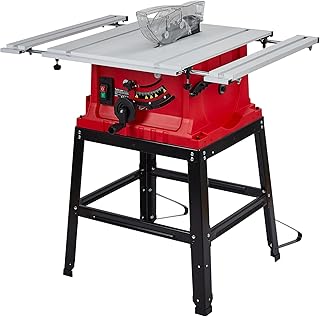
The rack-and-pinion fence is the reason this one sits at the top: adjustments are a single-hand operation and the fence returns to parallel without babying, which pays off across a long day of repeat rips. With 24 inches of rip capacity and a 2.5HP draw, it handles full sheet breakdown without the operator having to walk the stock in from an awkward angle.
DOVAMAN 10″ 15A Table Saw (DTS10A)
The copper-wound motor and 3.35-inch cut at 90 degrees give it real headroom in thick stock, and the single-side table extension buys support exactly where offcuts tend to tip. A sensible pick if you want durability margin without jobsite-grade bulk.
10-Inch Portable Benchtop Saw with Stand and Dust Port
A straightforward 5000 RPM setup whose strongest feature is the dedicated collector port — connect it and the fine dust stays out of your face rather than settling across the table. Adjustable blade height and a 0–45 degree bevel cover standard furniture joinery well.
Hoteche 8-Inch Portable Table Saw
At 720W and 8 inches, this is a small-shop machine for trim, drawer parts, and repetitive short rips, and the compact footprint means less reaching. The 20T carbide blade is coarse for finish work, so plan on swapping to a higher tooth count for visible cuts.
6.5-Inch Portable Benchtop Table Saw
The lightest option here, and the easiest to lift onto a bench without recruiting help. Adjustable depth plus the same 90 degree and 0–45 degree bevel range make it viable for thin hardwood, plastics, and light non-ferrous stock, but it will stall in anything approaching two-inch material.
Frequently Asked Questions
Is a benchtop saw rigid enough for furniture work?
For casework and drawer parts, yes, provided you check fence parallelism and blade square before each session. Long, thin rips in solid hardwood are where the lighter tables show their limits, and an outfeed support solves most of it.
Does the included stand matter, or should I build my own?
It matters more than most buyers expect. A stand at the wrong height changes your wrist and shoulder angle on every pass, and that compounds. If the included one doesn’t suit your build, factor a bench or adjustable base into the budget.
How long do these motors realistically last?
With clean vents, an unclogged dust path, and pauses during heavy cutting, several years of weekend use is reasonable. Overheating from continuous hard ripping is what shortens their life, not total run hours.
Should I replace the stock blade?
Usually. Factory blades are ground for general ripping, so a 40 to 60 tooth crosscut blade transforms edge quality on visible joinery and reduces the cleanup sanding that eats your time.
Final Thoughts
If you want the least fatiguing machine of the group, the FINDBUYTOOL 10-inch earns it on fence ergonomics and rip capacity alone. The DOVAMAN DTS10A is the better value if cut depth and motor durability rank above fence convenience, and the Hoteche 8-inch is the honest choice for a cramped shop where reach and storage matter more than raw capacity.