Key takeaways
- Submerged step count: Two steps below the surface is the practical minimum for adults. One submerged step forces you to haul your full body weight on a single arm-and-leg push, which is exactly when shoulders and knees complain. Four- and five-step models earn their extra bulk here.
- Pedal geometry: Look for pedals at least 3 to 4 inches deep with a squared profile rather than thin round tubing. Depth spreads load across the arch of the foot instead of concentrating it under the ball, which matters enormously when you’re barefoot.
- Alloy and grade: 316 stainless resists chloride pitting far better than 304 and is worth the premium in saltwater. Thickened 6063 aluminum is a sound freshwater choice: lighter to remove seasonally, and it won’t stain your deck if the finish scuffs.
- Handrail height and reach: Rails should extend high enough to grab from chest-deep water without lunging. Long, continuous rails let you climb hand-over-hand and keep your weight stacked over the steps rather than hanging off the back.
- Mounting and load path: Rated capacity assumes proper installation. Use backing plates on any through-bolted fitting, keep dissimilar metals isolated to avoid galvanic corrosion, and confirm the ladder clears your motor and swim platform through its full swing.
What's inside
Climbing out of the water is where most pontoon ladders reveal their design compromises. A ladder that feels perfectly adequate while you’re standing dry on the deck can become a knuckle-scraping, shin-barking obstacle once you’re waterlogged, cold, and pulling against gravity with tired arms. The two failure points I see most often in the field are geometry (steps too narrow, too shallow, or hung too close to the transom) and metallurgy (bargain hardware that blooms rust after a single season in brackish water). Both are avoidable if you know what to look at before you buy.
This guide breaks down pontoon and dock ladders from an ergonomics and durability standpoint: tread depth and pedal width, how many steps actually sit below the waterline, handrail placement relative to your center of gravity, and which alloys hold up under repeated wet-dry cycling. Below you’ll find current top options, followed by a buying framework, short reviews of the strongest performers, and answers to the questions that come up most.
As an Amazon Associate we earn from qualifying purchases.


How to Choose a Ladder For Pontoon Boat (2026)
- Submerged step count: Two steps below the surface is the practical minimum for adults. One submerged step forces you to haul your full body weight on a single arm-and-leg push, which is exactly when shoulders and knees complain. Four- and five-step models earn their extra bulk here.
- Pedal geometry: Look for pedals at least 3 to 4 inches deep with a squared profile rather than thin round tubing. Depth spreads load across the arch of the foot instead of concentrating it under the ball, which matters enormously when you’re barefoot.
- Alloy and grade: 316 stainless resists chloride pitting far better than 304 and is worth the premium in saltwater. Thickened 6063 aluminum is a sound freshwater choice: lighter to remove seasonally, and it won’t stain your deck if the finish scuffs.
- Handrail height and reach: Rails should extend high enough to grab from chest-deep water without lunging. Long, continuous rails let you climb hand-over-hand and keep your weight stacked over the steps rather than hanging off the back.
- Mounting and load path: Rated capacity assumes proper installation. Use backing plates on any through-bolted fitting, keep dissimilar metals isolated to avoid galvanic corrosion, and confirm the ladder clears your motor and swim platform through its full swing.
The Best Ladders For Pontoon Boats (2026) Reviewed
Stainless Steel Folding Telescoping Rear Entry Ladder (4 Steps)
This rear-entry design gets the priorities right: wider-than-average pedals, integrated handrails, and a folding-plus-telescoping action that stows flat against the deck. It’s the most balanced option here for a boat that sees frequent swimmers, since the wide treads and rail support noticeably reduce strain on the trailing knee.
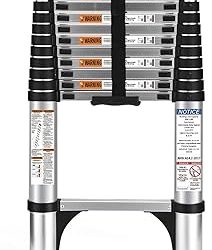
4 Step Stainless Steel Telescopic Ladder, 900 lb Capacity
The 900-pound rating gives real headroom for dynamic loads, which are always higher than a static bodyweight number suggests. Telescoping stainless construction keeps the stowed footprint tight, making it a strong fit for pontoons where deck space is already committed to seating.
VEVOR Removable Dock Ladder, 5 Steps
Thickened 6063 aluminum with textured nonslip steps delivers a shallower, more forgiving climb angle than most four-step units, and the quick-detach mount means you can pull it for winter storage in seconds. Best suited to freshwater lakes and docks where aluminum’s corrosion behavior is a non-issue.
VEVOR Dock Ladder, 6 Steps with Handrails
Adjustable height is the standout feature: on fluctuating lake levels or a tall pontoon freeboard, being able to tune the reach means the bottom step actually stays submerged. Widened nonslip pedals and full handrails make this the most accessible pick for older swimmers or anyone with limited upper-body strength.
RecPro 4-Step Telescoping Ladder, 316 Stainless
Marine-grade 316 throughout puts this in a different durability class for coastal use, where lesser stainless will pit and weep rust within a season. The build is straightforward and the telescoping action is clean, which is what you want from hardware expected to last a decade.
Frequently Asked Questions
How many steps do I actually need?
Count from the water, not the deck. Aim for at least two submerged steps at your typical waterline. Four steps suits most pontoons; five or six makes sense for tall freeboard, dock use, or anyone who prefers a gentler climb angle.
Is stainless steel always better than aluminum?
Not always. 316 stainless is the right call for saltwater and long-term coastal exposure. Thickened aluminum like the VEVOR 4-step and 5-step models is lighter, easier to remove seasonally, and perfectly durable in freshwater at a lower cost.
Will a telescoping ladder hold up to regular use?
Yes, provided you rinse the sliding sections with fresh water and keep grit out of the tracks. Abrasive sand is what wears telescoping joints, not the extension mechanism itself.
Can I mount one of these myself?
Most bolt-on and removable models are a straightforward DIY job. The non-negotiable detail is backing plates behind through-bolts so load spreads into the structure rather than crushing the deck skin.
Final Thoughts
For most pontoon owners, the stainless folding telescoping rear-entry 4-step hits the best balance of wide pedals, handrail support, and compact stowage. Saltwater boaters should step up to the RecPro 316 stainless for corrosion life, while the VEVOR 6-step with adjustable height and handrails is the clear choice when easy, low-effort boarding matters more than a small stowed footprint.