Key takeaways
- Worktable construction: Cast aluminum or cast iron resists the twist that pressure-treated stock and hardwood blanks apply mid-cut. Thin stamped steel deflects just enough to open a gap at the blade, which you feel as drift rather than see as a defect. A machined surface with a legible scale also spares you constant test cuts.
- Reach and adjustment layout: Sight down at the saw as it sits on your bench. Tension knob, blade guard height, and table tilt lock should all be reachable without crossing your hand in front of the blade path. Tool-free levers age better than hex-key fittings that gradually round out.
- Working height and footprint: Table height between roughly 38 and 44 inches keeps your shoulders neutral. A model bundled with a stand solves this immediately; a true benchtop unit needs a bench measured before purchase, not after.
- Vibration and mass: Weight is not the enemy here. Heavier frames with rubber-isolated feet transmit less chatter into the workpiece and your wrists. If a saw is light enough to slide during a cut, it needs bolting down, and that changes where it can live.
- Throat depth versus cut height: Curved chair parts and cabriole legs need throat clearance. Resawing needs vertical capacity. Buying for one and hoping to get the other is the most common regret with saws in this class.
What's inside
Spec sheets make benchtop band saws look nearly identical: an amp rating, a cut height, a tilting table. What they don’t tell you is how the machine behaves in hour twelve. That’s when a stamped worktable starts to flex under a maple blank, when a knurled tension knob you can’t reach without leaning over the blade becomes a genuine annoyance, and when frame vibration stops being background noise and starts showing up as a numb thumb and a wandering cut line.
This guide looks at current table top band saws through two lenses I care about most in a home shop: ergonomics, meaning how the saw positions your body and how much effort routine adjustments demand, and durability, meaning which components are likely to still hold a setting two years from now. Below you’ll find the models worth shortlisting for furniture work, plus the specific details to check before you commit bench space to one.
As an Amazon Associate we earn from qualifying purchases.


How to Choose a Table Top Band Saw (2026)
- Worktable construction: Cast aluminum or cast iron resists the twist that pressure-treated stock and hardwood blanks apply mid-cut. Thin stamped steel deflects just enough to open a gap at the blade, which you feel as drift rather than see as a defect. A machined surface with a legible scale also spares you constant test cuts.
- Reach and adjustment layout: Sight down at the saw as it sits on your bench. Tension knob, blade guard height, and table tilt lock should all be reachable without crossing your hand in front of the blade path. Tool-free levers age better than hex-key fittings that gradually round out.
- Working height and footprint: Table height between roughly 38 and 44 inches keeps your shoulders neutral. A model bundled with a stand solves this immediately; a true benchtop unit needs a bench measured before purchase, not after.
- Vibration and mass: Weight is not the enemy here. Heavier frames with rubber-isolated feet transmit less chatter into the workpiece and your wrists. If a saw is light enough to slide during a cut, it needs bolting down, and that changes where it can live.
- Throat depth versus cut height: Curved chair parts and cabriole legs need throat clearance. Resawing needs vertical capacity. Buying for one and hoping to get the other is the most common regret with saws in this class.
The Best Table Top Band Saws Reviewed
WEN 10-Inch Two-Speed Band Saw with Stand (BA3962)
Including the stand is the smartest ergonomic decision in this group, because it puts the table at a genuine standing work height and moves mass off your bench. The two-speed drive and 3.5-amp motor handle both hardwood curves and slower non-ferrous passes, and the bolted stand markedly reduces the chatter that plagues clamped-down benchtop units.
SEESII 8-Inch Benchtop Band Saw
The 0-45 degree tilting table with a double-sided fence and miter gauge makes this the most versatile setup for detailed furniture components like drawer pulls and small brackets. An 8-inch throat with just over 3 inches of cut height suits joinery and pattern work rather than resawing.
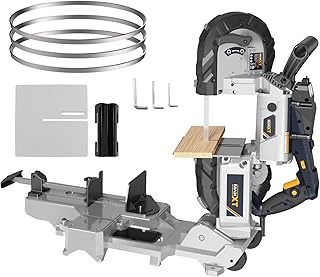
MAXXT 2-in-1 Deep Cut Band Saw with Table Base
This is a handheld deep-cut saw that drops into a rolling table base, so it covers both shop cuts and jobsite trimming without owning two tools. The 5-inch capacity and variable speed are strong on tube and stock removal, though the aluminum body means you should expect more vibration than a dedicated cast-frame saw.
Portable 9-Inch Woodworking Band Saw
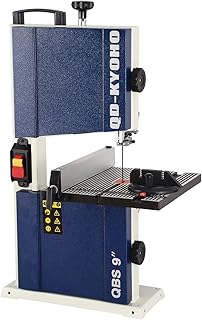
A cast-aluminum worktable with a scale plus a miter gauge gives it a more finished feel than the amp rating suggests, and 2526 FPM keeps cuts clean in softwoods and sheet stock. The 2.5-amp motor rewards patience in thick hardwood, so let the blade set the pace.
PeakPursuit 8-Inch Band Saw
The pure copper motor windings are the durability story here, running cooler than aluminum-wound equivalents during longer sessions. With a tilting table, fence, and miter gauge, it’s a tidy fit for small-part woodworking and occasional aluminum cuts.
Frequently Asked Questions
Can a table top band saw cut metal?
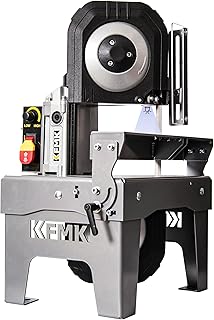
Non-ferrous metals like aluminum and brass, yes, provided you can slow the blade down. For steel you want a purpose-built variable-speed unit such as a 137-472 FPM deep-cut bandsaw with a liftable worktable, because wood-speed blades work-harden and fail quickly on ferrous stock.
How much bench space should I plan for?
Allow the saw’s footprint plus roughly 18 inches of clearance on the infeed and outfeed sides, and keep the throat side open so long workpieces can swing. Cramped clearance forces awkward body positions, which is where accuracy and safety both slip.
What blade should stay on the saw?
A 1/4-inch, 6 TPI blade is the practical default for furniture work: it turns reasonable curves and still tracks straight along a fence. Keep a wider blade for straight-line work and a 1/8-inch for tight radii.
Do these saws need dust extraction?
A shop vacuum at the port captures most of the debris that otherwise lands in your sightline and on the table. Benchtop saws blow fines upward toward your face more than floor-standing models do, so eye protection is not optional.
Final Thoughts
For most home furniture shops, the WEN BA3962 is the balanced pick, since the included stand fixes working height and damps vibration in one move. Choose the SEESII 8-inch if your work is detailed and bench-bound, or the MAXXT 2-in-1 if you need one saw that follows you from bench to jobsite.
Two heading labels in your outline looked like template artifacts (“a/an” and “Band Saw (2026)s”), so I wrote them as natural English.