Key takeaways
- Match tooth count to the work, not the price tag: 24 to 40 teeth clear waste fast for ripping solid stock with light feed pressure, 60 teeth split the difference, and 80 teeth deliver glass-smooth crosscuts in melamine and veneered ply. Using an 80-tooth blade for thick rips forces you to slow down and lean in, which is exactly how hands get tired and cuts drift.
- Check plate thickness against your saw’s muscle: Thin-kerf blades remove less material and let underpowered contractor saws maintain RPM, which reduces bogging and the jerky feed that wears out your grip. Full-kerf plates resist deflection better on cabinet saws with three horsepower or more, giving squarer edges on tall stock.
- Look for expansion slots and a tensioned body: Laser-cut anti-vibration slots and copper-filled expansion joints keep the plate flat as it heats up. Less wobble means less audible whine, less numbness in your fingertips, and a rim that stays true rather than warping into a wandering cut.
- Verify the arbor and the carbide grade: Nearly every North American saw wants a 5/8-inch arbor, so confirm the bore before you order. Then look at tooth material: micro-grain carbide with a generous shoulder can be resharpened several times, which makes a slightly pricier blade the cheaper one across a few years.
- Budget for a small rotation instead of one do-everything blade: Swapping blades takes ninety seconds and saves you from muscling a fine-finish blade through hardwood rips. Multi-packs make that rotation affordable and cut down on the temptation to force the wrong tool.
What's inside
Feed a board into a saw with the wrong blade and your body knows before your eyes do. Your wrists tense, your shoulders creep toward your ears, and you start pushing instead of guiding. That extra effort is not grit, it is friction: too few teeth for the cut, a plate that flexes under load, or carbide that dulled three projects ago. The result is scorched edges, tearout on the underside of plywood, and a workpiece that fights back right at the moment you need it steady.
This guide looks at ten-inch table saw blades through two lenses that rarely get enough attention: how a blade feels over an afternoon of cutting, and how long it holds that feel. Tooth count, plate stiffness, kerf width, and carbide grade all change the amount of force your hands and lower back absorb per cut. Below you will find the picks worth your money in 2026, a selection framework built around fatigue and longevity, and answers to the questions that come up once the blade is actually spinning.
As an Amazon Associate we earn from qualifying purchases.


How to Choose a 10 Inch Blade For Table Saw (2026)
- Match tooth count to the work, not the price tag: 24 to 40 teeth clear waste fast for ripping solid stock with light feed pressure, 60 teeth split the difference, and 80 teeth deliver glass-smooth crosscuts in melamine and veneered ply. Using an 80-tooth blade for thick rips forces you to slow down and lean in, which is exactly how hands get tired and cuts drift.
- Check plate thickness against your saw’s muscle: Thin-kerf blades remove less material and let underpowered contractor saws maintain RPM, which reduces bogging and the jerky feed that wears out your grip. Full-kerf plates resist deflection better on cabinet saws with three horsepower or more, giving squarer edges on tall stock.
- Look for expansion slots and a tensioned body: Laser-cut anti-vibration slots and copper-filled expansion joints keep the plate flat as it heats up. Less wobble means less audible whine, less numbness in your fingertips, and a rim that stays true rather than warping into a wandering cut.
- Verify the arbor and the carbide grade: Nearly every North American saw wants a 5/8-inch arbor, so confirm the bore before you order. Then look at tooth material: micro-grain carbide with a generous shoulder can be resharpened several times, which makes a slightly pricier blade the cheaper one across a few years.
- Budget for a small rotation instead of one do-everything blade: Swapping blades takes ninety seconds and saves you from muscling a fine-finish blade through hardwood rips. Multi-packs make that rotation affordable and cut down on the temptation to force the wrong tool.
The Best 10 Inch Blade For Table Saw (2026)s Reviewed
DEWALT DWA11040 40-Tooth Fine Finish
Forty teeth on a thin-kerf plate is the sweet spot for anyone who rips and crosscuts on the same setup without wanting to change blades constantly, and the computer-balanced body keeps vibration low enough that feed pressure stays light and consistent. The tungsten carbide holds a usable edge through plenty of hardwood, and the tooth geometry sharpens cleanly when it finally dulls.
FOXBC 10-Inch 80-Tooth Ultra Finish
This is a crosscut and sheet-goods specialist, and the high tooth count means each tooth takes a small bite, so tearout on melamine and prefinished plywood stays minimal without a backer board. Feed slowly and evenly here; the blade rewards patience with edges that need little more than a scuff before finishing.
WEN BL1080 80-Tooth Ultra-Fine Finish
A well-tensioned plate with anti-vibration slotting, the BL1080 runs noticeably quieter than budget 80-tooth blades, which matters over a long session in a small shop. It moves between miter saw and table saw without complaint, making it a sensible single purchase for trim carpentry.
WEN BL1060 60-Tooth Fine Finish
Sixty teeth is the most ergonomic all-purpose count on this list: it clears chips well enough to avoid burning in maple while still leaving a crosscut clean enough for joinery. If you only keep one blade mounted between projects, this is the one that asks the least of your arms.
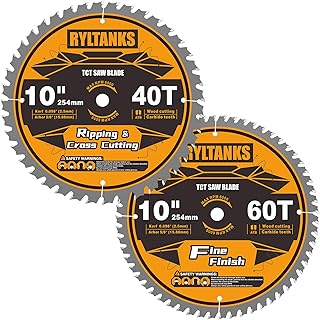
3-Pack 32T, 60T and 80T Combination Set
Buying framing, fine-finish, and ultra-fine blades together removes the main excuse for pushing the wrong blade through the wrong material, which is where burned edges and kickback usually start. Quality sits a step below premium single blades, but the set is excellent value for a beginner building out a first blade rotation.
Frequently Asked Questions
Does a higher tooth count always mean a better cut?
Only when the cut is short or across the grain. Long rips in thick stock need open gullets to eject sawdust, and an 80-tooth blade clogs, heats up, and burns the wood while forcing you to push harder than is safe.
Should I choose thin-kerf or full-kerf?
Pick thin-kerf if your saw is under two horsepower or you cut a lot of expensive hardwood and want to waste less of it. Choose full-kerf on a heavy cabinet saw where the extra plate stiffness improves accuracy on tall cuts.
How do I know when a blade is done?
Watch the effort, not the teeth. When you find yourself feeding more slowly, hearing a change in pitch, or seeing scorch marks and fuzzy fibers on cuts that used to come off clean, the carbide has rounded over. Resharpening usually costs far less than replacement.
Can these blades go on my miter saw too?
Most ten-inch blades with a 5/8-inch arbor fit both, and the WEN and combination-pack blades are explicitly rated for it. Just confirm the maximum RPM printed on the plate exceeds your saw’s no-load speed.
Final Thoughts
For most home shops, the WEN BL1060 60-tooth is the blade that stays on the arbor: balanced, quiet, and forgiving of a relaxed feed rate. Add the DEWALT DWA11040 when you need to rip stock efficiently without straining a smaller motor, and reach for the FOXBC 80-tooth when a project lives or dies on the finish quality of its plywood edges. Together those three cover nearly everything a furniture builder will throw at a table saw, and they do it without making your body pay for it.