Key takeaways
- Duty rating, read strictly: Type IA (300 lb) and Type IAA (375 lb) ratings include you, your clothing, your tools, and the material you are carrying. Budget the rating with a comfortable margin rather than treating it as a target to hit.
- Rung and step geometry: Deep, flat, slightly serrated treads spread pressure across the mid-foot and delay the arch fatigue that narrow round rungs cause within minutes. A full standing platform matters more than an extra foot of reach.
- Hinge and lock quality: On multi-position ladders, the hinge is the wear item. Look for hardened pins, minimal side play out of the box, and locks that seat with an unambiguous mechanical stop you can feel through your palm.
- Material trade-offs: Fiberglass rails are non-conductive, hold stiffness in heat, and resist the gradual dulling that aluminum takes on. Aluminum saves real weight, which matters if you carry the ladder more often than you climb it.
- Base stability and leveling: Stabilizer bars widen the footprint, and integrated leg levelers let you set a true plumb frame on stairs or sloped ground without shimming with scrap wood.
What's inside
Most ladder purchases are decided by two numbers: reach and price. Neither number tells you how your calves will feel after twenty minutes of overhead work, whether the rungs will bite into the arch of a soft-soled shoe, or how much the side rails will flex when you lean sideways to reach the last inch of gutter. Ladders are load-bearing tools that your body has to negotiate, and the difference between a well-engineered frame and a merely adequate one shows up in ankle fatigue, forearm strain, and the small involuntary corrections you make when a foot pad skids a quarter-inch on a tile floor.
This guide evaluates ladder brands the way a durability lab would: rail deflection under eccentric load, rung depth and edge profile, hinge and locking-pin tolerances after repeated cycling, foot-pad compound, and how honestly each maker states its duty rating. Below you will find the models worth your money in 2026, a buying framework built around body mechanics rather than marketing copy, and answers to the questions that come up once a ladder is actually in your hands.
As an Amazon Associate we earn from qualifying purchases.



How to Choose a Ladder Brand (2026)
- Duty rating, read strictly: Type IA (300 lb) and Type IAA (375 lb) ratings include you, your clothing, your tools, and the material you are carrying. Budget the rating with a comfortable margin rather than treating it as a target to hit.
- Rung and step geometry: Deep, flat, slightly serrated treads spread pressure across the mid-foot and delay the arch fatigue that narrow round rungs cause within minutes. A full standing platform matters more than an extra foot of reach.
- Hinge and lock quality: On multi-position ladders, the hinge is the wear item. Look for hardened pins, minimal side play out of the box, and locks that seat with an unambiguous mechanical stop you can feel through your palm.
- Material trade-offs: Fiberglass rails are non-conductive, hold stiffness in heat, and resist the gradual dulling that aluminum takes on. Aluminum saves real weight, which matters if you carry the ladder more often than you climb it.
- Base stability and leveling: Stabilizer bars widen the footprint, and integrated leg levelers let you set a true plumb frame on stairs or sloped ground without shimming with scrap wood.
The Best Ladder Brands (2026) Reviewed
Little Giant Velocity 26 ft Multi-Position with Leg Levelers
The Velocity is the reference point for hinged multi-position ladders: rail stiffness stays predictable well past mid-span, and the integrated leg levelers solve the single most common stability problem in home use, which is uneven ground. If you own one ladder for a two-story house with stairs, this is the defensible choice.
Little Giant MightyLite 8 ft Fiberglass Stepladder
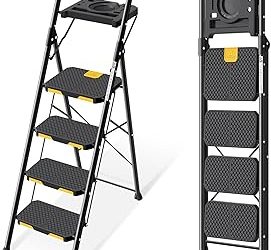
A 375-pound rating in a slim-profile fiberglass frame is an unusual combination, and the Ground Cue feature — an audible signal when the ladder is fully seated — removes a genuine ergonomic hazard for anyone who climbs without looking down. The wide anti-slip steps and standing platform make extended overhead work far less punishing on the feet.
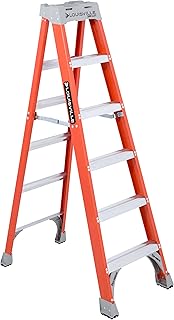
Louisville FS1506 6 ft Fiberglass Step Ladder
Louisville’s fiberglass stepladders earn their reputation on repeatability: consistent rail lay-up, solid rung-to-rail joints, and a Type IA rating that holds up under the shock loading of daily use. At six feet it is the right tool for interior work where electrical proximity makes a non-conductive frame the sensible default.
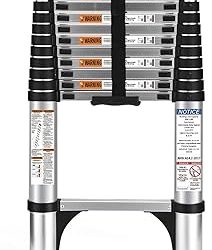
17 FT Telescoping A-Frame with Stabilizer Bar and Wheels
The stabilizer bar meaningfully widens the base, and the transport wheels spare your lower back on longer carries — a small feature with an outsized effect on how often you actually use the ladder. Verify hinge play on arrival and cycle every lock before the first climb.
LANBITOU 14 FT Multi-Position Folding Ladder
A capable aluminum multi-position ladder at an accessible price, with anti-slip treads and a compact folded footprint that stores in a closet rather than a garage bay. Treat the 330-pound rating conservatively and keep the extension work well within the stated limits.
Frequently Asked Questions
Is fiberglass genuinely worth the extra weight?
Yes, if you work near wiring or in heat. Fiberglass is non-conductive and keeps its stiffness at temperatures where aluminum feels noticeably more compliant. For pure carrying convenience, aluminum still wins.
How much reach do I actually get from a stated height?
Usable reach is roughly your standing height on the ladder plus your safe overhead extension, minus the top rungs you should not stand on. Plan for less than the number on the label, not more.
Do multi-position hinges loosen over time?
All of them develop some play. Quality hinges develop it slowly and predictably; inexpensive ones can show measurable slop within a season of heavy use. Inspect pins annually and keep them clean and lightly lubricated.
What reduces foot fatigue the most?
Tread depth, followed by a stable base. A deep step or full platform distributes load across your whole foot, while a ladder that shifts under you forces constant micro-corrections that tire your legs faster than the work itself.
Final Thoughts
For most homeowners, the Little Giant Velocity 26 ft is the ladder that eliminates the need for a second one, particularly if stairs or sloped ground are part of your reality. The MightyLite 8 ft is the better buy if your work is mainly indoors and overhead, and the Louisville FS1506 remains the sensible, non-conductive workhorse for anyone who wants a dependable six-footer and nothing more complicated than that.