Key takeaways
- Working height and reach: Aim for a tabletop between 34 and 36 inches so your forearms stay near horizontal while feeding stock. Anything lower forces a stooped back on every rip; anything higher robs you of downward control. Check that the rip fence lock and bevel crank sit within a comfortable arm sweep from the operating position.
- Fence rigidity over rip capacity: A 32-inch rip number means little if the fence flexes when you lean on it. Squeeze the far end of the fence with moderate pressure and watch for movement at the blade; a fence that deflects even a sixteenth will cause burn marks and creeping cut widths within months.
- Trunnion and arbor construction: Cast trunnions bolted to a rigid frame keep blade-to-slot alignment far longer than stamped assemblies. Sealed ball bearings and a machined arbor flange are what separate a saw that stays quiet at year five from one that starts humming at month eight.
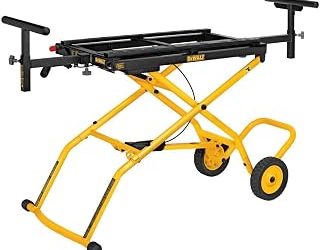
- Mobility without the deadlift: Rolling stands solve storage, but only if you can raise and lower them without hoisting the whole machine. Look for a lever-actuated or gravity-assisted stand and keep total weight under what you can comfortably tip and steer alone.
- Dust capture at the source: In a small shop the air you breathe is the air you just cut in. Prioritize a shrouded blade cavity and a below-table port sized for your existing hose, plus a top-mounted guard port if you plan to run a shop vacuum.
What's inside
Most people shopping for a cabinet saw in a small shop eventually run into the same math problem: a true cabinet saw wants a 600-pound footprint, a 220V circuit, and four feet of clearance on every side. A one-car garage or basement bay rarely offers any of those. So the practical question is not “which cabinet saw fits?” but “which saw delivers cabinet-saw behavior — a fence that stays parallel, a table that stays flat, an arbor that stays quiet — inside a footprint you can wheel against the wall on Sunday night?” That trade-off is where most buyers get burned, usually by choosing on horsepower alone and discovering later that the fence racks under hand pressure or that the stand puts the tabletop at an elbow height that wrecks their shoulders after an hour.
This guide looks at the strongest small-shop options through two lenses I care about most after years of watching machines age: ergonomics, meaning working height, reach distance, control placement, and how much of the cut you can complete without twisting your spine; and durability, meaning trunnion construction, fence deflection, bearing quality, and whether the moving parts still hold calibration after a few hundred cuts. Below you will find portable and compact saws that punch well above their footprint, plus benchtop craft saws for modelmakers and small-part work, along with the selection criteria I use before recommending anything.
As an Amazon Associate we earn from qualifying purchases.


How to Choose a/an Cabinet Table Saw For Small Shop (2026)
- Working height and reach: Aim for a tabletop between 34 and 36 inches so your forearms stay near horizontal while feeding stock. Anything lower forces a stooped back on every rip; anything higher robs you of downward control. Check that the rip fence lock and bevel crank sit within a comfortable arm sweep from the operating position.
- Fence rigidity over rip capacity: A 32-inch rip number means little if the fence flexes when you lean on it. Squeeze the far end of the fence with moderate pressure and watch for movement at the blade; a fence that deflects even a sixteenth will cause burn marks and creeping cut widths within months.
- Trunnion and arbor construction: Cast trunnions bolted to a rigid frame keep blade-to-slot alignment far longer than stamped assemblies. Sealed ball bearings and a machined arbor flange are what separate a saw that stays quiet at year five from one that starts humming at month eight.
- Mobility without the deadlift: Rolling stands solve storage, but only if you can raise and lower them without hoisting the whole machine. Look for a lever-actuated or gravity-assisted stand and keep total weight under what you can comfortably tip and steer alone.
- Dust capture at the source: In a small shop the air you breathe is the air you just cut in. Prioritize a shrouded blade cavity and a below-table port sized for your existing hose, plus a top-mounted guard port if you plan to run a shop vacuum.
The Best Cabinet Table Saw For Small Shop (2026)s Reviewed
DEWALT DWE7491RS 10-Inch with Rolling Stand
This is the closest thing to cabinet-saw manners in a portable body: the rack-and-pinion fence tracks square across its full 32-1/2-inch capacity without the tap-and-check ritual cheaper fences demand, and the 4800 RPM motor holds speed through hardwood. The foldable rolling stand is the ergonomic win here, raising the table to a natural forearm height and collapsing without asking you to lift the full mass off the floor.
SKIL TS6307-00 15 Amp 10-Inch Jobsite Saw
SKIL’s rack-and-pinion fence and integrated foot-release folding stand make this the friendliest setup-and-teardown experience in the class, which matters when the saw lives against a wall six days a week. The 15-amp motor and generous table give you real sheet-goods capability, and the guard assembly is easy enough to remove and reinstall that you will actually keep using it.
DEWALT DWE7485 8-1/4-Inch Compact Saw
Choose this when floor space, not rip capacity, is your binding constraint: it is light enough for one-handed carry to a bench yet keeps the same fence architecture and metal roll cage that make DEWALT saws survive being moved constantly. Just plan on a solid, correctly-heighted bench or stand, since the low profile puts the table well below comfortable working height on the floor.
MXBAOHENG Mini Table Saw S3
For miniatures, box work, and thin hardwood stock, the seven-speed control lets you match feed rate to material instead of muscling parts through a single fixed RPM. The 1/2-inch depth and small table keep your hands close to the blade, so a pushstick and good bench lighting are non-negotiable accessories.
96W Dual Motor Mini Table Saw
The dual-motor layout gives this desktop unit noticeably better torque recovery than single-motor hobby saws, and the 12mm depth with 0-90 degree adjustment covers most model-making and PCB tasks. Four included blades let you switch between wood, acrylic, and plastic without hunting for arbor-compatible replacements.
Frequently Asked Questions
Can a portable saw really replace a cabinet saw?
For furniture-scale work in a small shop, yes, with caveats. You give up mass-based vibration damping and continuous-duty motor cooling, which means slower feed rates in thick hardwood and more attention to blade choice. What you keep is accuracy, provided the fence and trunnions are sound.
What working height should I set my saw to?
Stand relaxed, bend your elbows to 90 degrees, and measure to your palms. A tabletop within an inch or two of that height lets you steer stock with your shoulders down and your wrists neutral, which is the single cheapest injury-prevention upgrade available.
How do I keep a compact saw accurate over time?
Check blade-to-miter-slot parallelism and fence alignment every few months, keep the elevation and bevel screws clean and lightly lubricated, and avoid using the tabletop as a hammering surface. Most drift comes from debris in the mechanisms, not from worn parts.
Are mini craft saws safe for furniture parts?
They are built for small stock, thin sheet, and hobby materials, not for ripping structural lumber. Use them for inlay, jig parts, and model work, and keep a full-size saw for anything that will carry load.
Final Thoughts
If your shop builds furniture, the DEWALT DWE7491RS is the pick that ages best — a rigid fence, a stand at the right height, and enough motor to avoid the stalling that shortens tool life. The SKIL TS6307-00 is the smarter buy if daily setup and teardown is your reality, and the DEWALT DWE7485 makes sense when every square foot counts and you already have a solid bench to mount it on. For miniature and craft work, the MXBAOHENG S3 covers the small-scale end without pretending to be more than it is.