Key takeaways
- Verify the start system on the exact SKU: Many 212cc and 3000-plus PSI platforms ship in both recoil-only and electric-start trims, sometimes under nearly identical titles. Confirm the listing specifies a starter and battery before you buy, and factor in a trickle charger if the unit will sit through winter.
- Pump type over peak pressure: An axial cam pump like the AAA unit on DeWalt’s residential machine is direct-drive, compact, and fine for seasonal use. Brass or copper-headed pumps resist thermal cycling better. Either way, plan on pump saver fluid and never run dry, which is the single most common early death for gas units.
- Trigger and wand ergonomics: Look for a cushioned grip, a trigger you can hold with two fingers rather than a full fist, and an extension wand that lets you clean furniture undersides without crouching. A swivel inlet on the gun stops the hose from torqueing your wrist every time you pivot.
- Hose length and material: A 32-foot hose beats a 25-footer for a patio set plus a driveway, but stiff PVC coils remember every bend. If yours fights you, a hybrid-jacket replacement hose is the cheapest ergonomic upgrade you can make.
- Frame, wheels, and nozzle logic: Pneumatic or large-diameter wheels roll over lawn and expansion joints; small hard plastic casters do not. Check for a real lift handle at the balance point. For furniture, you want 25- and 40-degree tips plus a soap nozzle, and the discipline to leave the 0-degree tip in the box.
What's inside
Outdoor furniture ages in slow motion until the day you notice it: a teak bench gone gray at the joints, powder-coated aluminum wearing a film of pollen and mildew, a resin sectional whose weave has quietly turned the color of weak tea. A gas pressure washer solves that in an afternoon. The catch is that most people buying one are shopping the wrong number. They chase PSI, then discover the real fatigue comes from yanking a recoil cord six times on a cold morning, wrestling a hose with a permanent coil memory, and holding a trigger gun whose spring fights back for forty straight minutes.
That is why electric start matters, and why this guide reads a machine the way an ergonomics and durability specialist would: how the load transfers to your wrist and shoulders, whether the pump is built to survive a fifth season, how the frame behaves when you lift it over a threshold, and what fails first. Below are the gas units worth considering in 2026 for homeowners who clean furniture, decking, siding, and vehicles, along with the buying criteria that actually predict satisfaction two years in.
As an Amazon Associate we earn from qualifying purchases.


How to Choose a/an Electric Start Gas Pressure Washer (2026)
- Verify the start system on the exact SKU: Many 212cc and 3000-plus PSI platforms ship in both recoil-only and electric-start trims, sometimes under nearly identical titles. Confirm the listing specifies a starter and battery before you buy, and factor in a trickle charger if the unit will sit through winter.
- Pump type over peak pressure: An axial cam pump like the AAA unit on DeWalt’s residential machine is direct-drive, compact, and fine for seasonal use. Brass or copper-headed pumps resist thermal cycling better. Either way, plan on pump saver fluid and never run dry, which is the single most common early death for gas units.
- Trigger and wand ergonomics: Look for a cushioned grip, a trigger you can hold with two fingers rather than a full fist, and an extension wand that lets you clean furniture undersides without crouching. A swivel inlet on the gun stops the hose from torqueing your wrist every time you pivot.
- Hose length and material: A 32-foot hose beats a 25-footer for a patio set plus a driveway, but stiff PVC coils remember every bend. If yours fights you, a hybrid-jacket replacement hose is the cheapest ergonomic upgrade you can make.
- Frame, wheels, and nozzle logic: Pneumatic or large-diameter wheels roll over lawn and expansion joints; small hard plastic casters do not. Check for a real lift handle at the balance point. For furniture, you want 25- and 40-degree tips plus a soap nozzle, and the discipline to leave the 0-degree tip in the box.
The Best Electric Start Gas Pressure Washer (2026)s Reviewed
4200 PSI 212cc Gas Pressure Washer with 32 ft Hose
The long hose and five quick-connect tips make this the most practical layout here for a patio-and-driveway session without repositioning the cart. Treat the 4200 PSI rating as headroom rather than a working setting, and stay on the 40-degree tip anywhere near wood, wicker, or cushions.
4200 PSI 212cc Commercial Washer with Copper Pump (Black)
Same displacement class, but the copper pump head and included extension wand are the durability and reach story: less heat-related distortion over long runs, and a lower working posture when you are rinsing table undersides and chair frames. EPA/CARB/ETL listing means California buyers are covered.
Westinghouse WPX3400
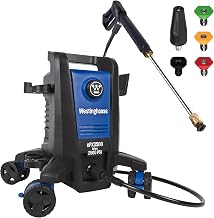
My pick for mixed household work. At 3400 PSI and 2.6 GPM it hits the sweet spot where flow does the cleaning and pressure does not gouge softwood, and the onboard soap tank removes the awkward siphon-tube step when you are detergent-washing a furniture set.
DeWalt DXPW3300-S
The best-considered controls of the group: the ergonomic spray gun and AAA axial cam pump are a deliberately homeowner-scaled pairing, tuned for comfort across a two-hour job rather than all-day contractor duty. Note the 25-foot hose and 49-state compliance before ordering.
4200 PSI 212cc Commercial High Powered Pressure Washer
A leaner take on the same 212cc, 4.0 GPM platform with the copper pump, spray gun, and wand retained. Reasonable if you want maximum flow for concrete and fencing and are willing to add your own longer hose.
Frequently Asked Questions
Is electric start worth it on a gas pressure washer?
If you have shoulder, elbow, or back sensitivity, yes. Recoil starting a 212cc engine is a sharp, asymmetric pull, and cold-start attempts multiply it. Electric start adds a battery to maintain, which is a fair trade.
How much pressure is safe for outdoor furniture?
Stay under roughly 1500 PSI at the surface. Achieve that with a 40-degree tip and distance rather than by guessing, and always test on a hidden section of frame or weave first.
Does higher PSI clean faster than higher GPM?
Flow moves debris; pressure breaks the bond. For broad surfaces, GPM is the bigger time saver, which is why 4.0 GPM machines finish driveways noticeably faster than higher-PSI, lower-flow units.
What maintenance keeps one alive past five years?
Fuel stabilizer or a drained tank in the off-season, an annual oil change, an inlet filter you actually inspect, and pump saver before freezing weather. Neglected pumps and stale fuel account for most failures.
Final Thoughts
For most homeowners cleaning furniture alongside hard surfaces, the Westinghouse WPX3400 offers the most balanced pressure-to-flow ratio with the convenience of an onboard soap tank, while the DeWalt DXPW3300-S earns its place on grip comfort and pump quality. If you need maximum coverage speed and a longer working radius, the 4200 PSI 212cc unit with the 32-foot hose is the pragmatic choice, just confirm the electric-start trim on the listing before you check out.