Key takeaways
- Projection depth: Recliners open up a much larger void than office chairs. Measure the gap at your typical recline angle — most people need 4 to 5 inches of cushion thickness, not the 2 to 3 inches that suits a task chair.
- Foam density and recovery: Look for high-density memory foam or a firm polyurethane core. Low-density fill feels plush on day one, then develops compression set — a permanent dent where your spine sits. Density, not softness, determines lifespan.
- Contact area: Wide cushions (18 to 20 inches) distribute load across the erector spinae rather than concentrating it on a narrow band. Broader is generally kinder on a reclined back.
- Strap system: Recliners have thick wings and side levers that defeat many strap designs. Check for adjustable dual straps with a long span, or consider a strapless cushion held in place by seat-back friction.
- Cover durability: Removable, machine-washable covers matter because skin oils degrade fabric over time. Tightly woven mesh, corduroy, and dense knits resist pilling far better than thin velour.
What's inside
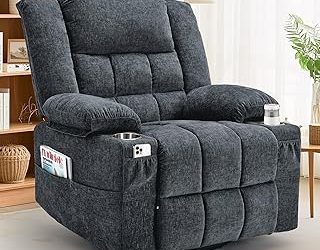
Recliners are designed around one thing: letting your torso fall backward. That’s excellent for offloading spinal compression and terrible for maintaining the natural inward curve of your lower back. As the backrest tilts, the gap between your lumbar spine and the upholstery widens, your pelvis rolls rearward, and the discs at L4-L5 sit under sustained asymmetric load. Most people feel it as a dull ache after forty minutes of reading or an evening of television — not an injury, just tissue held in a bad position for too long.
A lumbar cushion solves that geometry problem, but only if it’s built for a reclined posture rather than an upright desk chair. This guide looks at fill density, cover abrasion resistance, strap architecture, and how each cushion holds its shape after months of daily loading. I’ve focused on the specs that predict long-term performance, because a pillow that flattens by 20% in six months stops supporting anything at all.
As an Amazon Associate we earn from qualifying purchases.


How to Choose a Lumbar Support Cushion For Recliner Chair (2026)
- Projection depth: Recliners open up a much larger void than office chairs. Measure the gap at your typical recline angle — most people need 4 to 5 inches of cushion thickness, not the 2 to 3 inches that suits a task chair.
- Foam density and recovery: Look for high-density memory foam or a firm polyurethane core. Low-density fill feels plush on day one, then develops compression set — a permanent dent where your spine sits. Density, not softness, determines lifespan.
- Contact area: Wide cushions (18 to 20 inches) distribute load across the erector spinae rather than concentrating it on a narrow band. Broader is generally kinder on a reclined back.
- Strap system: Recliners have thick wings and side levers that defeat many strap designs. Check for adjustable dual straps with a long span, or consider a strapless cushion held in place by seat-back friction.
- Cover durability: Removable, machine-washable covers matter because skin oils degrade fabric over time. Tightly woven mesh, corduroy, and dense knits resist pilling far better than thin velour.
The Best Lumbar Support Cushion For Recliner Chair (2026)s Reviewed
HOMBYS Extra Large Lumbar Support Pillow
At 20 by 13.5 inches with a 5-inch profile, this is the most dimensionally appropriate option here for a genuine recliner void, and the thick memory foam block resists bottoming out under body weight. It’s a strong fit for older users who spend extended sessions in one position and need the pelvis actively blocked from rolling back.
Large Memory Foam Back Support Cushion (Ergonomic Backrest)
A generously sized contoured cushion that works across recliners, sofas, and gaming chairs, with a machine-washable cover that makes long-term hygiene realistic. The wider footprint spreads pressure well, though the softer feel suits moderate rather than heavy support needs.
HIGOGOGO Tufted Corduroy Back Support Cushion
The tufted corduroy construction is the standout durability feature — that channeled weave handles repeated abrasion better than most smooth-faced covers, and the tufting keeps internal fill from migrating. It reads as furniture rather than a medical accessory, which matters in a living room.
Everlasting Comfort Original Lumbar Support Pillow
A well-proven contoured memory foam design with a reliable strap system and consistent rebound over time. Its profile is tuned for upright seating, so it performs best in recliners with a shallower backrest curve or when you want firm support without much bulk.
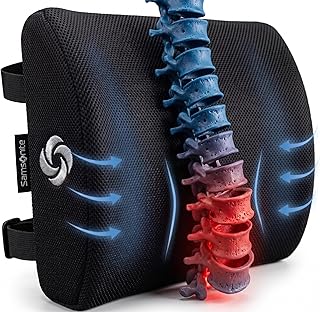
Samsonite Lumbar Support Pillow
Compact, firm, and travel-friendly, with memory foam that holds a defined shape rather than collapsing. Choose it if you move between a recliner, a car seat, and a desk chair and want one cushion that transitions cleanly among them.
Frequently Asked Questions
Where exactly should the cushion sit?
Position the thickest point at the small of your back, roughly level with your navel or just above your belt line. Too high and it pushes your shoulders forward; too low and it tilts your pelvis instead of supporting the lumbar curve.
Do I need straps for a recliner?
Not always. In a deep recliner, body weight and seat-back friction often hold a large cushion in place. Straps help most in narrower chairs or if you shift position frequently.
How long should a memory foam cushion last?
Expect two to four years of daily use from a high-density core. If you notice the cushion no longer springs back within a few seconds of standing up, the foam has lost its structural function.
Can a cushion make back pain worse?
An overly thick cushion can hyperextend the lumbar spine and create new discomfort. Start with the least amount of support that keeps you upright and comfortable, and consult a clinician for persistent or radiating pain.
Final Thoughts
For a purpose-built recliner cushion, the HOMBYS Extra Large is the most anatomically correct choice thanks to its 5-inch depth and broad contact area, while the HIGOGOGO tufted corduroy offers the best long-term cover durability with living-room aesthetics. If you need one cushion that follows you from recliner to car to desk, the Samsonite is the sensible pick.