Key takeaways
- Airflow control: Look for an adjustable inlet or similarly practical ventilation system so you can fine-tune combustion instead of accepting a fixed burn rate.
- Handling: Wheels, a carry handle, and a stable base make a tall heater much easier to reposition safely when the wind, seating layout, or storage needs change.
- Weather protection: A stainless-steel rain cap helps limit water entry, while rust-resistant components are preferable for patios exposed to damp air.
- Maintenance: An accessible ash tray and a straightforward pellet-loading path reduce awkward bending and make regular cleanout more likely.
- Flame visibility: Borosilicate glass tubes and viewing windows create a stronger visual centerpiece, but inspect them regularly for soot, cracks, and heat-related damage.
What's inside
Pellet patio heaters promise the atmosphere of a fire pit with a more controlled footprint, but the buying decision is rarely simple. Construction quality, airflow, ash handling, mobility, and the visibility of the flame all affect whether a heater becomes a dependable outdoor fixture or an awkward, smoky novelty.
This guide evaluates the leading designs from an ergonomics-and-durability perspective. We focus on how easily each unit can be positioned, loaded, cleaned, and protected from weather, while also considering the practical details that matter during real patio use: viewing windows, caster wheels, rain caps, adjustable airflow, and long-burning pellet operation.
As an Amazon Associate we earn from qualifying purchases.





How to Choose a Pellet Patio Heater (2026)
- Airflow control: Look for an adjustable inlet or similarly practical ventilation system so you can fine-tune combustion instead of accepting a fixed burn rate.
- Handling: Wheels, a carry handle, and a stable base make a tall heater much easier to reposition safely when the wind, seating layout, or storage needs change.
- Weather protection: A stainless-steel rain cap helps limit water entry, while rust-resistant components are preferable for patios exposed to damp air.
- Maintenance: An accessible ash tray and a straightforward pellet-loading path reduce awkward bending and make regular cleanout more likely.
- Flame visibility: Borosilicate glass tubes and viewing windows create a stronger visual centerpiece, but inspect them regularly for soot, cracks, and heat-related damage.
The Best Pellet Patio Heaters (2026) Reviewed
70-Inch Glass-Tube Pellet Patio Heater
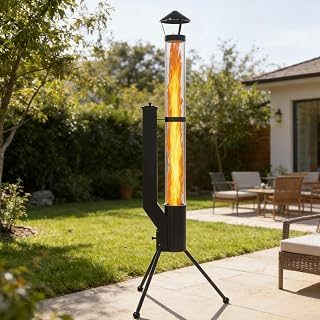
This tall, versatile design is aimed at buyers who want a heater, fire pit, and outdoor cooking-adjacent centerpiece in one portable format. Its glass flame column should provide an engaging view from several seating positions, while the overall height makes careful placement and a level surface especially important.
70,000 BTU Pellet Patio Heater
With a high stated heat output and a glass viewing window, this model is a compelling choice for larger gatherings or more open patios. The wheels are an ergonomic advantage, but a unit of this size should be moved only when cool and handled on smooth, unobstructed surfaces.
BPS 56-Inch Smokeless Pellet Heater
The BPS takes a more compact approach, making it easier to integrate into a smaller porch, garden, or camping setup. Its rain cap and viewing window address two everyday concerns—weather exposure and flame monitoring—while the shorter profile can feel less visually dominant around low outdoor furniture.
64.5-Inch Pellet Torch Heater
This torch-style heater emphasizes flame presentation, with a glass tube and ash tray supporting both ambiance and routine upkeep. The ash tray is particularly useful from a maintenance standpoint because it gives spent material a defined collection point rather than leaving cleanup scattered around the base.
64-Inch Stainless-Steel Pellet Heater
For buyers who prioritize serviceability, this model has a practical feature set: a stainless-steel rain cap, lockable caster wheels, carry handle, ash tray, and adjustable air inlet. Those controls and contact points make it one of the more adaptable choices for a backyard that alternates between entertaining, storage, and repositioning.
Frequently Asked Questions
Are pellet patio heaters easier to use than traditional wood fire pits?
They can be more predictable because pellets are uniform in size and generally simpler to portion than logs. However, they still require ventilation, careful ignition, ash removal, and a fully extinguished, cool-down period before storage.
Where should a pellet patio heater be placed?
Use it outdoors on a stable, nonflammable, level surface with generous clearance from roofs, walls, umbrellas, branches, and furniture. Always follow the manufacturer’s clearance guidance, and avoid locations where wind could push heat or embers toward combustible materials.
How often should the ash tray be cleaned?
Check it before each extended use and empty it whenever ash begins to restrict airflow or reduce the available space. Let all residue cool completely, then use a suitable metal container rather than placing warm ash directly in household waste.
Can these heaters remain outside year-round?
Weather-resistant parts do not make a heater weatherproof. A rain cap can reduce water entry, but covered storage or a properly fitted outdoor cover will better protect glass, fasteners, wheels, and internal surfaces between uses.
Final Thoughts
The 64-Inch Stainless-Steel Pellet Heater is a strong all-rounder for buyers who value airflow adjustment and easy repositioning, while the 70-Inch Glass-Tube model suits gatherings where flame visibility is the priority. For tighter spaces, the BPS 56-Inch Smokeless Pellet Heater offers a more manageable footprint without abandoning the viewing-window experience.