Key takeaways
- Footprint and conversion geometry: Measure the flat-open length, not just the closed width. A 59-inch loveseat that opens to roughly 71 inches suits users under about 5’10”; taller sleepers should target 72 inches closed or plan for a diagonal layout. Leave 24 inches of clear path on at least one side.
- Seat height and egress: Standing up is where low-profile designs bite. Around 16 to 18 inches of seat height keeps hips level with knees and is easiest on the joints. Boneless floor models sit near 12 inches, which is fine for younger, mobile users and awkward for anyone with knee or hip limitations.
- Foam density and recovery: Memory foam over a supportive base layer resists the trenching you get from single-layer polyfoam. Press hard into the front seat edge with your palm: quality foam pushes back and rebounds within a second or two rather than staying dented.
- Frame and hinge hardware: Steel tube frames with multi-position ratchet hinges outlast wooden dowel constructions in daily-conversion use. Check the stated weight capacity as a proxy for deck strength, and look for cross-bracing under the seat rather than fabric-only slings.
- Upholstery durability: Corduroy and tight-weave linen blends handle abrasion and hide wear well. Faux leather wipes clean easily but can crack at flex points near hinges, so prioritize it in low-traffic rooms or where spills are the bigger risk.
What's inside
Small-space furniture shopping usually turns into a compromise you feel in your back. A sofa that seats three comfortably eats the walking path; a sleeper that folds flat leaves you perched on a thin cushion with your knees higher than your hips. Futons promise to solve both problems, but the cheap ones fail in predictable ways: seat foam that packs down to a pancake inside six months, recline hinges that lose their detent and creep backward under load, and welded frames that develop a metallic tick at the joints because the tubing was too thin for the span.
This guide looks at compact futons through two lenses that matter more than styling: postural support across both the seated and flat positions, and the material and hardware choices that determine whether the piece still feels solid in year three. Below you’ll find the models worth shortlisting, followed by the specification checks I’d run before buying, honest notes on where each design earns its keep, and answers to the questions that come up most often once the box arrives.
As an Amazon Associate we earn from qualifying purchases.


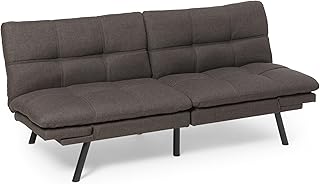


How to Choose a Futon For Small Spaces (2026)
- Footprint and conversion geometry: Measure the flat-open length, not just the closed width. A 59-inch loveseat that opens to roughly 71 inches suits users under about 5’10”; taller sleepers should target 72 inches closed or plan for a diagonal layout. Leave 24 inches of clear path on at least one side.
- Seat height and egress: Standing up is where low-profile designs bite. Around 16 to 18 inches of seat height keeps hips level with knees and is easiest on the joints. Boneless floor models sit near 12 inches, which is fine for younger, mobile users and awkward for anyone with knee or hip limitations.
- Foam density and recovery: Memory foam over a supportive base layer resists the trenching you get from single-layer polyfoam. Press hard into the front seat edge with your palm: quality foam pushes back and rebounds within a second or two rather than staying dented.
- Frame and hinge hardware: Steel tube frames with multi-position ratchet hinges outlast wooden dowel constructions in daily-conversion use. Check the stated weight capacity as a proxy for deck strength, and look for cross-bracing under the seat rather than fabric-only slings.
- Upholstery durability: Corduroy and tight-weave linen blends handle abrasion and hide wear well. Faux leather wipes clean easily but can crack at flex points near hinges, so prioritize it in low-traffic rooms or where spills are the bigger risk.
The Best Futons For Small Spaces (2026) Reviewed
COMHOMA 72″ Convertible Futon Sofa Bed
The multi-angle backrest is the standout here, giving you genuine intermediate recline positions instead of the usual sit-or-flat binary, which makes a real difference for reading and laptop work. At 72 inches it accommodates average-height adults fully extended, and the breathable fabric helps with heat buildup during overnight use.
Grey Linen Futon Sofa Bed with Memory Foam
Adjustable armrests plus an adjustable backrest let you tune elbow and shoulder height independently, which is rare at this size and a meaningful ergonomic advantage for anyone who works from the couch. The memory foam layer resists the front-edge collapse that plagues budget loveseat sleepers.
MeMoreCool 59″ Boneless Couch Bed
A 700-pound capacity and boneless construction mean there’s no internal frame to squeak, sag, or misalign, so durability comes down to foam quality rather than hardware. The corduroy cover wears exceptionally well; just note the low seat height and the 59 x 71 inch open size, which runs shorter than a queen.
Amazon Basics Convertible Futon Sofa Bed
A sensible, no-drama pick with memory foam and multiple locking positions, and the dark grey linen hides everyday marks better than lighter upholstery. Support is firmer than plush, which is the right call for a piece doing double duty as seating and a bed.
Flamaker Faux Leather Convertible Loveseat
Removable armrests are the practical trick: pull them off and you gain several inches of usable sleeping width without changing the closed footprint. Wipe-clean faux leather suits guest rooms and home offices, though I’d keep it out of direct sun to slow surface cracking.
Frequently Asked Questions
Can I sleep on a small futon every night?
Yes, if the foam is dense enough to keep your hips from sinking below your shoulders. Rotate and flip the cushion sections weekly, and add a two-inch topper if you’re a side sleeper needing more shoulder relief.
How long should a compact futon last?
Expect three to five years of daily use from a steel-framed model with layered memory foam, and longer from boneless designs since there’s no hardware to wear out. Cushion compression, not frame failure, is usually what ends the service life.
Are boneless floor futons practical for small apartments?
Very, since they’re light, silent, and easy to reposition. The tradeoff is the low seat height, which makes standing up harder and puts you closer to floor drafts and dust.
How do I keep the seat from sagging?
Vary where you sit, avoid parking in one spot night after night, and convert the unit fully open occasionally so the foam decompresses evenly. Tightening the frame bolts twice a year prevents the flex that accelerates foam breakdown.
Final Thoughts
For most small rooms, the COMHOMA 72″ offers the best balance of usable sleeping length and genuinely adjustable recline positions, while the MeMoreCool 59″ boneless model is the pick if long-term durability and silence matter more than seat height. If you want dependable support without overthinking it, the Amazon Basics futon covers the fundamentals well at a lower risk.