Key takeaways
- SCFM at 90 PSI, not gallons: Delivery is what feeds the gun. Budget roughly 2.5 SCFM per framing nailer in steady use, so a 4 CFM unit genuinely supports two carpenters while a 2.6 SCFM pancake is a solid one-gun machine.
- Carry geometry: Lift the unit before you commit. A handle centered over the tank keeps the load on your spine rather than your rotator cuff; offset handles on 40-pound pancakes are the single most common source of ladder-day soreness.
- Pump construction and duty cycle: Oil-free aluminum pumps are maintenance-free and cold-start reliably, but cast-iron cylinder designs run cooler under long cycles and tolerate framing’s near-continuous demand with less heat-related wear.
- Protected controls: Regulators, gauges, and couplers should sit inside a steel roll cage or recessed panel. Exposed brass fittings are the first casualty of stacked-tool transport and the most expensive small repair.
- Noise and vibration: Anything under about 80 dB spares your hearing and your patience; rubber isolation feet also stop the unit from walking across a subfloor and chewing the finish.
What's inside
Framing guns are the thirstiest tools on a residential job site. A single full-round-head nailer can pull well past 2 SCFM once you settle into a rhythm on a wall plate, and two carpenters sharing one small tank quickly turn into two carpenters standing around waiting for pressure to climb back. Most buyers shop by tank gallons alone, then discover the real problem three days in: a machine that recovers fine but hangs off your arm like a bag of wet sand, or a plastic control panel that cracks the first time it rides in a truck bed with a bundle of stakes.
This guide looks at framing compressors the way a carpenter’s shoulders and a rental fleet manager would. I weighted three things: recovery rate under continuous nailing, how the unit actually moves — handle placement, balance point, whether the weight sits over your centerline — and long-term survivability of the pump, regulator, and cage. Sound level matters too, since 90-plus dB running all day compounds fatigue in ways that show up around 3 p.m. Picks below span pancake, twin stack, and wheeled formats.
As an Amazon Associate we earn from qualifying purchases.



How to Choose a/an Air Compressor For Framing Gun (2026)
- SCFM at 90 PSI, not gallons: Delivery is what feeds the gun. Budget roughly 2.5 SCFM per framing nailer in steady use, so a 4 CFM unit genuinely supports two carpenters while a 2.6 SCFM pancake is a solid one-gun machine.
- Carry geometry: Lift the unit before you commit. A handle centered over the tank keeps the load on your spine rather than your rotator cuff; offset handles on 40-pound pancakes are the single most common source of ladder-day soreness.
- Pump construction and duty cycle: Oil-free aluminum pumps are maintenance-free and cold-start reliably, but cast-iron cylinder designs run cooler under long cycles and tolerate framing’s near-continuous demand with less heat-related wear.
- Protected controls: Regulators, gauges, and couplers should sit inside a steel roll cage or recessed panel. Exposed brass fittings are the first casualty of stacked-tool transport and the most expensive small repair.
- Noise and vibration: Anything under about 80 dB spares your hearing and your patience; rubber isolation feet also stop the unit from walking across a subfloor and chewing the finish.
The Best Air Compressor For Framing Gun (2026) Reviewed
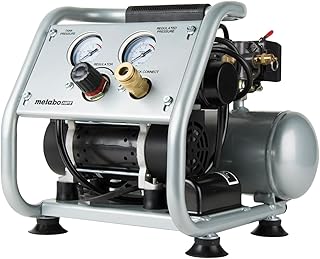
Metabo HPT EC914S 6-Gallon Pancake
The 4 CFM output is the headline here: this is the pancake that genuinely keeps two framing nailers or a framer-plus-roofer pairing fed without stalling. The 200 PSI tank stores more usable air per cycle, and the guarded control cluster and balanced center handle make it the most transport-tolerant pancake in the group.
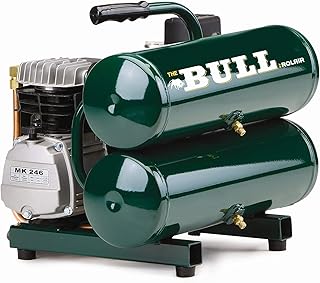
Rolair FC2002 2 HP Twin Stack
A cast-iron, belt-driven pump in a format built to be rebuilt rather than replaced, with overload protection and manual reset that saves the motor from the abuse of long extension cords. It is the heaviest option and the loudest ergonomic tradeoff is its lift weight, but the twin-stack profile carries close to the leg and it will outlive several oil-free units.
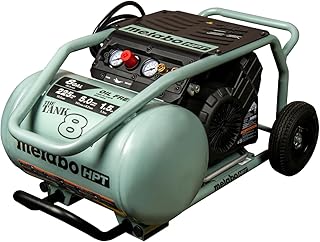
Metabo HPT EC1315S 8-Gallon Trolley
If your work is remodel and interior framing, rolling beats carrying every time — real rubber tires and an upright handle mean no repeated deadlifts across a slab. The 8-gallon tank at 225 PSI delivers the deepest air reserve in this lineup, though stairs and unfinished ground still call for a two-person lift.
DEWALT DWFP55126 6-Gallon Pancake
At 2.6 SCFM and 165 PSI this is a well-sorted single-gun framer with a genuinely low-effort high-flow regulator and a console cover that has proven itself across years of fleet abuse. The maintenance-free pump and cold-weather start behavior make it the reliable default for solo carpenters.
BOSTITCH BTFP02012-WPK Kit
The quietest and lightest realistic framing option here, which matters most on occupied remodels and second-story work where you carry the compressor up yourself. It runs at the edge of its capability with a full-size framing nailer, so treat it as a one-gun, moderate-pace machine rather than a production tool.
Frequently Asked Questions
Can a 1-gallon compressor run a framing nailer?
Not comfortably. A compact unit like the Metabo HPT EC28M is excellent for brad and finish nailing at 59 dB, but a framing gun will outrun its recovery within a handful of shots.
How much hose do I actually need?
Fifty feet of 3/8-inch hose is the practical sweet spot. Quarter-inch line chokes flow at framing volumes, and coiling extra length adds drag you feel in your wrist all day.
Does higher tank PSI matter for framing?
Yes, indirectly. A 200 or 225 PSI tank stores more air in the same volume, so the motor cycles less often and you spend less time waiting between wall sections.
Oil-free or oil-lubricated for framing work?
Oil-free wins on maintenance and cold starts; oil-lubricated cast-iron pumps win on heat management and service life under long continuous runs. Choose by how many hours per week you actually nail.
Final Thoughts
For most framing crews the Metabo HPT EC914S is the smartest balance of delivery, carry ergonomics, and protected hardware, while the Rolair FC2002 is the buy-it-once choice if durability outranks weight. Remodelers working on finished floors should look hard at the EC1315S trolley and let the wheels carry the load instead of your back.