Key takeaways
- Tooth count and grind: For 3/4″ plywood, 60 to 80 teeth in an alternate top bevel (ATB) grind is the sweet spot. The bevel acts like a knife edge, slicing the veneer fibers before the gullet clears the waste. Below 40 teeth you’re ripping, not finishing.
- Kerf width and feed effort: Thin-kerf blades (roughly 0.079″–0.098″) remove less material, which directly lowers the push force your arms supply. On underpowered contractor saws this is the single biggest comfort upgrade you can make.
- Carbide grade and tip geometry: Plywood glue lines are abrasive. Look for tungsten carbide tips with visible mass at the shoulder, since a thicker tip survives more sharpening cycles and resists the micro-chipping that turns clean cuts fuzzy after a few sheets.
- Plate flatness and vibration control: Laser-cut expansion slots and a tensioned steel plate keep the blade from deflecting as it heats. Less deflection means less side pressure on your hands and noticeably lower noise across a long session.
- Diameter and arbor match: A 5/8″ arbor is standard on 10″ saws, but confirm diameter against your specific machine. Compact and jobsite saws often take 8-1/4″ or 8-1/2″ blades, and forcing an oversized blade compromises guard geometry and depth of cut.
What's inside
Plywood punishes the wrong blade. Face veneers are thin, cross-banded, and glued under pressure, so any tooth that lifts fiber instead of shearing it leaves a fuzzy, chipped edge that no amount of sanding fully rescues. The second problem is one shop-hand fatigue studies keep confirming: a blade that fights the cut forces you to push harder, stand closer, and hold tension in your shoulders and wrists through every pass. Higher feed pressure means less control, more burning, and a saw that sounds and feels like it’s working against you.
This guide looks at plywood blades through two lenses I care about most: how effortlessly they feed through sheet goods, and how long they hold that performance before the carbide rounds over. Below you’ll find a selection of well-reviewed high-tooth-count blades for full-size and compact table saws, followed by a buying framework, short reviews of the strongest options, and answers to the questions that come up most often once the sawdust settles.
As an Amazon Associate we earn from qualifying purchases.


How to Choose a Table Saw Blades For Plywood (2026)
- Tooth count and grind: For 3/4″ plywood, 60 to 80 teeth in an alternate top bevel (ATB) grind is the sweet spot. The bevel acts like a knife edge, slicing the veneer fibers before the gullet clears the waste. Below 40 teeth you’re ripping, not finishing.
- Kerf width and feed effort: Thin-kerf blades (roughly 0.079″–0.098″) remove less material, which directly lowers the push force your arms supply. On underpowered contractor saws this is the single biggest comfort upgrade you can make.
- Carbide grade and tip geometry: Plywood glue lines are abrasive. Look for tungsten carbide tips with visible mass at the shoulder, since a thicker tip survives more sharpening cycles and resists the micro-chipping that turns clean cuts fuzzy after a few sheets.
- Plate flatness and vibration control: Laser-cut expansion slots and a tensioned steel plate keep the blade from deflecting as it heats. Less deflection means less side pressure on your hands and noticeably lower noise across a long session.
- Diameter and arbor match: A 5/8″ arbor is standard on 10″ saws, but confirm diameter against your specific machine. Compact and jobsite saws often take 8-1/4″ or 8-1/2″ blades, and forcing an oversized blade compromises guard geometry and depth of cut.
The Best Table Saw Blades For Plywood (2026)s Reviewed
FOXBC 10-Inch 80-Tooth Table Saw Blade
An 80-tooth ultra-finish blade that earns its keep on veneered ply and melamine, leaving edges crisp enough to go straight to edge banding. The plate runs true and quiet, and the low resistance through the cut means you can guide a full sheet with fingertip pressure rather than a shoulder shove.
KENDO 10-Inch Blade Set, 40T and 60T
The smartest value here for anyone building casework, because you get the right tool for both halves of the job: 40 teeth for breaking down sheets without bogging the motor, 60 teeth for finish cuts in plywood, MDF, and laminate. Swapping blades instead of overworking one is also how you extend the life of both.
10-Inch 80-Tooth Fine Finish Blade (Red)
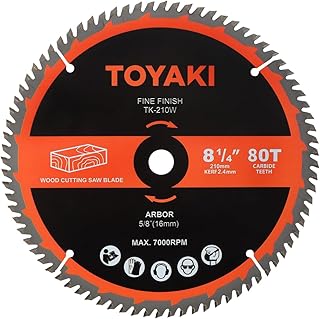
Rated to 7,000 RPM with carbide-tipped teeth and a 5/8″ arbor, this one is built around clean crosscutting and holds its edge through repeated plywood passes. The coating sheds pitch well, which matters more than most buyers realize since resin buildup is what starts the burning-and-pushing cycle.
Benchmark Abrasives 8-1/2″ TCT 60-Tooth
A well-matched option for compact saws and track-saw-adjacent work, with a tungsten carbide tipped tooth count that balances speed against finish quality. The 60-tooth count is more forgiving on smaller-motor machines than an 80-tooth blade, so feed stays smooth instead of stalling mid-sheet.
8-1/4″ 80-Tooth Ultra-Fine Finish Blade
If you run a compact jobsite table saw, this is the finish blade to reach for on cabinet-grade ply. The dense tooth spacing produces genuinely glue-ready edges, though you’ll want a steady, moderate feed rate to let all 80 teeth do their share of the work.
Frequently Asked Questions
How many teeth do I need for plywood?
Sixty to eighty. An 80-tooth blade gives the cleanest veneer edge; 60 teeth cut nearly as well while clearing chips more freely, which suits saws under 15 amps.
Will a plywood blade also handle solid wood?
For crosscuts, yes. For ripping thick hardwood, no. High tooth counts have small gullets that pack with chips, causing heat, burning, and premature carbide wear.
Do I still get tearout with the right blade?
Sometimes on the underside. Raise the blade only slightly above the stock, use a zero-clearance insert, and score the cut line with a shallow first pass on show faces.
How long should a quality blade last?
Several hundred sheet-goods cuts before sharpening, assuming you clean pitch off regularly. Resin buildup mimics dullness and is the most common reason blades get replaced too early.
Final Thoughts
For most 10″ saws, the FOXBC 80-tooth blade delivers the cleanest plywood edges with the least feed effort, making it my default recommendation for cabinet work. The KENDO 40T/60T set is the better buy if you break down full sheets yourself, since dedicating each blade to its job pays off in both cut quality and longevity, and compact-saw owners should look at the Benchmark Abrasives 8-1/2″ 60-tooth for a comfortable balance of finish and feed.