Key takeaways
- Thickness versus underfoot relief: Anything at or below 2.5 mm is a protective skin, not a cushion. If you creep, kneel, or stand at a bench for long stretches, step up to 2.8 mm or 3 mm rubber, which flexes enough to reduce the sharp pressure points that make kneecaps ache.
- PVC or rubber: PVC handles oil, coolant, and cleaning chemicals with less swelling and wipes clean fast. Rubber wins on compression recovery and grip, especially when damp, but it can mark light-colored surfaces and has a break-in odor for the first week or two.
- Real coverage, not nominal width: Measure bay to bay, then subtract for door tracks, water heater platforms, and shelving footprints. A 7.5 ft roll covers one vehicle generously; two-car bays need a pair of rolls with a deliberate seam plan and tape underneath.
- Traction texture and trip risk: Diamond plate embossing sheds water sideways and gives shoes something to bite, which matters most in the first three feet inside the door. Check that edges either taper or can be taped flat, since a curled lip is the most common cause of a stumble.
- Hot tire and point-load behavior: Parked tires transfer heat and concentrated weight. Look for material rated as wear-resistant with good indentation recovery, and avoid setting jack stands directly on thin PVC without a plywood spreader.
What's inside
Concrete does two things badly. It punishes your knees and lower back when you spend an afternoon under a bumper, and it drinks in every drop of brake fluid, road salt, and coolant that finds its way off your tires. Most people notice the staining first and the joint fatigue later, usually around year three of owning the house. A rolled floor covering solves both at once, but only if you match the material and thickness to the way you actually use the space, and that is where most purchases go sideways.
This guide looks at garage flooring rolls through two lenses I care about professionally: how the surface behaves under a human body over hours, and how the material holds up under point loads, tire heat, and repeated solvent exposure over years. Below you will find the standout rolls and one strong tile alternative for 2026, followed by the selection criteria that separate a floor you forget about from one you regret.
As an Amazon Associate we earn from qualifying purchases.



How to Choose a/an Garage Flooring Rolls (2026)
- Thickness versus underfoot relief: Anything at or below 2.5 mm is a protective skin, not a cushion. If you creep, kneel, or stand at a bench for long stretches, step up to 2.8 mm or 3 mm rubber, which flexes enough to reduce the sharp pressure points that make kneecaps ache.
- PVC or rubber: PVC handles oil, coolant, and cleaning chemicals with less swelling and wipes clean fast. Rubber wins on compression recovery and grip, especially when damp, but it can mark light-colored surfaces and has a break-in odor for the first week or two.
- Real coverage, not nominal width: Measure bay to bay, then subtract for door tracks, water heater platforms, and shelving footprints. A 7.5 ft roll covers one vehicle generously; two-car bays need a pair of rolls with a deliberate seam plan and tape underneath.
- Traction texture and trip risk: Diamond plate embossing sheds water sideways and gives shoes something to bite, which matters most in the first three feet inside the door. Check that edges either taper or can be taped flat, since a curled lip is the most common cause of a stumble.
- Hot tire and point-load behavior: Parked tires transfer heat and concentrated weight. Look for material rated as wear-resistant with good indentation recovery, and avoid setting jack stands directly on thin PVC without a plywood spreader.
The Best Garage Flooring Rolls (2026)s Reviewed
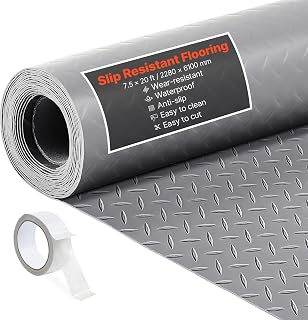
VEVOR 7.5 x 20 ft PVC Diamond Plate Roll (Silver Gray)
The most sensible default for a single-bay garage: 150 square feet of 2.2 mm PVC that unrolls square, relaxes flat within a day or two, and cleans with a mop rather than a scrub brush. The silver gray brightens a dim garage noticeably, and the included double-sided tape is what keeps the perimeter from lifting during seasonal temperature swings.
7.8 x 18 ft 2.8 mm Rubber Garage Flooring Roll
At 2.8 mm this is the pick if your knees are the deciding factor, since the extra body absorbs enough load to make an hour on the floor tolerable rather than something you pay for the next morning. The nearly 8 ft width also gives mid-size SUVs and wide sports cars room to open doors without a tire hanging off the edge.
VEVOR 12 x 12 in Interlocking Floor Tiles (Red, 50-Pack)
Not a roll, but the right answer for oddly shaped bays, columns, or floors with a pronounced drain slope, because you cut and fit rather than fight a full sheet. The polypropylene grid is rigid and drains well, and damaged tiles pop out individually instead of forcing a whole-floor replacement.
VEVOR 4 x 20 ft 3 mm Rubber Diamond Plate Roll (Black)
The thickest option here and the one I would put along a workbench, in a walkway, or down the center of a trailer. Three millimeters of rubber gives genuine standing comfort and shrugs off dropped tools, dragged toolboxes, and grit that would gradually score thinner PVC.
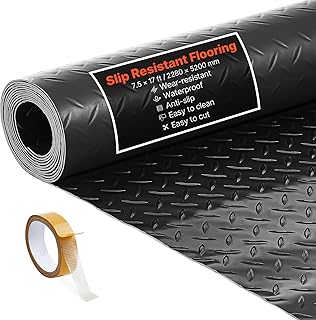
VEVOR 7.5 x 17 ft PVC Diamond Plate Roll (Black)
Same construction as the silver gray flagship in a slightly shorter length, which suits shallower bays where a 20 ft roll would need trimming anyway. Black hides tire marks and oil shadows better, at the cost of a darker workspace unless your lighting is good.
Frequently Asked Questions
Will a flooring roll trap moisture against the slab?
It can, particularly on slabs without a vapor barrier. Leave a small gap at the walls, lift the roll once or twice a year to let the concrete breathe, and dry the slab thoroughly before installation.
Do I need adhesive across the whole floor?
No. Perimeter tape plus tape along any seams is standard and keeps the material free to expand and contract with temperature. Full adhesion makes future removal considerably harder.
How do I get rid of the wrinkles?
Unroll it in a warm garage and let it sit loose for 24 to 48 hours. Warmth relaxes the memory in both PVC and rubber; forcing a cold roll flat is how edges end up permanently curled.
Can I park on it right after installation?
Wait until the material has fully relaxed and the tape has set, ideally a full day. Driving onto a still-buckled roll shifts it and can crease the surface where a tire turns.
Final Thoughts
For most single-bay garages, the VEVOR 7.5 x 20 ft PVC roll in silver gray is the balanced choice on coverage, cleanup, and light. If you spend real time on the floor, move to the 2.8 mm rubber 7.8 x 18 ft roll for the joint relief, and add the 4 x 20 ft 3 mm rubber runner along your bench where you stand the longest.