Key takeaways
- Measure the vertical stack, not just the ceiling: Add lower vehicle height, runway thickness, and top-vehicle height, then leave four to six inches of clearance for the garage door track and any opener rails. An 84″ lifting height only helps if your ceiling can absorb it.
- Slab thickness beats capacity ratings: Most four-post lifts want at least four inches of cured concrete at 3,000 PSI. Freestanding designs spread the load through the posts, but a soft or cracked slab will telegraph into runway misalignment over time.
- Inspect the lifting hardware, not the number: Look for equalization cables of adequate diameter, sheaves that ride on bearings rather than bare pins, and a mechanical safety lock at every post that engages audibly. Hydraulics lower a vehicle; locks are what hold it overnight.
- Judge the ergonomics you’ll repeat weekly: Pump placement, lock release routing, ramp weight, and caster effort determine whether you use the lift or resent it. Single-point lock release and long, low-angle approach ramps save your back and your front air dam.
- Match power and finish to your space: A 110V pump plugs into a standard garage circuit, while 220V units lift faster but need a dedicated outlet. Powder-coated runways and zinc-plated fasteners resist the road salt and condensation that eat painted steel in unheated garages.
What's inside
Floor space is the scarcest material in any home garage. You can hang bikes from joists and stack totes to the rafters, but a second vehicle has no vertical option unless you build one. That’s the appeal of a storage lift: it turns a single parking bay into two without pouring concrete or moving a wall. The catch is that a lift lives under several thousand pounds of steel for years at a time, and the parts that fail first are rarely the ones on the spec sheet. Undersized cables, thin runway welds, and a hydraulic pump mounted where you have to bend sideways to reach it will make a bargain lift feel expensive fast.
This guide looks at the current crop of four-post storage lifts and portable low-rise scissor lifts through two lenses that matter most over a decade of ownership: ergonomics, meaning how the lift feels to load, lock, release, and roll every week, and durability, meaning what’s actually holding the load and how it’s protected. Below you’ll find picks for stacked long-term storage, mobile shop use, and tight-ceiling garages.
As an Amazon Associate we earn from qualifying purchases.



How to Choose a Car Storage Lift for Your Home Garage (2026)
- Measure the vertical stack, not just the ceiling: Add lower vehicle height, runway thickness, and top-vehicle height, then leave four to six inches of clearance for the garage door track and any opener rails. An 84″ lifting height only helps if your ceiling can absorb it.
- Slab thickness beats capacity ratings: Most four-post lifts want at least four inches of cured concrete at 3,000 PSI. Freestanding designs spread the load through the posts, but a soft or cracked slab will telegraph into runway misalignment over time.
- Inspect the lifting hardware, not the number: Look for equalization cables of adequate diameter, sheaves that ride on bearings rather than bare pins, and a mechanical safety lock at every post that engages audibly. Hydraulics lower a vehicle; locks are what hold it overnight.
- Judge the ergonomics you’ll repeat weekly: Pump placement, lock release routing, ramp weight, and caster effort determine whether you use the lift or resent it. Single-point lock release and long, low-angle approach ramps save your back and your front air dam.
- Match power and finish to your space: A 110V pump plugs into a standard garage circuit, while 220V units lift faster but need a dedicated outlet. Powder-coated runways and zinc-plated fasteners resist the road salt and condensation that eat painted steel in unheated garages.
The Best Car Storage Lifts For Home Garage (2026) Reviewed
KATOOL 9500 lbs Four-Post Car Lift
A well-proportioned 9,500 lb four-post that gets the details right for home use: an 84″ maximum height, aluminum approach ramps light enough to reposition one-handed, and a 3.0 HP power unit on ordinary 110V. The included caster kit, drip tray, and jack tray mean you’re not buying accessories twice, and the wide runways forgive imprecise parking on the way up.
XK 8,000 lb Portable Four-Post Parking Lift
Built for garages that change layout, this 8,000 lb four-post rolls on integrated wheels and runs off 110V, so it can serve as a storage stack in winter and a service lift in spring. Capacity is modest for heavy three-quarter-ton trucks, but for sedans, SUVs, and half-tons it’s the most flexible platform here.
11,000 lb Extra-Tall and Wide Four-Post Lift
The pick for owners of dually pickups, lifted trucks, or wide-track classics that hang off narrower runways. The extra deck width reduces the tire-placement precision required at load-in, and the 3.0 HP hydraulic system moves an 84″ lift without laboring, which is generally kinder to seals and hoses long term.
VEVOR 5,000 lb Portable Car Lift
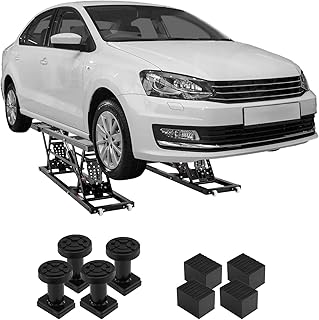
A low-rise carbon steel scissor lift with extended-length plates and a 120V power unit, topping out around 25.6″ of height. It won’t stack vehicles, but for brake jobs, exhaust work, and detailing it gets you off the creeper and onto a stool, which is the single biggest ergonomic upgrade a home mechanic can make.
Albott 7,000 lb Portable Scissor Lift
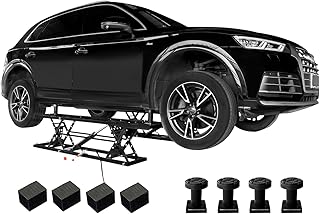
Albott’s quick-jack style lift adds capacity and 28″ of maximum height over the VEVOR, with adjustable-height posts and built-in wheels for storing it against a wall. Extension plates and a decent frame contact range make it usable across cars, SUVs, and light trucks without improvised blocking.
Frequently Asked Questions
How much ceiling height do I need to stack two cars?
Plan on 11 to 12 feet for two typical sedans, and 13 feet or more if either vehicle is an SUV or truck. Confirm your opener and door track won’t intrude into the stacked envelope before you order.
Do four-post storage lifts need to be anchored?
Most are engineered as freestanding, which is what makes caster kits possible. Follow the manufacturer’s guidance exactly; if anchoring is specified for your configuration, treat it as mandatory rather than optional.
Is a scissor lift a substitute for a storage lift?
No. Low-rise scissor lifts are service tools with limited height and no provision for parking a second vehicle underneath.
What maintenance do these actually need?
Check hydraulic fluid level, inspect cables for fraying or slack, verify all locks engage evenly, and grease sheaves annually. Cable equalization drift is the most common cause of uneven runways.
Final Thoughts
For most home garages, the KATOOL 9500 lb four-post is the balanced choice: full storage height, 110V power, and the accessories you’d otherwise buy separately. Step up to the 11,000 lb extra-tall and wide lift if you park anything with dual rear wheels or a lift kit, and add the Albott 7,000 lb portable scissor lift if what you really want is comfortable access for weekend work rather than a second parking space.