Key takeaways
- Post cross-section over post count: A 4.6″ or 4.7″ post has roughly 40% more section modulus than a nominal 4″ one, which matters far more for lateral wind resistance than adding extra thin uprights. Check the actual measured dimension, not the nominal size.
- Roof pitch and panel span: Sloped and double-tier galvanized steel roofs shed snow rather than accumulating it, and shorter unsupported panel spans between purlins resist the buckling that precedes a collapse. A stated snow load figure in pounds is more useful than a vague “heavy duty” claim.
- Anchoring is the product: Nearly every wind failure traces back to the base connection. Budget for concrete footings or engineered anchors matched to your substrate — deck, pavers, and soil each need a different approach, and the included hardware is usually a starting point.
- Serviceability at standing height: Look for hardware, curtain tracks, hooks, and drainage channels you can inspect and clear from the ground or a two-step stool. Anything that requires a ladder gets skipped, and skipped maintenance is what shortens service life.
- Corrosion strategy: Powder-coated aluminum sidesteps rust entirely and suits coastal or de-icing-salt environments. Cedar offers better thermal comfort and lower glare but needs re-sealing every two to three years, especially at end grain and ground contact.
What's inside
Most gazebo failures don’t happen during the storm. They happen in the three seasons before it, while fasteners back out a quarter turn at a time, a roof panel loses its bite on a purlin, and untreated end grain wicks moisture up a post. By the time a 60 mph gust or eight inches of wet snow arrives, the structure has already been quietly disqualified. Buyers see a “snow and wind resistant” claim on a listing and reasonably assume it means the finished, installed, five-year-old version of the product — but those ratings almost always describe a freshly assembled unit, correctly anchored, with every bolt at spec torque.
This guide looks at permanent gazebos through a durability-and-ergonomics lens: post cross-section, roof pitch and panel span, fastener quality, anchoring requirements, and how much of the annual upkeep you can actually reach without renting a lift. We’ve focused on hardtop wood and aluminum structures that are engineered to stay up year-round, since seasonal soft-top canopies are a different product category with a different service life. Each pick below is assessed for how it holds up under real load and how pleasant it is to live with between storms.
As an Amazon Associate we earn from qualifying purchases.



How to Choose a Gazebo For High Winds And Snow (2026)
- Post cross-section over post count: A 4.6″ or 4.7″ post has roughly 40% more section modulus than a nominal 4″ one, which matters far more for lateral wind resistance than adding extra thin uprights. Check the actual measured dimension, not the nominal size.
- Roof pitch and panel span: Sloped and double-tier galvanized steel roofs shed snow rather than accumulating it, and shorter unsupported panel spans between purlins resist the buckling that precedes a collapse. A stated snow load figure in pounds is more useful than a vague “heavy duty” claim.
- Anchoring is the product: Nearly every wind failure traces back to the base connection. Budget for concrete footings or engineered anchors matched to your substrate — deck, pavers, and soil each need a different approach, and the included hardware is usually a starting point.
- Serviceability at standing height: Look for hardware, curtain tracks, hooks, and drainage channels you can inspect and clear from the ground or a two-step stool. Anything that requires a ladder gets skipped, and skipped maintenance is what shortens service life.
- Corrosion strategy: Powder-coated aluminum sidesteps rust entirely and suits coastal or de-icing-salt environments. Cedar offers better thermal comfort and lower glare but needs re-sealing every two to three years, especially at end grain and ground contact.
The Best Gazebo For High Winds And Snow (2026)s Reviewed
Modern Shade Wood Grill Gazebo 12′ x 16′
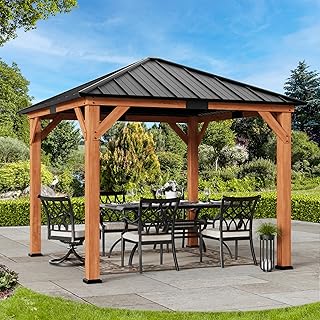
The 4.6″ cedar posts and steeply sloped galvanized steel roof make this the most structurally serious option here, and the 12′ x 16′ footprint gives you genuine circulation space around a grill and a dining table without anyone ducking a beam. Expect a substantial assembly commitment and plan your footings before the pallet arrives.
Modern Shade Permanent Wood Gazebo 10×10
A compact, well-proportioned cedar structure that carries the same galvanized roof logic into a smaller footprint, which makes it a strong fit for tighter yards and side gardens. The integrated hooks sit at a usable height for lanterns and planters, so you’re not improvising attachment points with screws later.
PURPLE LEAF 11 x 13′ Gazebo
The 4.7″ posts and built-in drainage channels address the two things that age a gazebo fastest — lateral flex and standing water — while the vented roof design bleeds off wind pressure instead of fighting it. Fade-resistant curtains hold their color noticeably better than generic polyester, which spares you a mid-life replacement cost.
PURPLE LEAF Hardtop Gazebo 10′ x 12′
An 1800 lb snow load rating on a powder-coated aluminum frame is the right answer for heavy-snow regions where you’d rather not re-seal timber every few years. The white frame runs cooler underfoot and reflects more light into shaded patios; curtains and netting are included, which is a real ergonomic gain in mosquito country.
Aoxun 10′ x 12′ Outdoor Wood Gazebo
The galvanized steel double roof creates a ventilation gap that reduces heat buildup and helps snow slide clear of the upper tier, and the cedar framing keeps surface temperatures comfortable for bare hands and forearms in summer. Good midpoint value if you want timber warmth with a metal roof’s shedding behavior.
Frequently Asked Questions
Do I need to clear snow off a hardtop gazebo?
If the roof is pitched and the load rating comfortably exceeds your local ground snow load, generally no. Clear it anyway after unusual wet-snow or ice-then-snow events, using a roof rake from the ground rather than climbing on the structure.
How much wind can a permanent gazebo actually handle?
The frame is rarely the limiting factor — the anchoring is. Properly footed units in this class typically tolerate sustained gusts well past 50 mph, but the same gazebo sitting unanchored on pavers can lift in a summer thunderstorm.
Wood or aluminum for harsh climates?
Aluminum wins on maintenance and corrosion resistance; cedar wins on thermal comfort, acoustics, and repairability. Choose aluminum if you know you won’t re-seal on schedule.
Can these be installed on an existing deck?
Often yes, but the deck framing has to carry both the dead load and uplift, which usually means blocking or new posts down to footings. Have the deck evaluated before ordering.
Final Thoughts
For heavy snow and exposed sites, the Modern Shade 12′ x 16′ cedar gazebo offers the most structural margin and the most comfortable usable space, while the PURPLE LEAF 10′ x 12′ hardtop is the smarter pick if you want a documented snow load figure and near-zero maintenance from powder-coated aluminum. If you’re working with a smaller yard, the Modern Shade 10×10 delivers the same engineering thinking in a footprint that fits.