Key takeaways
- Footprint and vertical clearance: Measure the gap between counter and upper cabinet before anything else. Upright compressor units like the Whynter ICM-201SB need top clearance for the lid to swing; a top-loading Ninja CREAMi needs headroom for the pint to drop in. Chest-style bowls need horizontal elbow room instead.
- Loaded weight and lift path: A full 2.1-quart canister is a two-hand lift at an awkward angle. Machines with a removable bowl you extract straight up are kinder to wrists than ones you tilt and pour. If shoulder or grip strength is a factor, favour a fixed-bowl unit you scoop from in place.
- Compressor vs. pre-freeze bowl: Built-in compressors skip the 16-hour freezer wait and let you run back-to-back batches, but they add 20 to 30 pounds and a fan that needs breathing space at the vents. Pre-freeze bowls are light and near-silent, at the cost of freezer real estate and planning.
- Wear points you can replace: Look for a dasher (the paddle) in one piece, a lid gasket that seats rather than stretches, and a drive coupling made of metal or thick nylon. Thin plastic paddles and press-fit seals are the parts that fail first, and they’re the parts you’ll want to source in year three.
- Cleaning access: Count the parts that touch dairy, then check whether each one comes out without tools. Narrow vertical bowls with a fixed base need a long-handled brush; wide removable canisters wipe clean in seconds. Dairy residue in a blind corner is what ends most machines, not motor failure.
What's inside
Most kitchen appliance guides talk about texture and overrun. Fewer talk about what actually decides whether a machine stays on your counter: how heavy the bowl is when it’s full, whether you can reach the controls without leaning over a hot cooktop, and how many freeze-thaw cycles the door gasket survives before it stops sealing. An ice cream maker is a wet appliance with a compressor, a motor under load, and a bowl you handle cold and slippery. Those are durability problems as much as culinary ones.
This guide looks at six of the most widely bought home machines through an ergonomics-and-durability lens — footprint and clearance, lifting mechanics, control reach, seal and dasher wear, and how easily each one comes apart for cleaning. I’ve flagged which models suit small counters, which suit standing-height work, and which ones ask the most of your freezer and your forearms.
As an Amazon Associate we earn from qualifying purchases.



How to Choose a/an Ice Cream Maker For Home Use (2026)
- Footprint and vertical clearance: Measure the gap between counter and upper cabinet before anything else. Upright compressor units like the Whynter ICM-201SB need top clearance for the lid to swing; a top-loading Ninja CREAMi needs headroom for the pint to drop in. Chest-style bowls need horizontal elbow room instead.
- Loaded weight and lift path: A full 2.1-quart canister is a two-hand lift at an awkward angle. Machines with a removable bowl you extract straight up are kinder to wrists than ones you tilt and pour. If shoulder or grip strength is a factor, favour a fixed-bowl unit you scoop from in place.
- Compressor vs. pre-freeze bowl: Built-in compressors skip the 16-hour freezer wait and let you run back-to-back batches, but they add 20 to 30 pounds and a fan that needs breathing space at the vents. Pre-freeze bowls are light and near-silent, at the cost of freezer real estate and planning.
- Wear points you can replace: Look for a dasher (the paddle) in one piece, a lid gasket that seats rather than stretches, and a drive coupling made of metal or thick nylon. Thin plastic paddles and press-fit seals are the parts that fail first, and they’re the parts you’ll want to source in year three.
- Cleaning access: Count the parts that touch dairy, then check whether each one comes out without tools. Narrow vertical bowls with a fixed base need a long-handled brush; wide removable canisters wipe clean in seconds. Dairy residue in a blind corner is what ends most machines, not motor failure.
The Best Ice Cream Maker For Home Use (2026)s Reviewed
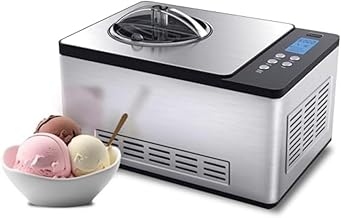
Whynter ICM-201SB (2.1 Qt Upright)
The stainless shell and upright geometry make this the most counter-efficient compressor machine here — it takes a narrow slice of depth and puts the LCD panel at readable eye level rather than face-down on top. The removable 2.1-quart canister lifts straight out, which is the right lift path, though at full load it’s genuinely heavy and worth two hands.
4-in-1 Compressor Ice Cream Maker (1.0 Qt)
A compact vertical build with a real compressor is a rare combination, and the 1.0-quart bowl means the loaded lift stays light enough for one hand. The trade-off is a smaller batch and a tighter bowl interior that wants a narrow silicone spatula rather than a scoop.
Whynter ICM-200LS
Mechanically close to the 201SB with the same no-pre-freeze convenience and timer, and the flatter control layout suits users who work seated or at a lower counter. Build quality follows Whynter’s usual pattern: a solid drive assembly and a lid seal that stays supple longer than most.
Cuisinart ICE-21P1ES (1.5 Qt)
The lightest and simplest machine of the group — a double-insulated freezer bowl, one lever, and almost nothing to break. The easy-lock lid is genuinely one-handed, and the whole unit is light enough to move to a cupboard between uses, which matters if your counter space is contested.
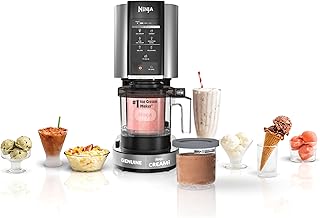
Ninja CREAMi NC301
The pint-container system removes the bowl-lifting problem entirely: you freeze a container, drop it in, and clamp the outer bowl. Expect a firm downward push to engage the lid and a noticeably loud spin cycle, but the sealed pints are the most durable-by-design consumable here.
Frequently Asked Questions
Is a compressor machine worth the extra weight?
If you make ice cream more than twice a month, yes — you skip the pre-freeze entirely and can run consecutive batches. If it’s occasional, a freezer-bowl unit like the Cuisinart is lighter, quieter, and easier to store.
How much clearance do compressor units need?
Allow three to four inches at the vents and enough top clearance for the lid to open fully. Restricted airflow makes the compressor run longer and hotter, which shortens its service life.
Which parts wear out first?
The dasher and the lid seal, in that order. Both are cheap and both are worth checking annually — a tired seal shows up as frost forming around the rim.
Can these go in the dishwasher?
Bowls and paddles are often top-rack safe, but heat cycling accelerates gasket and insulation fatigue. Hand washing in warm water is the choice that keeps parts sealing properly for longer.
Final Thoughts
For most kitchens the Whynter ICM-201SB is the durability pick — a metal shell, sensible lift path, and a compressor that earns its footprint. If counter space or grip strength is the constraint, the Cuisinart ICE-21P1ES is the lightest sensible option, and the Ninja CREAMi NC301 sidesteps heavy bowl handling altogether with its sealed pint system.