Key takeaways
- Bevel access, not just bevel range: Single-bevel saws force you to flip workpieces for opposing angles, which means more handling, more registration error, and more strain on long boards. Double-bevel earns its premium the moment you start cutting crown or mitered case sides.
- Sightline over laser gimmicks: Shadow-cast systems project the blade’s actual edge rather than an aligned beam, so the reference never drifts out of calibration. For dark hardwoods and fine layout lines, that difference is the whole ballgame.
- Detent quality and fence height: Positive stops should seat with an unmistakable click and hold under hand pressure. A taller fence supports crown nested at angle, reducing the awkward bracing postures that cause most mid-cut slips.
- Weight versus mobility reality: A 12-inch sliding saw is a fine shop fixture and a poor traveling companion. If the saw moves between locations, factor the stand into the total lift and count how many times per day you’ll perform it.
- Support geometry before support length: Cantilevered outfeed at the wrong height creates a lever that lifts your workpiece off the fence. Match the stand’s deck height to your elbow, then worry about how far the arms extend.
What's inside
Anyone who has spent a full afternoon breaking down trim stock knows the real cost of a miter saw isn’t measured in dollars. It’s measured in wrist fatigue, in the shoulder ache that builds from reaching across a too-low bench, in the squint you develop trying to read a pencil line through sawdust and shadow. Furniture builders feel this more acutely than framers do, because our cuts are repetitive, our tolerances are tighter, and our shops are usually a corner of a garage rather than a purpose-built cut station. A saw that fights your body will quietly degrade the quality of your joinery long before its bearings ever wear out.
This guide evaluates DEWALT’s most widely used miter saws through two lenses that rarely get equal billing in spec sheets: how the tool interacts with the human operating it, and how it holds calibration after a few thousand cycles. We look at handle geometry, detent feel, sightline clarity, dust capture at the throat, and the stands that determine whether your spine or the machine absorbs the load. Cut capacity matters, but so does whether you’ll still want to use the thing in year five.
As an Amazon Associate we earn from qualifying purchases.



How to Choose a Dewalt Miter Saw (2026)
- Bevel access, not just bevel range: Single-bevel saws force you to flip workpieces for opposing angles, which means more handling, more registration error, and more strain on long boards. Double-bevel earns its premium the moment you start cutting crown or mitered case sides.
- Sightline over laser gimmicks: Shadow-cast systems project the blade’s actual edge rather than an aligned beam, so the reference never drifts out of calibration. For dark hardwoods and fine layout lines, that difference is the whole ballgame.
- Detent quality and fence height: Positive stops should seat with an unmistakable click and hold under hand pressure. A taller fence supports crown nested at angle, reducing the awkward bracing postures that cause most mid-cut slips.
- Weight versus mobility reality: A 12-inch sliding saw is a fine shop fixture and a poor traveling companion. If the saw moves between locations, factor the stand into the total lift and count how many times per day you’ll perform it.
- Support geometry before support length: Cantilevered outfeed at the wrong height creates a lever that lifts your workpiece off the fence. Match the stand’s deck height to your elbow, then worry about how far the arms extend.
The Best Dewalt Miter Saw (2026)s Reviewed
DEWALT DWS780 12-Inch Double-Bevel Sliding Compound
The XPS shadow light is the single best ergonomic feature on any DEWALT saw, because it eliminates the head-tilting and re-squinting that laser guides encourage, and it stays true without adjustment. Between the sliding rails, dual-bevel action, and genuinely effective dust collection at the throat, this is the saw that reduces total handling per cut more than any other on the list.
DEWALT DWS716 12-Inch Double-Bevel Compound
For furniture work where crosscut width rarely exceeds a wide apron, the DWS716 delivers the dual-bevel convenience of the 780 in a lighter, more compact chassis that’s far easier to reposition on a bench. The tall sliding fences and stainless detent plate hold their settings admirably over years of use.
DEWALT DWS715 12-Inch Single-Bevel Compound
A well-balanced workhorse with the same 15-amp motor and generous capacity as its double-bevel sibling, trading only the second bevel direction. If your projects lean toward straight miters and simple bevels, the savings are real and the durability is identical.
DEWALT DWS713 10-Inch Single-Bevel Compound
The lightest and most forgiving to move, the DWS713 suits small shops and anyone who resents wrestling a heavy saw onto a bench. Blade cost is lower too, which matters if you rotate between rip-friendly and fine-finish blades regularly.
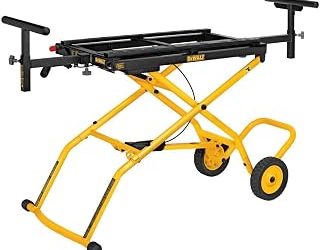
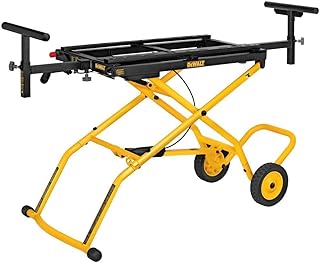
DEWALT DWX726 Rolling Miter Saw Stand
Adjustable height and wheels turn the stand from a compromise into a genuine ergonomic upgrade, letting you set deck height to your own frame rather than adapting to the tool. The 8-foot material support keeps long stock registered flat, which does more for cut accuracy than most blade upgrades. If you don’t need the roll-away function, the compact DWX724 covers similar ground with a 40-inch extending beam.
Frequently Asked Questions
Is a sliding saw worth it for furniture?
If you regularly crosscut panels or wide aprons, yes. If your stock stays under roughly 8 inches, a non-sliding 12-inch saw is lighter, cheaper, and easier to keep square.
How often should I check calibration?
Verify 90 degrees and the primary detents monthly under regular use, and always after transporting the saw. A five-minute check with a reliable square prevents cumulative joinery error.
Does the shadow light replace a laser?
It improves on one. Because the light casts the blade’s own shadow, there’s nothing to align and nothing to drift, and visibility holds up better on dark or figured woods.
Can I mount any of these on either stand?
The universal mounting rails on both stands accommodate DEWALT’s standard saw footprints, though heavier sliding models benefit from the rolling stand’s broader stance and locking wheels.
Final Thoughts
For a shop that builds furniture week in and week out, the DWS780 remains the most complete package thanks to its shadow-cast sightline and sliding capacity, while the DWS716 is the smarter choice if you want dual-bevel convenience without the weight penalty. Pair either with the DWX726 rolling stand, set the deck to your own elbow height, and you’ll notice the difference in both your cut quality and your shoulders by the end of the first project.