Key takeaways
- Duty rating with real headroom: Add your body weight, tool belt, and the heaviest bundle you’ll ever shoulder, then choose a rating well above that sum. Type IAA (375 lb) and 500 lb all-metal builds aren’t overkill; running near a limit accelerates fatigue in stiles and rivets.
- Rung geometry and foot support: Uniform 12-inch spacing lets your gait stay automatic, which conserves attention for balance. Wide, flat, serrated rungs spread pressure across the arch instead of concentrating it under the midfoot, the single biggest factor in how your feet feel after two hours.
- Pitch compatibility: Steep-assist wedges and pitch hoppers shine on 6/12 and above by converting a slope into a level platform. On shallow pitches a stabilized extension ladder plus roof hook is usually faster to set and easier to reposition.
- Joint quality over gross weight: Aluminum keeps carry weight manageable, but the failure point is rarely the rail. Inspect hinge tolerances, locking pin engagement, and whether pivots use bushings or bare metal-on-metal. Zero play out of the box means less play in year three.
- Anchoring and transport: A rated safety rope, gutter clips, and a stabilizer that spreads contact away from fascia will do more for your confidence than any spec sheet. Fold-flat designs and storage bags also reduce awkward one-arm carries, which is where a surprising number of strains originate.
What's inside
Roof work punishes the body in ways ground-level jobs never do. On a 7/12 pitch your calves hold an isometric contraction for minutes at a time, your wrists work at the edge of their comfortable range, and every reach for a shingle bundle asks your shoulders to stabilize a load you can’t see beneath. Most buyers shop roofing ladders by height and price alone, then discover the real variables the hard way: rung spacing that forces an unnatural stride, a hinge that develops play after one season, or a top section that flexes just enough to make you hesitate. Hesitation is where accidents live.
This guide evaluates roofing ladders and steep-assist systems through two lenses that matter most over a working lifetime: ergonomics, meaning how the tool distributes load across your body and how little it asks of your joints, and durability, meaning whether the welds, extrusions, and pivots survive repeated stress cycles without loosening. Below you’ll find picks spanning pitch hoppers, multi-position extension stepladders, chicken ladder sets, and the stabilizer hardware that ties the whole system together.
As an Amazon Associate we earn from qualifying purchases.


How to Choose a Roofing Ladder (2026)
- Duty rating with real headroom: Add your body weight, tool belt, and the heaviest bundle you’ll ever shoulder, then choose a rating well above that sum. Type IAA (375 lb) and 500 lb all-metal builds aren’t overkill; running near a limit accelerates fatigue in stiles and rivets.
- Rung geometry and foot support: Uniform 12-inch spacing lets your gait stay automatic, which conserves attention for balance. Wide, flat, serrated rungs spread pressure across the arch instead of concentrating it under the midfoot, the single biggest factor in how your feet feel after two hours.
- Pitch compatibility: Steep-assist wedges and pitch hoppers shine on 6/12 and above by converting a slope into a level platform. On shallow pitches a stabilized extension ladder plus roof hook is usually faster to set and easier to reposition.
- Joint quality over gross weight: Aluminum keeps carry weight manageable, but the failure point is rarely the rail. Inspect hinge tolerances, locking pin engagement, and whether pivots use bushings or bare metal-on-metal. Zero play out of the box means less play in year three.
- Anchoring and transport: A rated safety rope, gutter clips, and a stabilizer that spreads contact away from fascia will do more for your confidence than any spec sheet. Fold-flat designs and storage bags also reduce awkward one-arm carries, which is where a surprising number of strains originate.
The Best Roofing Ladders (2026) Reviewed
18 Foot 500LB All-Metal Steep Assist Roof Ladder
The all-metal construction and 500 lb rating make this the most confidence-inspiring pitch hopper here for anyone carrying tools and material simultaneously, and the included 10M safety rope means you aren’t sourcing anchoring separately. Expect a meaningful carry weight in exchange for that rigidity, so plan your staging before you climb.
The Goat Steep Assist Roof Ladder (Compact)
The Goat’s compact format is the standout for solo operators who reposition frequently, because the reduced bulk keeps your center of mass over your feet during transitions instead of out in front of you. Build quality at the pivots is consistent, which is exactly what you want in a tool that spends its life loaded at an angle.
Little Giant Skyscraper 17 ft Adjustable Extension Stepladder
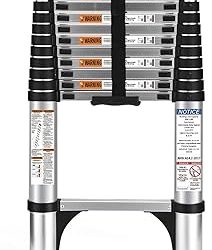
Type IAA at 375 lb with genuine multi-position versatility, the Skyscraper handles gutter lines, high ceilings, and stairwell landings that defeat single-purpose ladders. Non-slip feet and safety straps are well executed, and the extruded rails resist the twist that makes tall ladders feel sketchy at full extension.
ACRO Steel Chicken/Roof Ladder Set
Four six-foot steel sections plus a wheeled roof hook give you a modular chicken ladder that scales to the run you actually have, which is the ergonomic advantage: you walk rungs instead of shuffling shingles. Steel means weight and a need to watch for surface rust, but it also means this set outlives lighter alternatives.
Echo Ridge 18 Foot Steep Assist Roof Ladder
A well-rounded pitch hopper package with 10M rope and a storage bag, the Echo Ridge is the sensible pick for homeowners tackling seasonal maintenance rather than daily production work. The compact profile stows in a garage corner and the included bag genuinely reduces wear between uses.
Frequently Asked Questions
Do I need a stabilizer if my ladder has a roof hook?
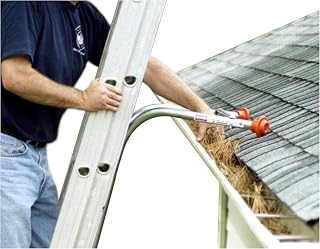
Often yes. A stabilizer like the Bighorn aluminum model widens your base contact and protects gutters and fascia from point loading, reducing side-to-side sway that quietly drains your grip strength.
Aluminum or steel for roof ladders?
Aluminum for frequent repositioning and long carries; steel when maximum stiffness and abrasion resistance matter more than pack weight. Never use either near live electrical service drops without confirming clearance.
How steep is too steep for a pitch hopper?
Steep-assist wedges are engineered for meaningful pitch, but above roughly 9/12 you should pair them with fall protection and a tie-off point. Verify your specific model’s rated pitch range.
How often should I inspect a roofing ladder?
Before every use, briefly: check rung tightness, hinge play, locking pins, rope condition, and foot pads. Any measurable slop in a pivot means retire or repair, not “watch it.”
Final Thoughts
For working professionals who need maximum rated capacity and minimal flex, the 18 Foot 500LB All-Metal Steep Assist Roof Ladder is the durability benchmark, while The Goat Compact offers the best ergonomics for anyone repositioning repeatedly across a long day. Homeowners who want one ladder for roofline, stairwell, and interior work should start with the Little Giant Skyscraper 17 ft, and pair whatever you choose with a proper stabilizer.