Key takeaways
- Dilution yield: Concentrates that make 40 gallons from a single bottle mean fewer trips to the shelf and less lifting of heavy jugs. Check the ratio, not the container size, when comparing cost and storage footprint.
- Foam cling time: Soap that stays put for two to three minutes does the loosening work chemically, which is the single biggest reduction in scrubbing effort. Thin foam that sheets off immediately puts the labor back on your arms.
- Coating and wax safety: Look for pH-neutral or explicitly ceramic-safe formulas if you want your existing protection to survive the wash. Stripping soaps shorten the life of every layer underneath.
- Equipment compatibility: Confirm the soap is rated for your delivery method — some are designed for detergent tanks and low-pressure siphons, others specifically for foam cannons with their own orifice and gasket tolerances.
- Touchless capability: If mobility or joint comfort is a real constraint, prioritize commercial-grade touchless formulas that are engineered to release soil without contact at all.
What's inside
Washing a vehicle by hand is one of the more physically demanding chores in a homeowner’s weekend rotation. You’re bent at the waist, reaching across a hood, working a mitt in circles while your shoulders load up and your lower back quietly protests. The soap you pair with your pressure washer changes that equation more than most people expect: a formula that clings and lubricates properly means fewer passes, less scrubbing pressure, and far less time spent in awkward positions. A weak or poorly diluted soap means you end up doing the mechanical work your equipment was supposed to handle.
There’s a durability side to this too. Surfactants that are too aggressive strip wax and sealant, leaving paint and trim to weather faster, and some concentrates are hard on foam cannon gaskets and pump seals over repeated use. This guide looks at six pressure washer soaps through both lenses — how much manual effort they save you, and how kindly they treat your finish and your equipment over a few seasons of use. We’ve noted dilution ratios, foam behavior, and coating compatibility so you can match a product to your washer and your tolerance for physical labor.
As an Amazon Associate we earn from qualifying purchases.



How to Choose a Car Wash Soap For Pressure Washer (2026)
- Dilution yield: Concentrates that make 40 gallons from a single bottle mean fewer trips to the shelf and less lifting of heavy jugs. Check the ratio, not the container size, when comparing cost and storage footprint.
- Foam cling time: Soap that stays put for two to three minutes does the loosening work chemically, which is the single biggest reduction in scrubbing effort. Thin foam that sheets off immediately puts the labor back on your arms.
- Coating and wax safety: Look for pH-neutral or explicitly ceramic-safe formulas if you want your existing protection to survive the wash. Stripping soaps shorten the life of every layer underneath.
- Equipment compatibility: Confirm the soap is rated for your delivery method — some are designed for detergent tanks and low-pressure siphons, others specifically for foam cannons with their own orifice and gasket tolerances.
- Touchless capability: If mobility or joint comfort is a real constraint, prioritize commercial-grade touchless formulas that are engineered to release soil without contact at all.
The Best Car Wash Soap For Pressure Washer (2026)s Reviewed
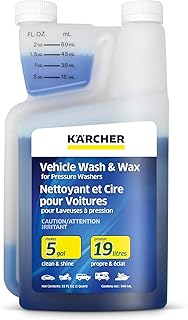
KÄRCHER Vehicle Wash and Wax (40 gal)
The concentration here is the headline: one manageable bottle yields up to 40 gallons of working solution, so you’re storing and handling far less weight for the same number of washes. The wax component adds a modest protective layer as you go, which is a sensible trade for anyone who’d rather not schedule a separate sealant session.
Wash Chems Pro50 Foam Cannon Car Wash
Built as a genuine touchless detergent, the Pro50 is the pick when you want to minimize contact with the surface entirely — valuable both for reducing swirl marks and for keeping your shoulders out of the equation. The 1.06-gallon commercial-grade format suits trucks and larger vehicles where hand-washing effort scales badly.
Wash Chems Pro30 Auto Foam Soap
A one-step, high-concentration formula in a 2.5-gallon jug, aimed at heavy equipment and farm vehicles where soil load is genuinely severe. Decant into a smaller working bottle rather than lifting the full container repeatedly — your wrists will thank you across a long season.
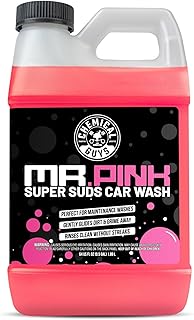
Chemical Guys Mr. Pink
Mr. Pink’s strength is lubricity: it makes the mitt glide instead of drag, which lowers both the force you apply and the risk of marring. It’s gentle on wax, sealant, and ceramic coatings, making it the safest choice for a vehicle you’ve already invested in protecting.
Meguiar’s Gold Class Car Wash
The ultra-rich foam holds well enough to soften grime before you touch anything, and the conditioning agents leave trim and paint looking fed rather than stripped. A solid gallon-sized all-rounder for regular maintenance washes on a daily driver.
Frequently Asked Questions
Can I use household dish soap instead?
Dish soap is formulated to cut grease aggressively, which means it strips wax and sealant along with the dirt. Over time that accelerates oxidation and leaves you reapplying protection far more often than necessary.
Do I need a foam cannon, or will the detergent tank work?
A detergent tank applies soap at low pressure and works fine for light maintenance washes. A foam cannon produces thicker, longer-clinging foam that does more of the loosening for you — the meaningful upgrade if reducing scrubbing effort is your goal.
How long should foam sit before rinsing?
Two to three minutes is the usual sweet spot. Avoid letting it dry on the panel, particularly in direct sun, since dried residue is harder to remove and can spot the finish.
Will concentrated soap damage my pressure washer?
Properly diluted car wash soap is safe for consumer pumps and cannon gaskets. Problems arise from running undiluted concentrate through the system or leaving soap sitting in lines, so flush with clean water after each session.
Final Thoughts
For most homeowners, the KÄRCHER Vehicle Wash and Wax offers the best balance of yield, light protection, and easy handling. If minimizing physical contact matters more than anything else, the Wash Chems Pro50 is the strongest touchless option here, while Chemical Guys Mr. Pink remains the gentlest choice for vehicles with existing ceramic or sealant protection you want to preserve.