Key takeaways
- Tooth count and task pairing: Higher counts (80–100) leave glass-smooth edges on trim, plywood veneer, and hardwood face frames. Counts in the 40–48 range clear chips faster and cut cooler in thick stock. Using a 100-tooth blade on 4x material overheats the plate and warps it permanently.
- Kerf width and motor load: A thin kerf removes less material per pass, so your saw spins up faster, bogs down less, and produces less of the low-frequency buzz that numbs your hands over a long session. Full kerf blades stay stiffer in wide crosscuts, so consider stock width before you commit.
- Carbide grade and grind quality: Micro-grain carbide tips with a polished, precisely ground ATB bevel stay sharp several times longer than budget sintered tips. Longevity matters ergonomically because a fading blade slowly increases the pressure you apply without you noticing.
- Vibration control features: Expansion slots, laser-cut anti-vibration cutouts, and copper plugs damp resonance in the plate. Less ringing means quieter work, cleaner shoulders on your cuts, and noticeably less hand-arm vibration exposure.
- Arbor and plate flatness: Nearly every 12-inch miter saw uses a 1-inch arbor. Verify the fit, and check that the plate runs true; a warped plate makes you steer the head, which is where wrist strain and burn marks both begin.
What's inside
Standing at the saw with a workpiece clamped and a deadline looming, most people blame their technique when a crosscut comes out fuzzy. More often the blade is the culprit. A dull or badly matched 12-inch blade forces you to push harder, hold the trigger longer, and fight vibration that travels straight up through your wrists and shoulders. That extra effort is not just fatiguing, it also degrades accuracy: the more force you apply, the more the workpiece creeps and the more the kerf wanders. Blade choice is quietly one of the biggest ergonomic decisions in a shop.
This guide looks at 12-inch miter saw blades through two lenses I care about most after years of evaluating tools for sustained use: how little effort a blade demands from the operator, and how long it holds that easy-cutting behavior before the carbide gives up. Below you will find picks spanning ultra-fine 100-tooth finish blades, versatile 80-tooth crosscutters, thin-kerf general purpose options, and a two-blade set for shops that switch between ripping and trim work. Each has a clear job, and matching the blade to that job is the fastest upgrade you can make.
As an Amazon Associate we earn from qualifying purchases.



How to Choose a 12 Blade For Miter Saw (2026)
- Tooth count and task pairing: Higher counts (80–100) leave glass-smooth edges on trim, plywood veneer, and hardwood face frames. Counts in the 40–48 range clear chips faster and cut cooler in thick stock. Using a 100-tooth blade on 4x material overheats the plate and warps it permanently.
- Kerf width and motor load: A thin kerf removes less material per pass, so your saw spins up faster, bogs down less, and produces less of the low-frequency buzz that numbs your hands over a long session. Full kerf blades stay stiffer in wide crosscuts, so consider stock width before you commit.
- Carbide grade and grind quality: Micro-grain carbide tips with a polished, precisely ground ATB bevel stay sharp several times longer than budget sintered tips. Longevity matters ergonomically because a fading blade slowly increases the pressure you apply without you noticing.
- Vibration control features: Expansion slots, laser-cut anti-vibration cutouts, and copper plugs damp resonance in the plate. Less ringing means quieter work, cleaner shoulders on your cuts, and noticeably less hand-arm vibration exposure.
- Arbor and plate flatness: Nearly every 12-inch miter saw uses a 1-inch arbor. Verify the fit, and check that the plate runs true; a warped plate makes you steer the head, which is where wrist strain and burn marks both begin.
The Best 12 Blade For Miter Saw (2026)s Reviewed
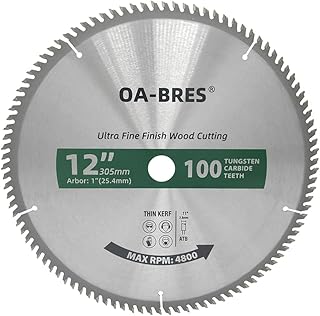
100-Tooth ATB TCT Ultra Fine Finish Blade
An affordable route to near-sanded edges on moldings and cabinet parts, with an alternate top bevel grind that severs cross-grain fibers instead of tearing them. Treat it as a dedicated finish blade and keep it away from thick or wet stock, and the tips will reward you with a long service life.
FOXBC 12-Inch 100-Tooth Polished Finish Blade
The polished plate is the standout detail here: it sheds pitch and slides through the cut with less friction, so the motor holds speed and you push less. It excels on hardwood trim, laminate, and prefinished baseboard where chip-out is unforgiving.
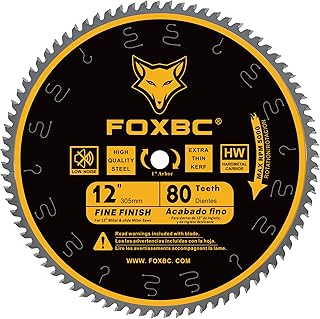
FOXBC 12-Inch 80-Tooth Fine Finish Blade
My pick for the best balance of surface quality and effort. Eighty teeth still leave a finish-ready edge on most hardwoods, but the larger gullets clear waste efficiently enough that you can work through a stack of framing or shelving without the blade heating up or the saw straining.
DEWALT DWA112100 100-Tooth Fine Finish Blade
Consistently flat plates and tightly controlled tooth geometry make this the reliable choice when repeatability matters more than price. The ultra-sharp carbide holds its edge through long punch-list days, which keeps cut quality steady from the first miter to the last.
ANGELSWORD 12-Inch 40T/60T Two-Pack
A sensible starter kit for a mixed shop: the 40-tooth blade rips and breaks down thicker stock with low motor load, while the 60-tooth handles crosscuts and general trim. Swapping between them beats forcing one compromise blade to do everything.
Frequently Asked Questions
Does a higher tooth count always mean a better cut?
Only for the right material. In thin, dense, or veneered stock, more teeth mean smoother edges. In thick softwood, too many teeth trap sawdust, generate heat, and can actually produce a rougher, scorched surface.
Is a thin-kerf blade worth it on a 15-amp saw?
Usually yes. A thin-kerf blade like the Freud LU86R012 reduces cutting resistance, which lowers vibration and lets a corded saw or battery platform maintain blade speed with less strain on both the tool and you.
How often should I replace or sharpen a blade?
Watch for behavior, not calendar dates. When you find yourself pressing harder, hearing a change in pitch, or seeing burn marks and fuzzy fibers, the carbide is dull. Quality blades can be professionally sharpened several times.
Can I use a miter saw blade on a table saw?
Some blades are rated for both, but confirm the intended use and the hook angle. Blades ground with a negative hook are designed for miter saws and will feed poorly and unsafely on a table saw.
Final Thoughts
For most home furniture builders, the FOXBC 80-tooth blade delivers the best mix of clean edges and low cutting effort for everyday work. Step up to the DEWALT DWA112100 when finish quality has to be flawless across a full day of trim, or reach for the Freud LU86R012 thin kerf if you want one versatile blade that keeps your saw spinning easily and your hands comfortable.