Key takeaways
- Compatibility: Confirm that the formula suits finished leather, corrected-grain leather, faux leather, or vinyl before applying it to a sofa. An inconspicuous test area is essential.
- Color control: Pick the closest practical shade rather than expecting a dramatically lighter color to cover a dark sofa. Layering thin coats usually looks more natural than one heavy application.
- Flexibility: Seating surfaces bend, compress, and warm with use. Favor products designed to remain flexible after curing, especially on cushions, arm fronts, and high-contact panels.
- Application effort: A balm is often forgiving for broad fading, while liquid dye can offer stronger coverage but demands more careful preparation, blending, and ventilation.
- Surface preparation: Clean away body oils, wax, silicone, and old conditioner first. Dye cannot reliably bond to a contaminated or glossy surface, regardless of how promising the color appears.
What's inside
A faded leather sofa can make an otherwise well-kept room look tired, but choosing a recoloring product is not as simple as matching a swatch online. Leather finishes vary in sheen, porosity, and wear, while vinyl blends and heavily conditioned hides may reject a dye or dry unevenly. The wrong formula can leave a stiff patch, visible overlap marks, or color that transfers onto clothing.
This guide evaluates leather sofa dyes from an ergonomics-and-durability perspective: how easily the product can be applied to broad seating surfaces, how well it accommodates flexing and daily contact, and how practical it is for targeted repairs. Use it to distinguish a conditioning balm from a true dye, choose a sensible color strategy, and avoid creating a surface that looks better briefly but performs poorly over time.
As an Amazon Associate we earn from qualifying purchases.


How to Choose a/an Leather Sofa Dye (2026)
- Compatibility: Confirm that the formula suits finished leather, corrected-grain leather, faux leather, or vinyl before applying it to a sofa. An inconspicuous test area is essential.
- Color control: Pick the closest practical shade rather than expecting a dramatically lighter color to cover a dark sofa. Layering thin coats usually looks more natural than one heavy application.
- Flexibility: Seating surfaces bend, compress, and warm with use. Favor products designed to remain flexible after curing, especially on cushions, arm fronts, and high-contact panels.
- Application effort: A balm is often forgiving for broad fading, while liquid dye can offer stronger coverage but demands more careful preparation, blending, and ventilation.
- Surface preparation: Clean away body oils, wax, silicone, and old conditioner first. Dye cannot reliably bond to a contaminated or glossy surface, regardless of how promising the color appears.
The Best Leather Sofa Dye (2026)s Reviewed
Leather Recoloring Balm
Leather Recoloring Balm, Leather & Vinyl Color Restorer Conditioner is a practical choice for sofas with widespread fading, light scuffs, and dry-looking panels. Its conditioning format is comparatively forgiving on large surfaces, making it easier to blend across a cushion or arm without creating a hard-edged repair; use thin layers and allow thorough drying between coats.
Furniture Clinic Medium Brown Leather Dye
Furniture Clinic Medium Brown Leather Dye for Furniture, Couches & Car Seats is well suited to owners who want a dedicated furniture-restoration product rather than a general craft colorant. It is a strong candidate for scratched or faded brown upholstery, although careful cleaning and controlled application matter because liquid dye can emphasize uneven preparation.
Angelus Leather Dye Jet Black
Angelus Leather Dye is a flexible, concentrated option supplied in a compact 3-ounce bottle with a dauber. The Jet Black shade is most useful for dark sofas, trim, or localized recoloring where precise control matters; for a full sofa, work methodically in small sections and check the cured sheen before committing to every panel.
Dark Brown Leather Repair Kit
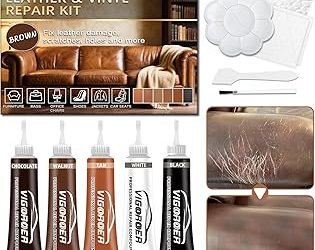
The Dark Brown Leather Repair Kit combines recoloring balm with a repair-oriented format for aged or scratched leather and vinyl. It makes sense when the sofa needs visual improvement across both broad faded areas and smaller marks, but users should not mistake recoloring for structural repair: torn seams, deep gouges, and collapsed padding require separate attention.
Dark Brown Leather Recoloring Balm
Dark Brown Leather Recoloring Balm is aimed at furniture, car seats, shoes, and other frequently handled leather goods, giving it useful versatility for matching household repairs. Its balm texture can help reduce abrupt transitions on worn seating, provided the surface is degreased first and the finished sofa is left undisturbed until fully cured.
Frequently Asked Questions
Can leather dye fix every damaged sofa?
No. Dye can improve fading, discoloration, and shallow scratches, but it will not restore missing leather, repair a split seam, rebuild foam, or correct severe peeling. Treat those problems first or combine recoloring with a suitable leather repair method.
Should I use balm or liquid dye on a sofa?
Choose balm when the main problem is broad fading and you value forgiving application and conditioning. Liquid dye can provide more assertive color coverage, but it generally rewards better preparation and a steadier hand, particularly on large cushions.
How do I stop the color from rubbing off?
Remove oils and residue, apply light coats, and respect the product’s drying and curing instructions. Avoid sitting on the sofa too soon, and test a dry, hidden area with a clean white cloth before returning the furniture to everyday use.
Can I recolor a beige sofa dark brown or black?
Usually, a darker shade is more achievable than a lighter one, but the result depends on the existing finish and the product’s coverage. Expect to use multiple thin coats, and understand that seams, piping, and heavily worn areas may absorb color differently.
Final Thoughts
For forgiving coverage on a faded sofa, the Leather Recoloring Balm is the most practical starting point. Furniture Clinic Medium Brown Leather Dye is a strong choice for controlled brown restoration, while Angelus Leather Dye Jet Black is best reserved for dark, precise recoloring work where application discipline matters.